
Finding clients is the single skill that separates agents who earn $40,000 a year from agents who earn $400,000. It is not about charm. It is not about "hustle." It is about building systems that reliably put you in front of people who want to buy or sell a home, then giving them a reason to pick you over the 47 other agents in their zip code.
This guide covers 15+ proven strategies for how to find clients real estate agents can start using today, with actual dollar amounts, realistic timelines, and the honest truth about what works at each career stage. Whether you got your license last month or you have been closing deals for a decade, there is a playbook here that fits.
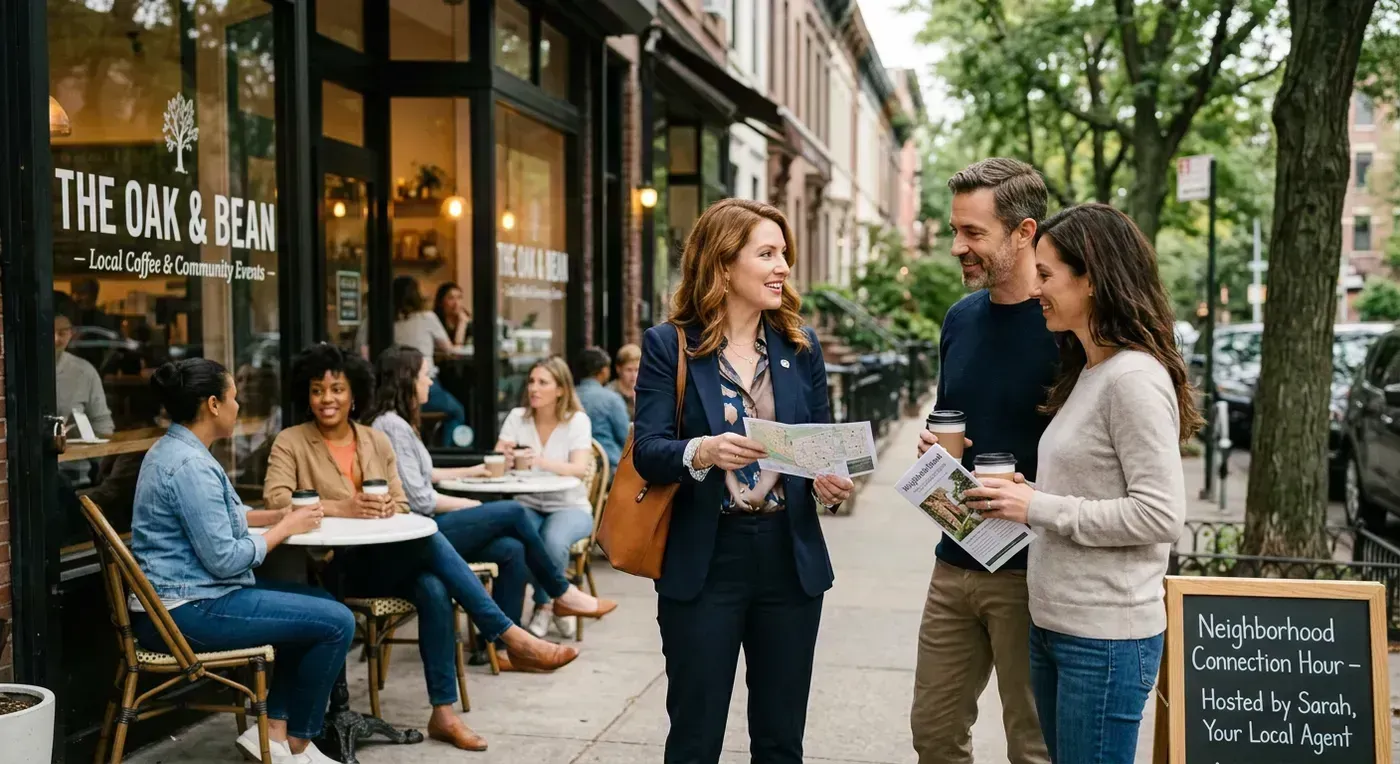
New agent vs. experienced agent: different playbooks
One of the biggest mistakes in real estate advice is pretending the same strategies work for everyone. They do not. A first-year agent with zero closings and a 15-year veteran with 200 past clients are playing entirely different games.
If you have been licensed for less than 2 years
Your biggest problem is not marketing. It is credibility. Nobody wants to hand the largest financial transaction of their life to someone who has never done it before. So your job in year one and two is to get reps, build proof, and make yourself visible.
What to prioritize:
- Open houses. Volunteer to host for every agent in your brokerage. You meet real buyers face-to-face, and it costs you nothing but a Saturday afternoon. An agent in our network hosted 3 open houses per weekend for 6 months and closed 9 deals from the contacts she collected.
- Social media video, aggressively. You may not have your own listings yet, but you can create neighborhood tour videos, "just listed" videos for your brokerage's inventory (with permission), and market update content. Post 4-5 times per week. Learn more in our guide to social media videos for real estate.
- Sphere of influence blitz. Call every single person in your phone contacts and tell them you are in real estate. Not in a weird way. Just: "Hey, I got my license. If you hear of anyone buying or selling, I would love the introduction." Do this in your first 30 days.
- Join a team. Working under a producing agent gives you leads, mentorship, and transaction experience. Yes, you split the commission. But 50% of something beats 100% of nothing, and the education is worth more than the money in year one.
Honestly, if you are a new agent reading this and you are not hosting at least 2 open houses per week, you are leaving the easiest free leads in real estate sitting on the table. I say this with love.
If you have 3+ years and a track record
You have proof. You have testimonials. You (probably) have past clients. Now your job shifts from "get any deal I can" to "build systems that generate clients without me personally hustling for every single one."
What to prioritize:
- Past client nurturing. Your database is a gold mine. Every 100 past clients should generate 10-15 transactions per year through repeat business and referrals. If that is not happening, your follow-up system is broken.
- Geographic farming. Pick a neighborhood, own it. This takes 6-12 months to gain traction, but experienced agents have the budget and patience to play the long game.
- Video marketing at scale. You have listings now. Every single one should get a professional listing video posted across Instagram, TikTok, YouTube, and Facebook. This is the highest-ROI marketing you can do.
- Strategic partnerships. Mortgage lenders, title officers, divorce attorneys, estate planners. These professionals send clients to agents they trust. Build 3-5 strong referral relationships and they can account for 20-30% of your annual business.
The 12 best ways to find real estate clients
1. Video marketing on social media
Social media video is the highest-ROI client acquisition channel for real estate agents in 2026. Instagram Reels and TikTok videos of your listings reach thousands of potential buyers and sellers organically, for free. The key is consistency: post 3-5 listing videos per week and your audience compounds over time.
Why it works: Video showcases your listings, your market expertise, and your personality at the same time. Sellers see an agent who markets aggressively. Buyers discover properties they would not find on Zillow. Both become clients. According to NAR, listings with video get 403% more inquiries than listings without.
How to start: Create a video for your next listing using an AI real estate video maker. Post the vertical version to Instagram Reels and TikTok. Post the horizontal version to YouTube. Total time: under 5 minutes including upload. Then do it for every listing, every week.
Expected ROI: Agents consistently posting video report 2-3x more inbound inquiries within 90 days. At a $6,000 average commission on a $200,000 sale, one extra closing per quarter from social media video adds $24,000 per year to your income. A video tool costs $44-$449/month. The math is not close.
Real-world example: Sarah, a solo agent in Tampa, started posting one listing video per day to Instagram Reels in January. By March she had 2,200 followers (up from 340) and had received 6 direct messages from sellers asking her to list their homes. She closed 3 of those 6 by June. Total cost: $44/month for Reel-E.
2. Sphere of influence and referrals
Your existing network remains the most reliable source of clients. Friends, family, past clients, and professional contacts generate the highest-quality referrals because trust is already established. The national average conversion rate on a referred lead is 50-70%, compared to 1-3% for cold online leads. The challenge is staying top of mind.
How to maximize referrals:
- Send a monthly market update email to your sphere. Not a generic newsletter. A personal update: "Three homes sold in Riverside Heights last month. The average price was $385,000, up 4% from last year. Here is what that means if you are thinking about selling."
- Share your listing videos on personal social media. Your sphere sees your activity and remembers you are in real estate when their coworker mentions wanting to move.
- Ask for referrals directly after every closing: "Do you know anyone thinking of buying or selling in the next 6 months?" Be specific. "Anyone" is too vague. "Anyone thinking of moving" gives them a concrete person to think of.
- Host an annual client appreciation event. A barbecue, a wine tasting, a family movie night at a local park. Budget $500-1,500 and invite every past client. The referrals you get from these events can pay for the party 20 times over.
- Send handwritten notes on home anniversaries. "Happy 2-year anniversary at 1847 Oak Street! Hope you are still loving the backyard." This takes 3 minutes and people remember it for years.
The agents who complain about "not getting referrals" are usually the same agents who close a deal, cash the check, and vanish. Referrals are not random. They are the result of consistent, genuine relationship maintenance. If your past clients forget you are in real estate, that is on you.
3. Open houses
Open houses remain one of the best ways to meet buyers face-to-face. Every open house visitor is a real person who drove to a real property because they are at least somewhat interested in buying a home. That is a warmer lead than almost anything you will find online.
You do not need your own listing. Offer to host for colleagues in your brokerage. Most agents hate sitting open houses on weekends, so you are doing them a favor while collecting leads for yourself.
Modern open house strategy:
- Promote with a listing video on social media 48 hours before. A 15-second teaser video gets 3-5x more engagement than a static photo post. Geo-target the ad to a 5-mile radius for $10-20.
- Use a digital sign-in (Curb Hero, Spacio, or even a Google Form on a tablet). Paper sign-in sheets with illegible handwriting are from 2009. Digital sign-ins collect clean emails and phone numbers automatically.
- Follow up within 2 hours of the open house. Text is better than email. "Hi [Name], thanks for visiting 2450 Maple Drive today! Did you have any questions about the property or the neighborhood?" Two hours, not two days. Speed matters.
- Film a 30-second walkthrough during the open house for additional social content. Bonus: include a clip of real visitors (with permission) to create social proof.
The numbers: A well-promoted open house in a desirable neighborhood will draw 15-30 visitors. If you follow up promptly, expect 3-5 to become active leads. Over a year of hosting 2 open houses per month, that is 72-120 new leads. At a 5% conversion rate, that is 4-6 closings worth $24,000-36,000 in commissions.
4. Geographic farming
Choose a neighborhood of 200-500 homes and become its undisputed expert. This means consistent direct mail, door knocking, video content about the neighborhood, and knowing every sale, price change, and new listing before anyone else.
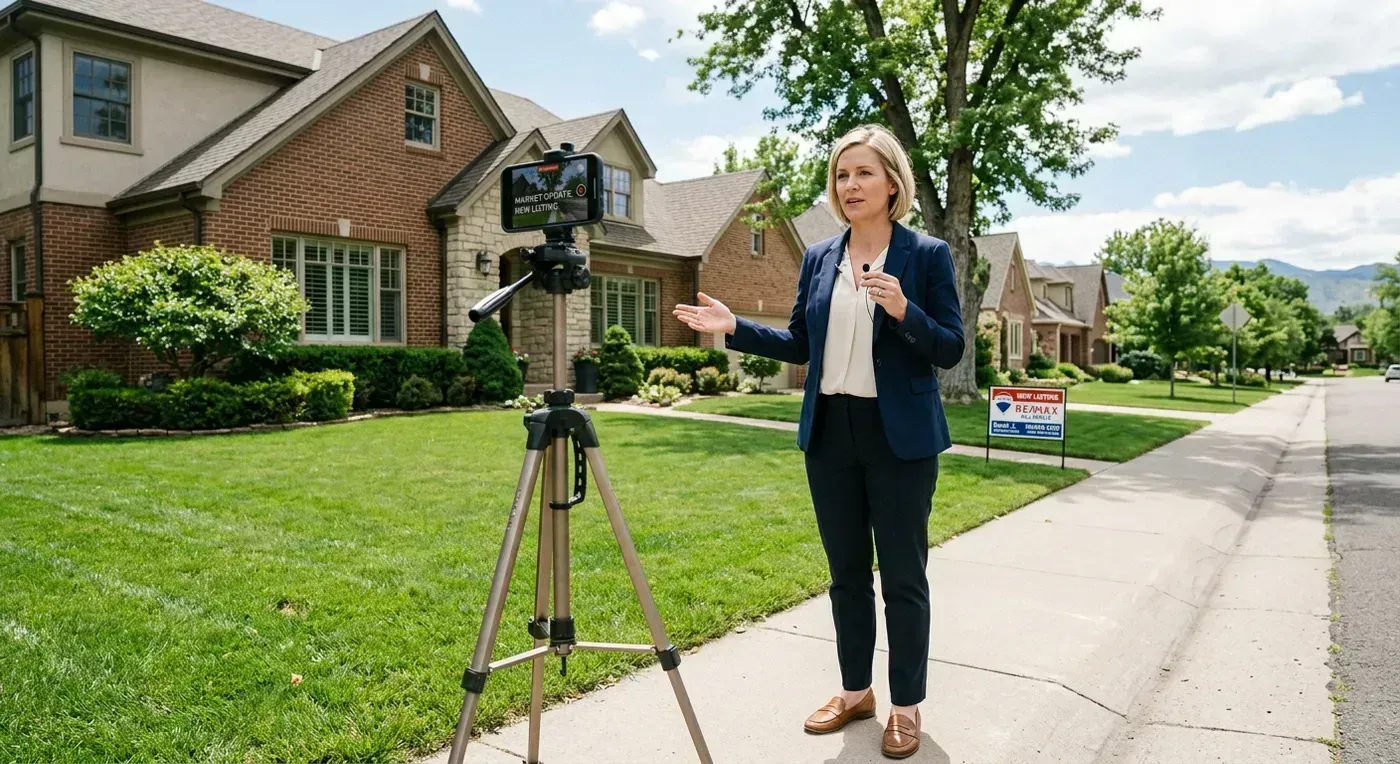
How to pick your farm:
- Look for 5-8% annual turnover (10-40 sales per year in a 500-home neighborhood)
- Avoid neighborhoods where one agent already has 30%+ market share. You want a fragmented market where no single agent dominates.
- Choose a neighborhood you genuinely like. You are going to spend a lot of time there.
Modern farming additions:
- Create video neighborhood tours and monthly market updates. "Three homes sold in Willowbrook this month. Here is what each one sold for and what it means for your home value." Post these to Instagram and YouTube with location tags.
- Run geo-targeted social media ads to your farm area. Facebook and Instagram let you target a specific zip code or even a 1-mile radius around an address. $100/month in hyper-local ads keeps you visible.
- Use Reel-E's video tools to create listing videos for every sale in your farm, even other agents' listings (with permission). When homeowners see you marketing every property in the neighborhood, they assume you are the neighborhood expert.
- Send a monthly "just sold" postcard with your branding. Cost: about $0.75-1.00 per household. For 400 homes, that is $300-400/month. Sounds expensive until you realize one listing from the farm pays for 2-3 years of mail.
Fair warning: farming is a slow burn. Expect 6-12 months before your first listing from the farm. Most agents quit at month 4 because they are impatient. The ones who stick with it build a predictable pipeline that generates 5-10 listings per year from a single neighborhood.
5. Online lead generation (paid)
Platforms like Zillow Premier Agent, Realtor.com, and BoldLeads sell buyer and seller leads directly. The quality varies wildly and the cost is significant ($200-1,000+ per month depending on your market), but for agents who can convert leads consistently, the math works.
Key to success: Speed to lead. The agent who responds within 5 minutes is 100x more likely to convert than the agent who responds in 30 minutes. This is not an exaggeration. MIT did a study on this. Set up automated text responses for the first touch, then follow up personally within the hour.
Realistic expectations: Zillow Premier Agent leads in a mid-size market cost $20-50 per lead. Conversion rates run 1-3% for most agents. That means you need 30-100 leads to get one closing. At $30 per lead, that is $900-3,000 in lead cost for one $6,000 commission. Profitable, but not as profitable as referrals or video marketing where the lead cost is near zero.
If you are going to buy leads, treat it like a business. Track every dollar in, every closing out, and know your cost per acquisition. Most agents who say "online leads don't work" are actually saying "I did not follow up fast enough or often enough." The leads are real. The follow-up is where most agents fail.
6. Content marketing and SEO
Create valuable content that ranks in Google search. When someone in your market Googles "best neighborhoods in [your city]" or "how to sell a house in [your city]," your blog post should be the first result. This is free, high-intent traffic from people actively making real estate decisions.
What to write about:
- Neighborhood guides: "Living in Midtown Atlanta: Pros, Cons, and What Homes Actually Cost in 2026"
- Market reports: "Phoenix Housing Market Update: March 2026 Numbers"
- Buyer/seller guides: "First-Time Home Buyer Checklist for Arizona"
- Local content: "The 10 Best Coffee Shops Near Scottsdale Homes for Sale"
Easiest content to create: Listing videos. You need them anyway for social media, and embedding them on your website with a written description creates a page that Google can index. Check out our guide to the best apps for real estate agents for tools that make content creation faster.
SEO is a 6-12 month investment, similar to farming. But once a page ranks, it sends you leads for years with zero ongoing cost. One well-written neighborhood guide can generate 500+ visits per month and 5-10 leads. That is essentially free lead generation on autopilot.
7. Past client reactivation
Your past clients are your most valuable asset. They have already worked with you and (hopefully) had a great experience. On average, homeowners move every 7-10 years. A database of 100 past clients means 10-15 potential transactions per year through repeat business and referrals, if you stay in touch.
Reactivation strategy:
- Annual home value update: "Hey [Name], homes in your neighborhood have appreciated about 6% since you bought. Your home at 1520 Birch Lane is probably worth around $340,000 now. Let me know if you want a detailed analysis."
- Quarterly market email: Not a mass blast. A personal note with 2-3 relevant data points about their neighborhood.
- Birthday and holiday cards: Physical mail. Not email. A real card that shows up in their mailbox stands out because almost nobody does this anymore.
- Annual check-in call: "How is the house? Any projects you have done lately? Let me know if you need a contractor recommendation." Stay relevant without being salesy.
I once met an agent who had 300 past clients and was complaining about "a slow year." I asked how many she had called in the past 6 months. The answer was zero. She was sitting on a $200,000/year referral engine and ignoring it completely.
8. Community involvement
Sponsor local events, volunteer with neighborhood organizations, join the chamber of commerce, coach a youth sports team. Community involvement builds organic visibility and trust over time. It is the longest play on this list, but also the most durable.
Budget-friendly ideas:
- Sponsor a Little League team ($200-500 per season, your name on every jersey)
- Host a neighborhood cleanup day (cost: trash bags and coffee)
- Volunteer at school fundraisers and PTA events
- Organize a quarterly community meetup at a local restaurant
The key is to pick activities you genuinely enjoy. People can smell a transactional networker from a mile away. If you hate golf, do not join the golf league just to hand out business cards. But if you love dogs, volunteering at the local shelter puts you in front of other dog people who also happen to need real estate agents sometimes.
9. Partnerships with adjacent businesses
Build referral relationships with mortgage lenders, title companies, home inspectors, contractors, divorce attorneys, estate planners, and insurance agents. These professionals interact with buyers and sellers daily. A strong referral partnership can generate 5-10 clients per year from a single relationship.
How to build partnerships that actually work:
- Make it mutual. Refer business to them first. The best partnerships are two-way streets.
- Meet monthly for coffee or lunch. Relationships require maintenance.
- Create co-branded content. Film a "5 mortgage mistakes first-time buyers make" video with your preferred lender. Both of you share it with your audiences.
- Track the referrals. Know exactly how many clients each partner sends you, and make sure you reciprocate proportionally.
A top-producing agent in Denver told me that 35% of her annual closings (about 8 deals) come from just 3 referral partners: a mortgage broker, a divorce attorney, and an estate planning lawyer. She buys them nice holiday gifts. Smart investment.
10. Door knocking and cold outreach
Old school but effective in certain markets. This works best when you bring value instead of just a business card. "I just sold 1847 Elm Street for $375,000, which is $20,000 over asking. Would you like a free market analysis of your property?" That is a conversation starter. "Hi, I am a real estate agent, here is my card" is a conversation ender.
Door knocking tips that actually work:
- Bring a one-page "just sold" flyer with the recent sale price, days on market, and your contact info
- Go between 10am and 2pm on weekdays (fewer people home, but the ones who are tend to be more receptive)
- Target 30-50 doors around your recent sales
- Expect a 10-15% answer rate and a 1-2% conversion rate over time
- Always, always leave a flyer at homes where nobody answers
11. Expired listings and FSBOs
Expired listings (homes that did not sell with a previous agent) and For Sale By Owner properties are warm leads because the homeowner has already decided to sell. They just need a better agent or a reality check on pricing.
How to approach expired listings: Call within 24 hours of the listing expiring. Have a specific plan: "Your home was listed at $425,000 and did not get offers. Here is what I would do differently, including professional video marketing that reaches 10,000+ potential buyers on social media." Bring data, not just confidence.
How to approach FSBOs: Be helpful, not pushy. Offer a free comparative market analysis. Show them your marketing materials and listing videos. Most FSBOs eventually list with an agent (88% according to NAR), and the agent who provided value early gets the listing.
12. Social media engagement (non-video)
Beyond posting videos, actively engage in local Facebook groups, Nextdoor, and community forums. Answer questions about the local housing market. Share helpful information without a sales pitch. When someone in the group asks "does anyone know a good real estate agent?" you want 5 people tagging your name because you have been helpful for months.
This is free, takes 15-20 minutes per day, and builds a reputation that is almost impossible to buy with advertising.
Cost per lead by channel
Not all leads are created equal, and not all marketing dollars produce the same return. Here is a realistic breakdown of what each channel costs per lead and per closing in a typical mid-size market.
| Channel | Cost per lead | Conversion rate | Cost per closing | Time to first result |
|---|---|---|---|---|
| Referrals (sphere) | $0 | 50-70% | $0 (+ relationship maintenance) | Immediate |
| Past client reactivation | $0-5 | 30-50% | $10-50 | 1-3 months |
| Open houses | $0-10 | 3-5% | $0-200 | 1-4 weeks |
| Social media video (organic) | $5-15 | 5-10% | $50-300 | 60-90 days |
| SEO / content marketing | $5-20 | 3-8% | $100-500 | 6-12 months |
| Community involvement | $10-30 | 10-20% | $100-300 | 3-6 months |
| Social media ads (paid) | $15-40 | 2-5% | $300-2,000 | 2-4 weeks |
| Zillow Premier Agent | $20-50 | 1-3% | $700-5,000 | 1-2 weeks |
| Paid lead platforms | $30-75 | 1-3% | $1,000-7,500 | 1-2 weeks |
| Direct mail (farming) | $100-300 /listing | 0.5-1% | $2,000-5,000 | 6-12 months |
| Google PPC ads | $25-75 | 1-4% | $625-7,500 | 1-2 weeks |
Look at that table carefully. The cheapest leads come from relationships and content. The most expensive leads come from paid platforms. This does not mean paid leads are bad (they provide speed and volume), but it does mean you should max out your low-cost channels before dumping $1,000/month into Zillow.
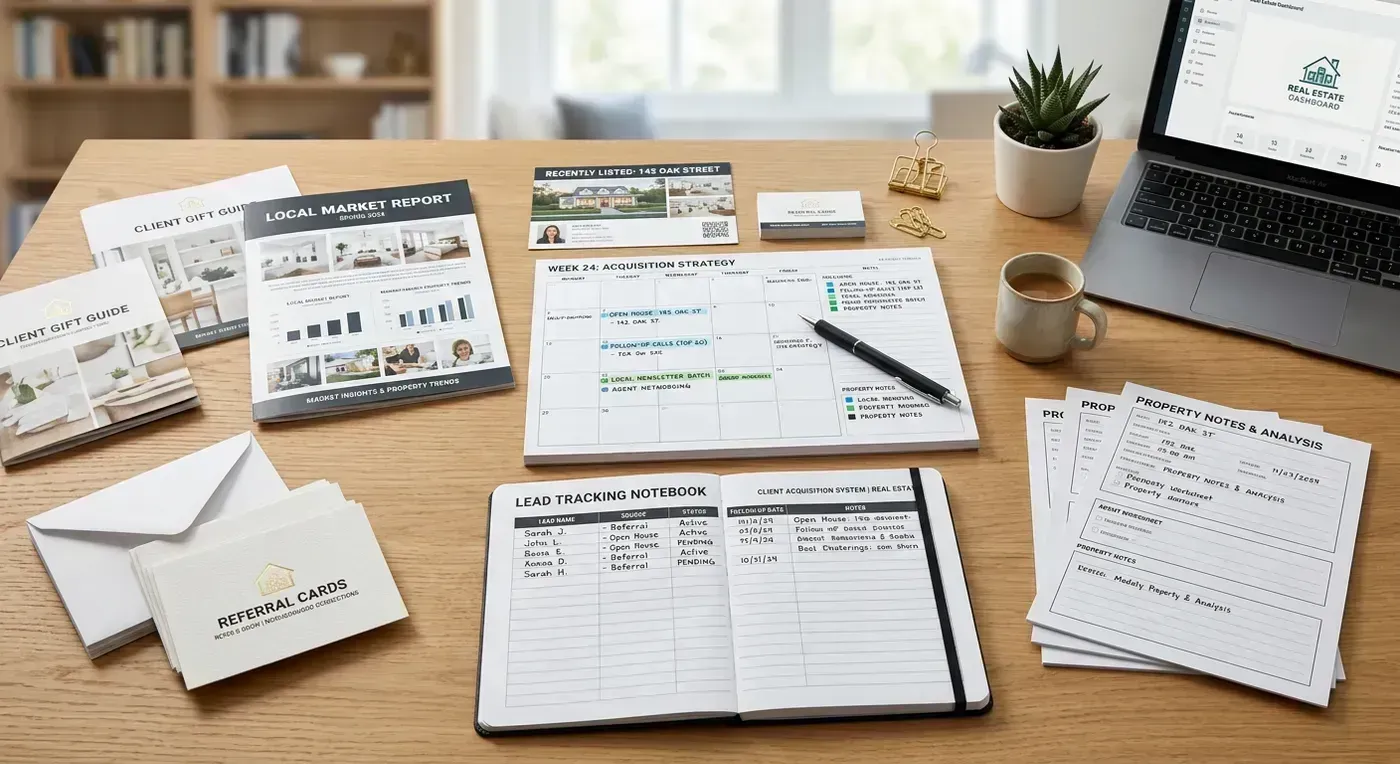
Seasonal patterns in client acquisition
Real estate is seasonal, and smart agents adjust their marketing spend and strategy throughout the year instead of doing the same thing every month. Here is how the calendar typically breaks down.
Q1 (January through March): Spring prep season
Buyers start browsing in January, and serious sellers begin preparing their homes for spring listings. This is your time to plant seeds.
- Ramp up social media posting. Buyers are scrolling Zillow and Instagram during cold winter evenings.
- Send "thinking of selling this spring?" mailers to your farm area in February.
- Film "neighborhood in winter" content. Almost nobody does this, which means less competition for attention.
- Reactivate your past client database. A January check-in call catches people before they pick an agent for their spring move.
Q2 (April through June): Peak season
This is where the money is made. Inventory spikes, buyers are competing, and open houses draw crowds. Go all in.
- Host 2-3 open houses per weekend. The traffic is highest now.
- Create a listing video for every new listing within 24 hours. Speed gives you an edge on social media before other agents post static photos. Use an AI video tool to make this realistic.
- Increase your farming mail frequency to twice per month.
- This is not the time to experiment with new channels. Double down on what is already working.
Q3 (July through September): Summer slowdown
Transaction volume dips as families settle into new homes and vacation season takes over. Use the downtime wisely.
- Create evergreen content: neighborhood guides, market reports, YouTube videos that will rank in Google for months.
- Build and strengthen referral partnerships. Take your mortgage broker to lunch. Meet with that divorce attorney you have been meaning to connect with.
- Run a client appreciation event in August. People are relaxed and social.
- Reduce paid ad spend. Cost per lead goes up during low-inventory months. Shift that budget to Q4.
Q4 (October through December): The hidden opportunity
Most agents mentally check out in November and December. "Nobody buys a house during the holidays" is one of the most expensive myths in real estate. Buyers who are house hunting in December are extremely motivated, and they have far less competition for your attention.
- Keep posting listing videos. You will stand out because half your competitors went silent after Halloween.
- Target relocating buyers. Corporate relocations often start in Q4 for Q1 moves.
- Send holiday gifts to your sphere and past clients. A $15 gift basket with a handwritten note does more for your referral pipeline than $500 in Facebook ads.
- Plan your Q1 marketing calendar in December so you hit the ground running in January.
The agents who treat real estate as a year-round business (because it is) consistently out-earn agents who take "the slow season" off. There is no slow season. There is just less competition if you keep showing up.
How video marketing accelerates every strategy
Notice how video integrates into almost every strategy in this guide. Open house promotion, farming content, social media presence, sphere of influence engagement, expired listing pitches, SEO content. Video amplifies all of them. That is why agents who invest in video creation tools see compounding returns: the video does not just help one strategy, it lifts everything.
Consider the math. At $44-$449/month for an AI video tool like Reel-E, the investment is negligible compared to the cross-channel impact. One additional client from any of these strategies pays for 3-4 years of the tool. And you are not getting one additional client. You are getting a systematic improvement across every marketing channel you run.
For the full picture on why video works, read our breakdown of real estate video statistics that should make every agent take notice.
Case study: How one agent went from 4 to 12 closings with video
Marcus had been licensed for 3 years in the suburbs of Charlotte, NC. He was closing about 4 deals per year, mostly from referrals and the occasional open house lead. His GCI (gross commission income) was hovering around $24,000, which, after brokerage splits and expenses, left him questioning whether to stay in real estate at all.
In January 2025, Marcus started a simple video marketing system:
- Week 1-4: Created listing videos for every new listing at his brokerage (not just his own) using Reel-E. Total: 6 videos in the first month. Posted each one to Instagram Reels, TikTok, and his personal Facebook page.
- Week 5-8: Added weekly "Charlotte market update" videos. 60 seconds, filmed on his phone, covering one stat or trend. Posted every Tuesday.
- Month 3: A seller in his target area DM'd him on Instagram: "I see you posting about homes in Ballantyne all the time. We are thinking of selling in May." That became listing #1 from video.
- Month 4-6: His Instagram following grew from 280 to 1,400. He started getting tagged in local Facebook groups when people asked for agent recommendations. Two more listings came from social media inquiries.
- Month 7-9: He pitched an expired listing with a presentation that included his video portfolio. The seller was impressed that he already had an audience and a marketing system in place. Listing won.
- Month 10-12: By October, Marcus had closed 12 transactions for the year, triple his previous best. His total marketing spend: $528 for Reel-E ($44/month x 12), $600 in social media ads, and $200 in farming mailers. Total: $1328 for approximately $48,000 in additional GCI.
The key insight from Marcus's story is not that video is magic. It is that video made every other strategy he was already doing work better. His referral sources saw him as more active and professional. His open house promotion reached more people. His expired listing pitch had proof of marketing ability. Video was the multiplier.
Building a client acquisition system
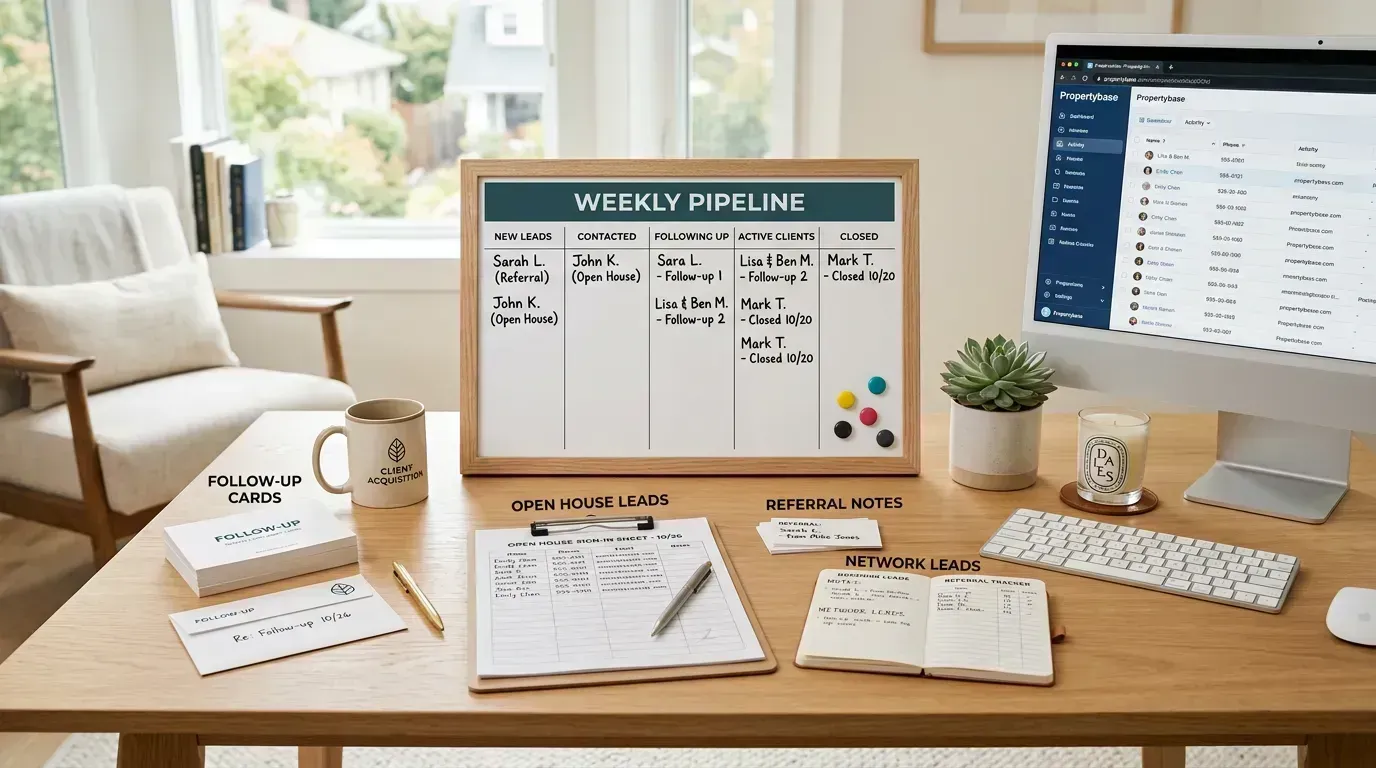
The best agents do not rely on one channel. They build a system that generates clients from multiple sources so a dry spell in one area does not tank their income.
- Passive channels (always running): Social media video posting, SEO content, sphere nurturing emails, past client follow-up sequences
- Active channels (weekly effort): Open houses, farming door knocks, community events, partnership meetings
- Paid channels (as budget allows): Online lead platforms, social media ads, direct mail, Google PPC
Diversify across all three categories. A healthy business should get roughly 40% of clients from passive channels, 35% from active channels, and 25% from paid channels. If more than 60% of your business comes from a single source, you have a concentration risk that could hurt badly if that source dries up.
Ready to add video to your system? Start your free trial with Reel-E and create your first listing video in under 2 minutes. Or read more about the best apps for real estate agents and video marketing strategies for real estate.
Frequently asked questions
How do new real estate agents find their first clients?
Start with your sphere of influence. Call every person in your contacts and tell them you are in real estate. Offer to host open houses for other agents in your brokerage (this is free and puts you in front of real buyers). Post listing content on social media 4-5 times per week. Farm a geographic area of 200-500 homes. And be patient: most new agents need 3-6 months of consistent effort before deals start closing.
What is the fastest way to get real estate clients?
Open houses and paid online leads (Zillow, Realtor.com) produce the fastest results, typically within 1-4 weeks. Social media video generates inbound inquiries within 60-90 days of consistent posting. For the fastest possible start, combine all three: buy leads for immediate pipeline, host open houses for face-to-face contacts, and post videos daily to build your long-term brand.
How much should real estate agents spend on marketing?
Industry benchmarks suggest 10-15% of gross commission income. For an agent earning $60,000 GCI, that is $6,000-9,000 per year, or $500-750 per month. New agents may need to invest a higher percentage upfront. Start with low-cost, high-impact tools: AI video at $44/month, social media posting (free), and open houses (free). Add paid lead generation as your budget grows.
Does video actually help real estate agents get more clients?
The data is unambiguous. Listings with video get 403% more inquiries. Agents using video grow revenue 49% faster. 73% of sellers prefer agents who use video marketing. Beyond the statistics, video builds trust and familiarity before a prospect ever meets you in person. Someone who has watched 10 of your listing videos on Instagram already feels like they know you. That makes the first conversation much easier. Read the full breakdown of video marketing statistics.
How many leads do I need to close one deal?
It depends entirely on the lead source. Referral leads convert at 50-70%, meaning 2 good referrals often produce 1 closing. Online leads from Zillow or BoldLeads convert at 1-3%, meaning you need 30-100 leads per closing. Social media leads fall somewhere in between at 5-10%. This is why diversifying your lead sources matters: you want a mix of high-conversion (referrals) and high-volume (online, social) channels.
When is the best time of year to prospect for new clients?
Always. Seriously. The "best" time is spring (March through June) because transaction volume is highest, but the competition for attention is also highest. The hidden opportunities are in Q4 (October through December) when most agents go quiet and the buyers still in the market are extremely motivated. The agents who prospect year-round consistently out-earn seasonal agents by 30-50%.
Should I focus on buyers or sellers?
Sellers are more profitable per transaction (you control the listing, the marketing, and the timeline), and a single listing can generate multiple buyer leads. However, new agents often find buyers easier to work with because buyer leads are more abundant (open houses, online platforms). The ideal progression is: work with buyers in years 1-2 to build experience and closings, then shift your marketing toward attracting sellers as your track record grows.
Recommended Next Steps for Agents
Turn this strategy into a production workflow with AI real estate video, real estate video maker workflows, and listing video maker templates. For deeper tactical planning, review video marketing for real estate and real estate video statistics before your next campaign sprint.