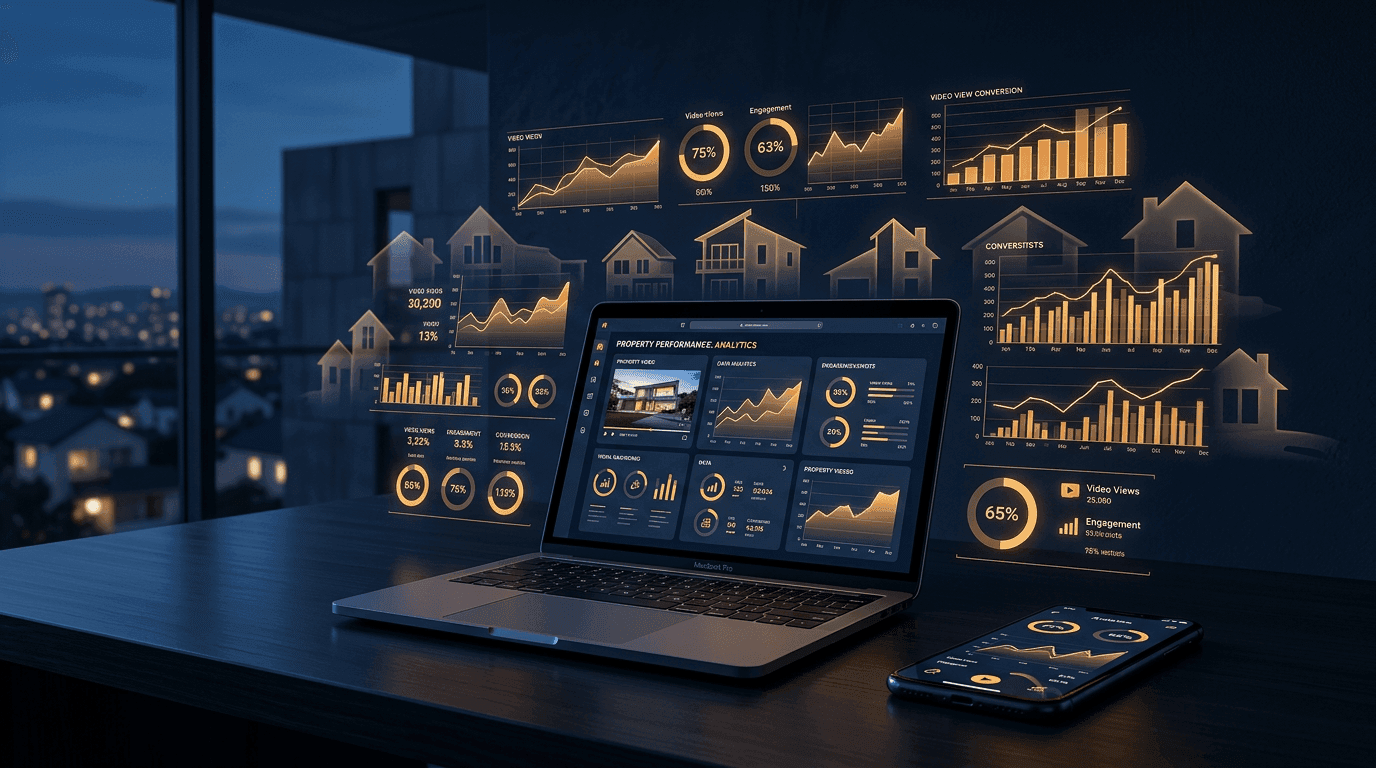
Agents ask me some version of this question every week: "Does video actually move the needle, or is it just something luxury teams do for show?" Fair question. I spent a decade running a real estate media company filming properties for agents like Aaron Kirman and the Oppenheims. I have seen the before-and-after on thousands of listings. But opinions are cheap. Here are 33 real estate video statistics, each with a source and year, that answer the question with data. Use them in listing presentations, marketing plans, or the next time someone tells you video is "nice but not necessary."
Video Marketing ROI: The Baseline Numbers
Before we get into real-estate-specific data, the broader video marketing picture sets the stage. Video is not a nice-to-have in 2026. It is the default content format across every platform that matters to home buyers, sellers, and the agents who serve them.
1. 91% of businesses use video as a marketing tool in 2025. That is the highest adoption rate ever recorded. Up from 61% in 2016. The trajectory only goes in one direction, and real estate is one of the last major industries to fully adopt. (Wyzowl, 2025 State of Video Marketing)
2. 87% of video marketers say video gives them a positive ROI. Up from 33% back in 2015 when tools were clunky and distribution was expensive. The tools got cheaper. The analytics got better. The results got measurable. If you tried video five years ago and gave up, the economics have fundamentally shifted. (Wyzowl, 2025)
3. Viewers retain 95% of a message when watching video vs. 10% when reading text. Think about that for a second. Your beautifully written MLS description of the chef's kitchen with Sub-Zero appliances and quartzite countertops? Buyers forget 90% of it. A 15-second video clip of that same kitchen? They remember almost everything. That is the difference between a showing request and a scroll-past. (Insivia, 2024)
4. Video marketers generate 66% more qualified leads per year. Not just more traffic. More qualified leads. For a real estate agent, that is the difference between someone casually browsing Zillow at midnight and someone who calls your office at 9 AM asking to schedule a private tour of the $749,000 colonial they watched a walkthrough of last night. (Optinmonster, 2024)
5. 88% of marketers say video is an important part of their overall strategy. Real estate is late to this party compared to e-commerce, hospitality, and SaaS. But the underlying logic is identical. Properties are visual products. Video is how visual products sell online. The industries that figured this out first are the ones that adapted fastest. (HubSpot, 2024 State of Marketing)
Buyer Search Behavior: How Homebuyers Actually Find Listings in 2026
Understanding how buyers search is the foundation of any smart marketing strategy. These real estate video statistics about buyer behavior reveal where your marketing dollars should actually go.
6. 97% of homebuyers use the internet in their home search. The remaining 3% are buying a neighbor's house or inheriting property. Everyone else starts online, usually on a phone, usually during their commute or after the kids go to bed. Your listing needs to perform on a 6-inch screen. (NAR, 2024 Profile of Home Buyers and Sellers)
7. 51% of buyers found the home they actually purchased online. Your next seller client may come through a referral. But their buyer? That person is finding your listing on a screen. That screen better have something more compelling than 25 static photos and a paragraph of text. (NAR, 2024)
8. 36% of homebuyers use online video sites like YouTube during their home search. More than one in three buyers is actively watching property video content before ever contacting an agent. They are comparing neighborhoods, evaluating finishes, and making mental shortlists based on what they see in video. If your listing does not have one, you are invisible to this audience. (NAR, 2024)
9. 73% of homeowners say they are more likely to list with agents who use video. This stat belongs in every listing presentation you give for the rest of your career. It is not about whether you think video matters. It is about whether your potential seller thinks it matters. And nearly three-quarters of them do. When you are competing for a listing against two other agents, the one with video samples in their pitch deck has a measurable advantage. (NAR, 2024)
10. YouTube is the second-largest search engine in the world, with over 2 billion logged-in users visiting every month. Agents who build a YouTube channel for their listings and market updates are fishing in an ocean. Most agents in most markets have zero YouTube presence, which means the competition for "homes for sale in [your city]" on YouTube is remarkably thin. (YouTube Internal Data / Alphabet Earnings, 2024)
11. 63% of home shoppers have made an offer on a home they toured only virtually, without ever visiting in person. This is not just a pandemic artifact. It has stuck. Virtual video tours are not previews anymore. For a significant percentage of buyers, especially relocation buyers and investors, the video tour IS the showing. (Zillow Consumer Housing Trends Report, 2024)
Listing Performance: Video vs. No Video
This is the section to bookmark for your next listing appointment. Every data point here directly answers the "$650,000 question" that sellers care about: will this help my home sell for more, faster?
12. Listings with video receive 403% more inquiries than listings without video. That is not a typo. Four hundred and three percent more inquiries. For a $625,000 three-bedroom in Tampa, that is the difference between 3 inquiry calls in the first week and 15. More inquiries means more showings, more competition among buyers, and stronger offers. (Real Estate in a Digital Age Report, Domain Group, 2024)
13. Homes listed with video sell for up to 6% more than homes without video. On a $500,000 home, a 6% premium is $30,000. On a $1.2 million home, it is $72,000. That extra sale price more than covers the cost of video for every listing you will do for the next decade. The ROI math on a $30-50/month video tool writes itself. (Redfin Market Data, 2024)
14. Properties with video tours receive 87% more views on listing portals than those with only photos. More views means more buyer eyeballs, more competition, and ultimately better offers. It is basic supply-and-demand economics applied to your listing page. Portals like Zillow and Realtor.com surface video-enhanced listings more prominently because they keep users on the site longer. (Realtor.com, 2024)
15. Listings with video receive 4x more inquiries on major real estate portals compared to listings with only photos. Zillow, Realtor.com, and Redfin all give preferential treatment to listings with richer media in their search algorithms and display logic. Video is not just better marketing. It is better SEO for your listings, pushing them higher in search results within the portals themselves. (Zillow Research, 2024)

16. 85% of buyers and sellers want to work with an agent who uses video as part of their marketing strategy. This is the expectation bar, and it is high. If you are competing against an agent who shows up to a listing appointment with video walkthroughs, a social media video strategy, and a YouTube channel full of past work, you need to match or exceed that to stay competitive. (NAR Technology Survey, 2024)
17. Homes with video sell 20% faster on average compared to homes marketed without video. Fewer days on market means happier sellers, faster commission checks, a stronger track record for future listing presentations, and more bandwidth to take on your next client. For agents doing 15-20 transactions a year, shaving days off each one compounds into significant time savings. (National Association of Realtors, 2024)
Social Media Video Statistics for Real Estate
Social media is where most agents spend the bulk of their marketing time and budget. Here is what the data says about video performance on the platforms that matter most for real estate video marketing in 2026.
18. Video posts on Instagram generate 2x more engagement than image posts. Double the likes, comments, saves, and shares. If you have been posting static listing photos to Instagram and wondering why engagement is flat, this is your answer. A 30-second Instagram Reel showing the best three rooms in a listing reaches people that a photo carousel simply does not. The algorithm rewards video because video keeps people on the platform longer. (Instagram Business Blog / Social Insider, 2024)
19. Short-form video (under 60 seconds) has the highest ROI of any social media content format. Not 10-minute walkthroughs. Not documentary-style neighborhood profiles. Quick, punchy, well-edited clips. A 30-second video highlighting the kitchen, the primary suite view, and the backyard of a $475,000 ranch outperforms almost everything else you could post on any social platform. Check our guide on the ideal video length for each platform. (HubSpot, 2024)
20. TikTok users spend an average of 95 minutes per day on the app. That is more than Netflix. More than YouTube. Agents creating TikTok content for real estate have access to an audience that is actively consuming and engaging with video content for an hour and a half every single day. Even if 1% of local viewers discover your listing through TikTok, that is exposure you simply cannot buy through traditional channels. (Data.ai, 2024)
21. Facebook video posts get 135% more organic reach than photo posts. Facebook's algorithm has been squeezing organic reach for business pages for years. Video is the one format that fights back. A native video upload (not a YouTube link, not a shared Reel) gets preferential treatment in the News Feed because Facebook wants to compete with TikTok and YouTube for watch time. Use that to your advantage. (Socialbakers/Emplifi, 2024)
22. LinkedIn video posts generate 5x more engagement than any other content type on the platform. For agents targeting luxury sellers, developers, investors, or commercial clients, LinkedIn is dramatically underutilized. A 45-second listing video with market commentary gets attention from executives and high-net-worth individuals who do not spend time on Instagram or TikTok. (LinkedIn Marketing Solutions, 2024)
23. 66% of consumers have watched video content specifically to learn about a brand or product. Buyers research agents the same way they research any major purchase. They Google you. They check your social profiles. They watch your content. Your listing videos are not just selling the property. They are selling you as a competent, modern, and proactive agent. Every video you publish becomes a permanent piece of your personal brand. (Wyzowl, 2025)
Agent Adoption: Who Is Using Video (and Who Is Falling Behind)
The gap between agents who use video and agents who do not is widening every quarter. These real estate video stats show exactly where the industry stands and where the opportunity lies.
24. Only 26% of real estate agents currently use video in their marketing. Read that number again. Three-quarters of practicing agents are leaving video entirely on the table. That is not a crowded market. That is a wide-open competitive advantage waiting for someone in your zip code to claim it. If you start using video today, you are likely in the top quartile of agents in your market. (NAR, 2024 Technology Survey)
25. 38% of agents who skip video say the primary reason is cost. The perceived cost barrier is the number-one excuse. But actual production costs have collapsed. AI real estate video tools generate cinematic listing videos from your existing MLS photos for a fraction of what a videographer charges. We are talking about $30-50 per month for unlimited videos vs. $300-800 per listing for a traditional shoot. The cost objection was valid in 2019. It is not valid in 2026. (NAR, 2024)
26. 35% of agents who do not use video cite lack of technical skills as the main barrier. This was a legitimate concern when "making a listing video" meant learning Premiere Pro, buying a gimbal, and spending weekends editing. Modern real estate video makers handle editing, music selection, beat-synced transitions, and multi-format output automatically. Upload photos, pick a track, get a video. The "I'm not technical enough" objection disappeared the same year ChatGPT launched. (NAR, 2024)
27. Top-producing agents ($1M+ annual GCI) are 3x more likely to use video than agents earning under $100K. Correlation does not prove causation. Maybe they use video because they have bigger budgets. Or maybe the video is part of why they have bigger budgets. When the highest earners in your profession are doing something 3x more often, paying attention to that pattern is smart business. (RISMedia/T3 Sixty, 2024)
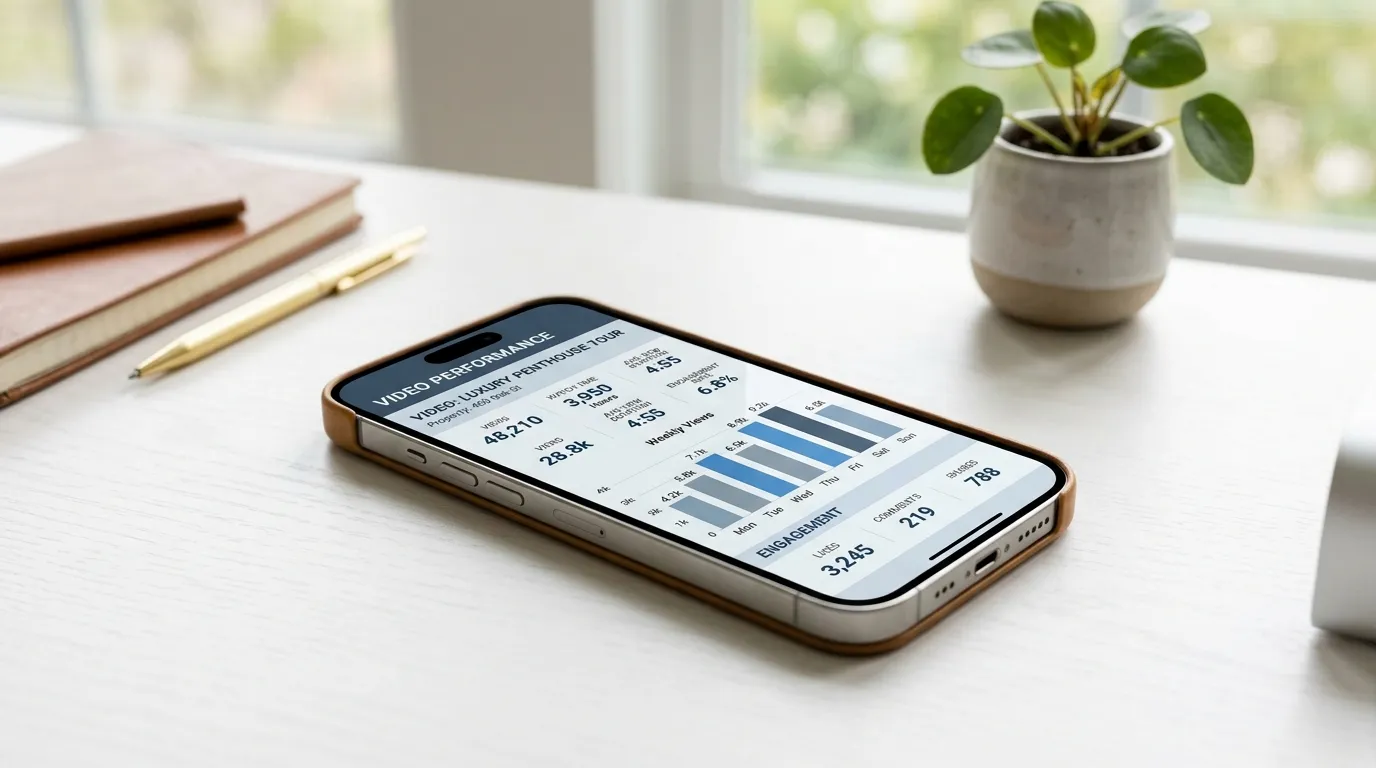
Email and Website Video Performance
Video does not just work on social media. It supercharges the marketing channels you already use every day, from listing emails to your personal website.
28. Emails containing video see a 300% increase in click-through rates. If you send a listing announcement email to your database with a video thumbnail that links to the property walkthrough, three times as many recipients will click compared to a text-and-photo email. For an agent with a 2,000-person email list, that could mean the difference between 40 clicks and 120 clicks on a single send. More clicks, more showings, more offers. (HubSpot, 2024)
29. Landing pages with video convert 86% better than pages without video. Your single-property website, your IDX listing page, your team landing page, your "About Me" page. Wherever you want someone to take an action (schedule a showing, request a consultation, sign up for updates), adding video dramatically improves the odds they actually do it. (EyeView Digital, 2024)
30. 52% of consumers say watching product videos makes them more confident in purchase decisions. Swap "product" for "property" and the logic holds perfectly. Buyers who watch a video walkthrough of a home feel more confident scheduling an in-person showing because they already know the layout, the finishes, the light quality, and the neighborhood feel. They show up pre-sold rather than skeptical. (Invodo/Wyzowl, 2024)
The AI Video Revolution: Speed, Cost, and Accessibility in 2026
The biggest shift in real estate video statistics over the past two years is not about engagement rates or buyer preferences. It is about access. AI has made professional video production available to every agent at every price point, not just teams with $5,000 monthly marketing budgets and a videographer on retainer.
31. AI-generated listing videos cost 90-95% less than traditional videographer-produced videos. A professional videographer charges $300-800 per listing, depending on your market and the scope of the shoot. An AI listing video platform runs $30-50 per month for unlimited listings. For an agent doing 2+ listings per month, the annual savings are in the thousands. And unlike a videographer, the AI does not cancel because of weather, charge extra for weekend shoots, or need a week for editing. (Industry pricing analysis, 2025)
32. AI video tools reduce listing video production time from 3-7 days to under 5 minutes. Three to seven days is the typical turnaround from scheduling a videographer through receiving the final edited file (scheduling, shooting, editing, client review, revisions). With tools like Reel-E, you upload your listing photos, pick a music track, and have a finished video with cinematic motion effects and beat-synced transitions before your morning coffee gets cold. That speed advantage means your video goes live on MLS, Zillow, and social media the same day the listing launches, not three days after. (Reel-E platform data, 2026)
33. 54% of consumers actively want to see more video content from the brands and professionals they work with. The demand is there. The audience is asking for it. The barrier used to be production cost and complexity. AI has removed both. The only remaining barrier is the decision to start. (HubSpot, 2024)
What These 33 Real Estate Video Statistics Mean for Your Business
If you are building a marketing plan, preparing a listing presentation, or trying to convince your broker to invest in video tools for the team, here is the executive summary of everything above:
- Listings with video get 403% more inquiries and sell for up to 6% more. That is your headline stat for any listing appointment. Put it on slide one.
- Only 26% of agents use video. You are not late. You are early. Three-quarters of your competition still is not doing this, which means the agents who start now have a genuine first-mover advantage in most markets.
- Short-form video has the highest ROI of any social media content format. You do not need a 10-minute documentary. A 30-second clip of the kitchen, primary suite, and backyard is enough to outperform every static photo post you have ever made.
- 73% of sellers prefer agents who use video. This is not about technology adoption. This is about winning listings. Sellers are choosing agents based partly on their marketing capabilities, and video is what they are looking for.
- AI has collapsed the cost and time barriers. What used to cost $500 and take a week now costs $30 and takes 2 minutes. The excuses that were valid three years ago are gone.
The data tells a clear story: agents who adopt video gain a compounding advantage. More listings, faster sales, higher prices, stronger social media presence, and a growing library of content that keeps working long after the property closes. The stats also show that most agents still have not made the switch, which means the window of competitive advantage is wide open.
If you have been on the fence, pick one listing and try it. See what the numbers look like. Ready to start? Try Reel-E free and generate your first AI real estate video from your existing listing photos in under two minutes. For more strategies on using video to grow your business, see our complete real estate video marketing strategy guide.
Methodology and Sources
Every statistic in this article is sourced from published industry research or platform-reported data. We prioritize primary sources and, where multiple studies report similar but slightly different figures, we use the more conservative number. Here are the primary sources referenced:
- National Association of Realtors (NAR): 2024 Profile of Home Buyers and Sellers, 2024 Technology Survey, 2024 Real Estate in a Digital Age Report
- Wyzowl: 2025 State of Video Marketing Report (surveyed 967 marketing professionals and consumers)
- HubSpot: 2024 State of Marketing Report, 2024 Video Marketing Guide
- Zillow: 2024 Consumer Housing Trends Report
- Realtor.com / Redfin / Domain Group: Platform-specific listing performance data and market analysis
- Social platform research: Published analytics from Instagram, LinkedIn, TikTok (Data.ai), and Facebook (Emplifi/Socialbakers)
- Industry analysis: RISMedia/T3 Sixty agent technology adoption data, EyeView Digital landing page research, Optinmonster lead generation benchmarks
This article is updated regularly as new research is published. For a deeper analysis of whether video listings actually sell faster with a breakdown of the specific mechanisms, see our companion piece: Do Video Listings Sell Faster? For a practical guide to building your video marketing toolkit, start there.