If hiring a real estate videographer for every listing feels too expensive, too slow, or too annoying to coordinate, your instincts are probably correct. The good news is that the alternative is no longer a sad slideshow with elevator music.
The best alternative today is a workflow that uses the assets you already have, creates AI listing video fast, and gives you enough quality to market every property instead of reserving video for the rare listings that get special treatment.
What makes a good alternative
A real alternative has to preserve the benefits agents actually want from a videographer: visual polish, speed to launch, and more visibility for the listing. If it only saves money but makes the output forgettable, it is not a real alternative. It is just a downgrade.
That is why the best alternatives are the ones that reuse existing listing photos, preserve a sense of movement and pacing, and create multiple final outputs for different channels. The workflow has to solve distribution, not just creation.
The strongest alternative for most agents
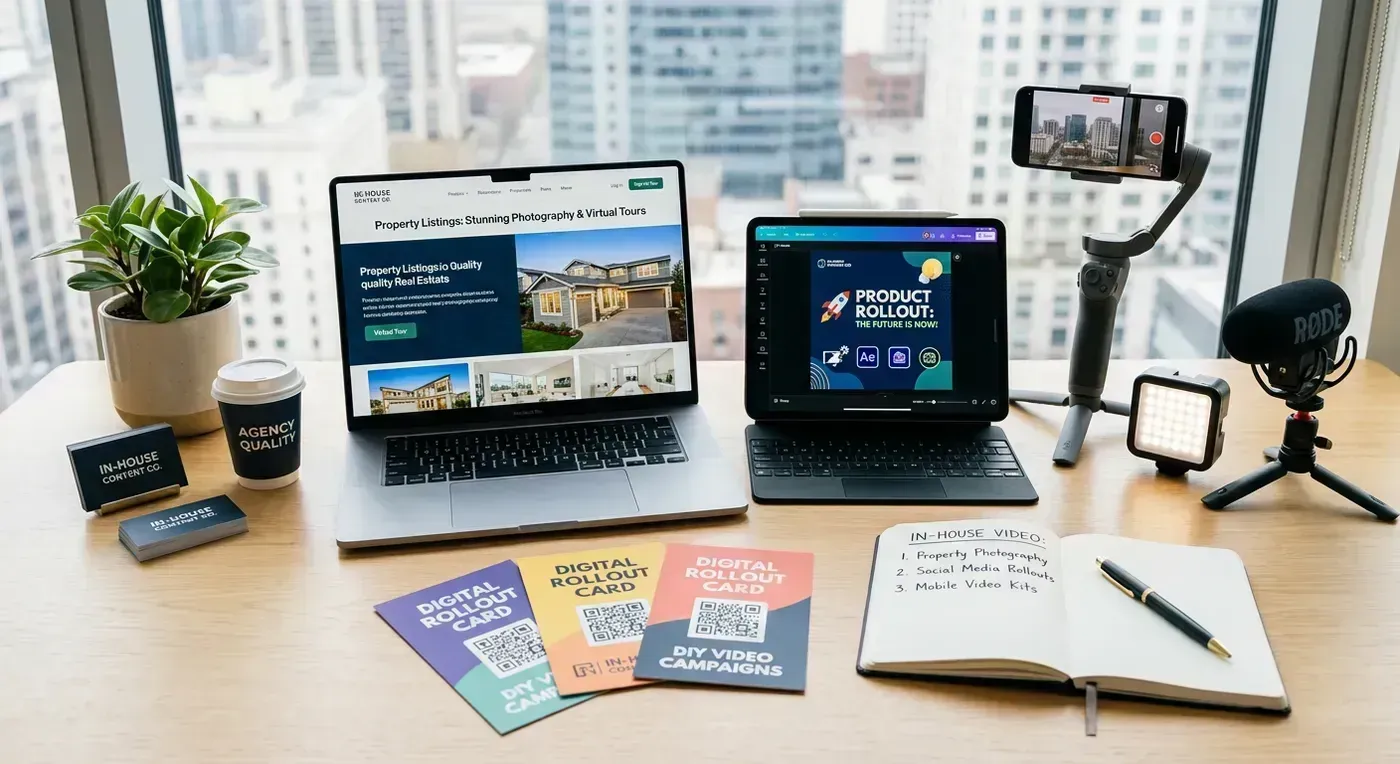
For most agents, the strongest alternative is software that turns listing photos into finished video assets. That is especially true if the team already gets professional photography and the missing piece is motion, pacing, and distribution rather than raw image capture.
This is exactly where AI real estate video fits. The photo set is already paid for. The AI workflow turns that set into a branded version, an unbranded version, and social-ready formats without requiring another shoot or edit queue.
| Alternative | Best for | Main limitation |
|---|---|---|
| AI video from listing photos | Most everyday listings | Depends on having a decent photo set |
| Hybrid phone capture plus software | Agents who want occasional custom talking-head moments | Still requires on-site recording discipline |
| Template video editor | Hands-on marketers who like editing | Takes longer and usually scales worse |
| Local freelance videographer only for hero listings | Premium inventory | Still not practical as the default |
Why the template-editor route usually disappoints
A template editor can feel like the cheap answer, but it often fails the real test: will you use it consistently on every listing? Many agents will not. Editing still takes time, and time is usually the thing that disappeared in the first place.
This is why a true alternative needs more automation than a traditional editor gives you. If the workflow still depends on opening a timeline, trimming clips, rearranging scenes, and exporting multiple versions manually, you have mostly recreated the original problem with a slightly cheaper logo in the corner.
When a hybrid approach is smarter
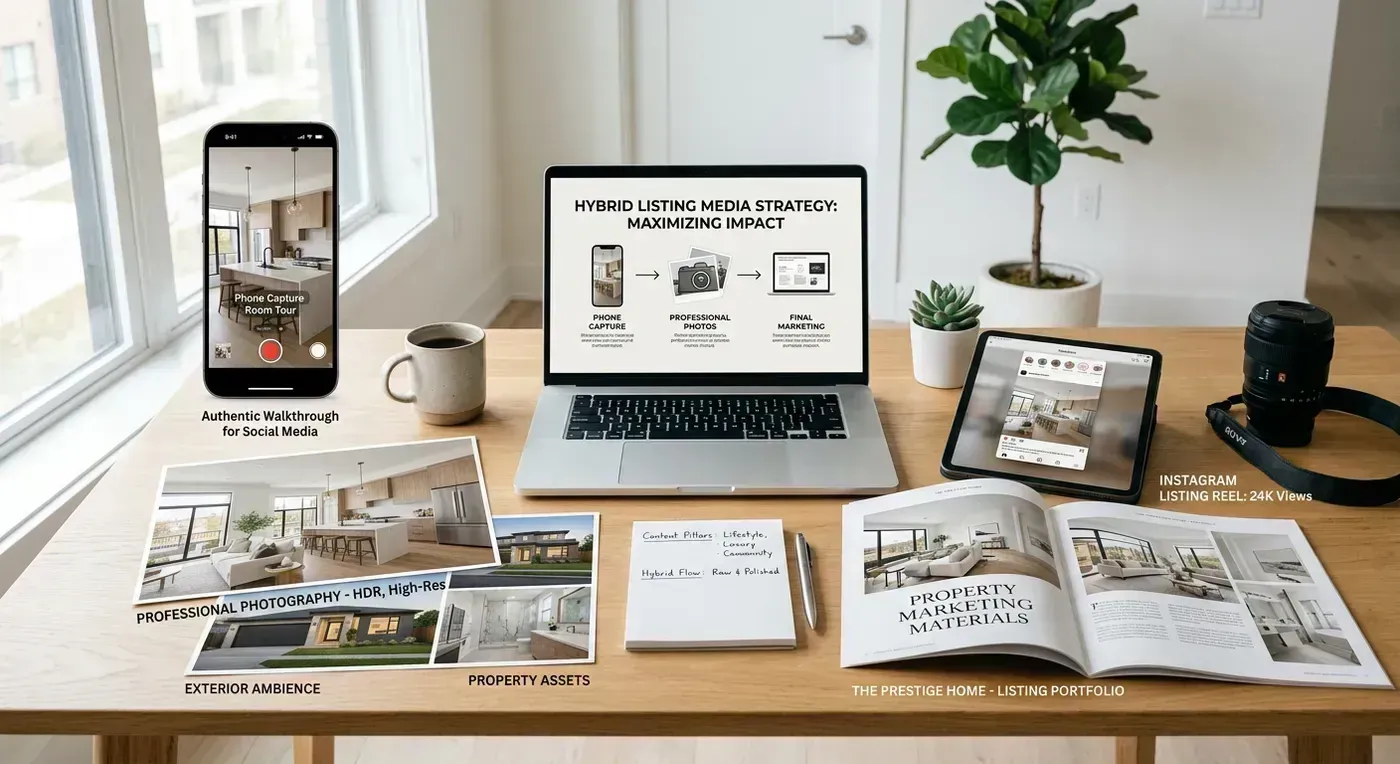
A hybrid approach makes sense when you want a little more personality without paying for full custom production. For example, an agent might record a quick intro or neighborhood clip on a phone, then let software handle the listing visuals and final format production. That can be a strong compromise.
It is also a good bridge for teams moving away from a service-heavy model. The baseline becomes software, while the occasional extra capture moment becomes optional. That is a much healthier system than defaulting to full custom work out of habit.
How to choose the right alternative
Ask three questions. Can this workflow cover nearly every listing? Can it produce the formats I need for MLS, property sites, and social? And can the team execute it without heroic effort? If the answer is yes, you have a real alternative. If the answer is maybe, you probably just found a prettier bottleneck.
For a useful companion read, compare this with whether you need a videographer at all and video services vs video maker software. Together they give you the full decision tree.
The best alternative is the one you will actually use across the whole listing pipeline, not the one that sounds the most impressive in a demo. If you want the video side of the workflow to stop eating your afternoon, start a Reel-E project and turn one listing shoot into multiple finished video assets.
Why the old alternatives felt weak and the current ones do not
For years, the alternative to hiring a videographer was mostly depressing. You either built a clumsy slideshow, spent half a day in a timeline editor, or just skipped video entirely and told yourself the photos were enough. That is why many agents still assume the alternative category is inherently low quality. They are remembering the wrong era.
What changed is not just that AI arrived. What changed is that photo-based video workflows got much better at pacing, motion, and multi-format output. The alternative no longer has to look like compromise made visible. It can look like a sensible, scalable system that gets strong media onto more listings with much less friction.
This is an important distinction because agents do not actually need a symbolic substitute for a videographer. They need a result. They need a finished asset that helps the property launch well, reaches buyers in more places, and does not require another operational production cycle. The minute the alternative achieves that, the conversation stops being philosophical and starts being very practical.
How the main alternatives rank in the real world
If the goal is broad listing coverage, AI video from listing photos is the strongest default for most agents. It reuses an asset set they already pay for and turns it into something much more distributable. A hybrid phone-plus-software approach is usually the second-best option, especially for agents who want a little more personality in the campaign. Template editors come after that. They can work, but the manual effort usually makes them less reliable as a default system.
Freelancers still belong on the list, but mostly as a selective premium option, not as the day-to-day answer. The best alternative to hiring a videographer for every listing is almost never 'hire a slightly cheaper videographer more often.' That is not innovation. That is just a slower route to the same budget headache.
The ranking matters because a lot of teams spend too much time comparing tools that solve the wrong problem. The default answer should be the option that scales cleanly across ordinary listings first. Then you can layer premium touches where they actually matter.
| Alternative | Best use | Why it wins or loses |
|---|---|---|
| AI video from listing photos | Default workflow for most listings | Fast, scalable, and built on assets you already have |
| Phone capture plus AI workflow | Teams that want light on-camera personality | Strong compromise, but requires consistent capture habits |
| Template editor | Hands-on marketers who enjoy editing | Usually too manual to become the default |
| Occasional freelance videographer | High-end or special-case launches | Still useful, but not the most scalable baseline |
The strongest default is usually photo-to-video
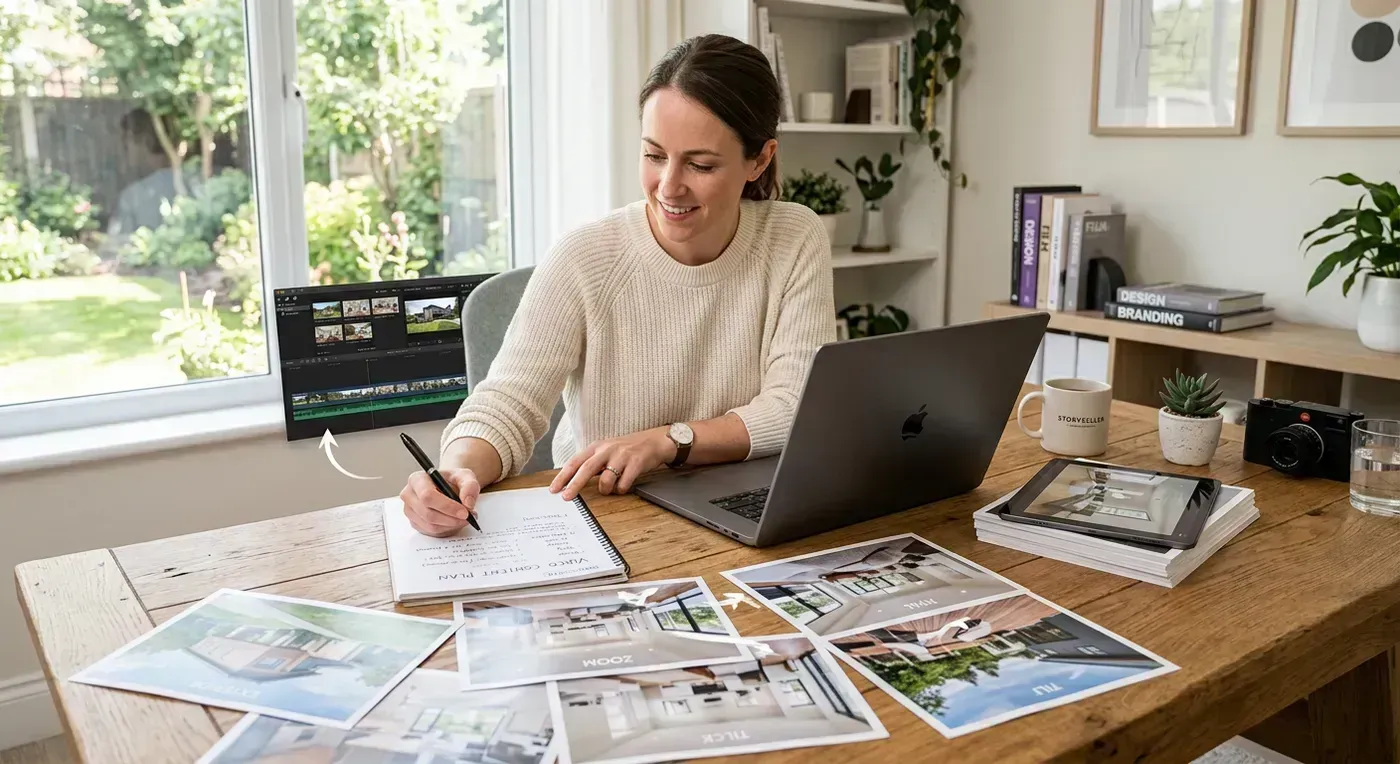
Most agents already buy professional photography. That means the most logical alternative starts from the asset set that already exists. You are not trying to recreate a production studio. You are trying to extract more value from a strong photo shoot. That is what makes photo-to-video workflows such a strong default. The spend is already sunk. The opportunity is in turning that existing shoot into more finished media.
This is also why the default alternative needs to create more than one output. If the system only gives you one horizontal video and nothing else, you still end up patching the rest of the campaign together by hand. A stronger option creates the listing video, the unbranded version, and the social-ready formats so the same project can actually support how real estate marketing works now.
In other words, the best alternative is not just cheaper production. It is better asset economics. One photo set. Multiple usable outputs. Less waiting. Less rework. More listings covered. That is a much stronger answer than trying to force every property through a custom-production gate it does not need.
Phone capture plus software is underrated when used carefully
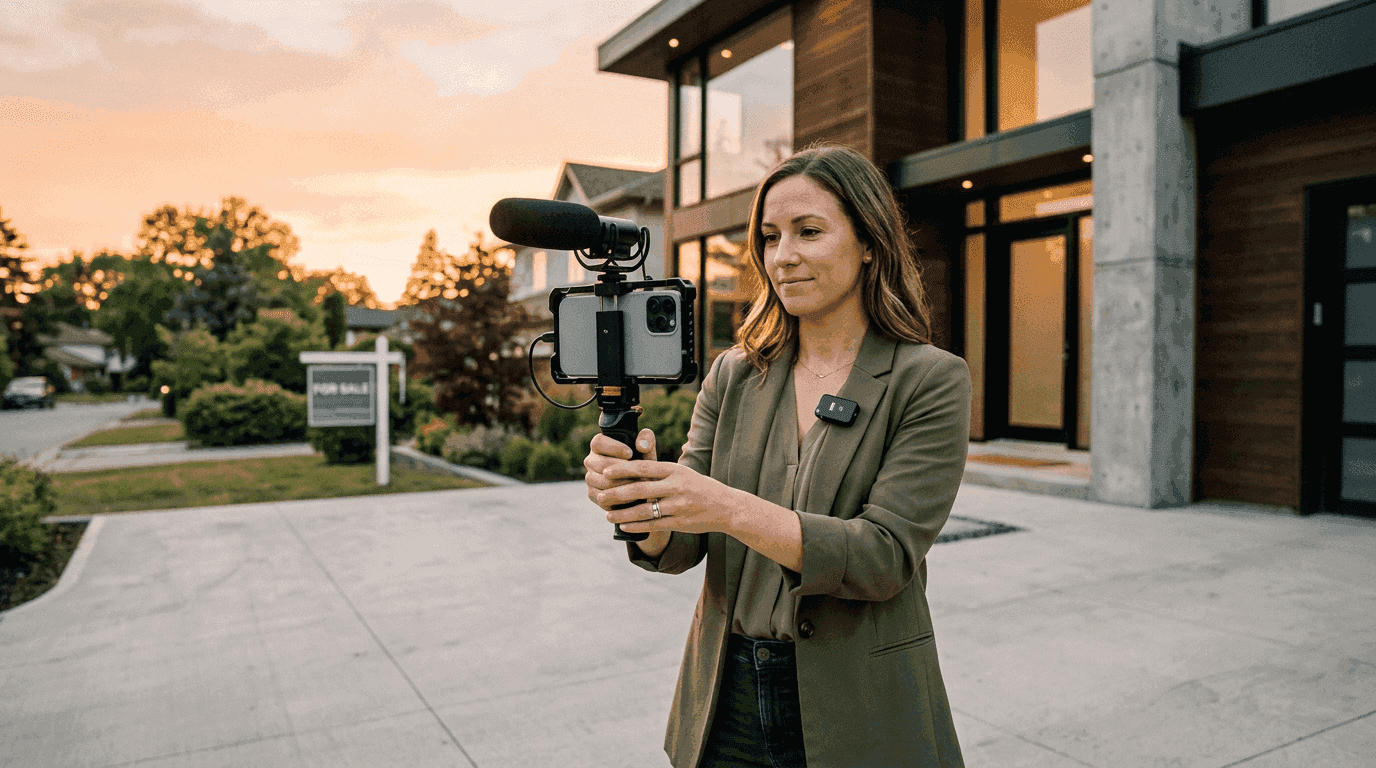
A lot of agents treat phone capture as either a full replacement for professional media or as something too amateurish to mention. Both views are wrong. Phone capture works well when it handles the human layer and the software handles the heavier media assembly. A quick agent intro, a neighborhood moment, or a simple walk-and-talk clip can add personality without requiring the whole campaign to become a DIY editing project.
The key is restraint. The phone clip should add context, not carry the whole listing. Let the professional photography and the AI video system do the structural work. Use the phone for the bit that feels hardest to outsource: your voice, your face, or a local detail that matters. That hybrid model often gives agents the personality they want without putting them back into a time-consuming manual workflow.
It is also one of the easiest transitional systems for teams moving away from full videographer dependence. The baseline gets lighter and more repeatable, while the human element stays available when it genuinely helps. That is a far healthier compromise than either going full DIY or full outsourced production on everything.
Why template editors usually become a trap
Template editors are seductive because they look cheap and flexible. In practice, they often become the software version of buying exercise equipment you swear you will use daily. The issue is not capability. The issue is consistency. If creating the finished asset still requires opening a timeline, making creative choices, exporting multiple formats, and handling all the fiddly parts manually, a lot of listings will quietly miss video again.
This is the central test. Would a normal Tuesday version of you use this workflow on the fifth listing of the month when the photographer is late, the seller wants an update, and you still have two price opinions to prepare? If the honest answer is no, it is not the best alternative. It is a tool you admire in calmer moments.
That is why AI-first alternatives keep outperforming template editors as a baseline. They reduce the number of manual decisions required to get something good enough to market. That matters more than theoretical creative freedom on listings that were never going to get handcrafted edits in the first place.
How to choose the right alternative by listing tier
Tier the inventory. Standard listings should get the fast, repeatable AI workflow by default. Mid-tier listings may get the same workflow plus a little extra phone capture or stronger campaign coordination. Premium listings can justify a hybrid or custom production layer if the economics and the seller expectations support it. The mistake is making the highest-effort tier the implied default for the whole business.
This tiering logic protects both quality and sanity. It makes sure no listing is ignored just because the custom workflow was too expensive, while still leaving room for premium effort where it counts. Teams that skip this step often end up with the worst of both worlds: too much money spent on a few listings and too little media on the rest.
If you want the broader decision tree, pair this with whether you need a videographer and our services-versus-software guide. Those two pieces help you define the tiers without guesswork.
How to explain the alternative to sellers without making it sound like a downgrade
Do not pitch the alternative as the cheaper option. Pitch it as the standard media system. Sellers are generally reassured by confidence and clarity, not by hearing that you found a discount workaround. Explain that the goal is to launch the home quickly with strong visuals across MLS, social, and property-site channels, and that the workflow is designed to do that on every listing.
Then explain where premium production still belongs. This is not about pretending all homes need the same treatment. It is about showing that your baseline is already strong and your upgrade path is intentional. That is a much better conversation than making the seller think custom video is the only serious choice and then quietly hoping the budget conversation goes your way.
Confidence really is the whole game here. If you sound embarrassed about the baseline, the seller will be skeptical. If you sound like you have a disciplined system built for visibility and speed, the seller usually accepts that much more readily. People trust structure. They get nervous around improvisation.
What a rollout week looks like when the alternative is actually working
On Monday, the photo set is approved and the listing angle is chosen. On Tuesday, the video is generated and the copy gets finalized around the same positioning. On Wednesday, the property page, MLS, and email all go live together. On Thursday, social variants are published. On Friday, the team reviews performance and cleans up anything that needs a second pass. That is what a usable alternative creates: rhythm.
Notice what is missing from that schedule. There is no fragile dependency on a custom vendor timeline for every ordinary property. There is no panic because the unbranded version is still pending. There is no resigned acceptance that video will show up eventually if the stars align. The workflow becomes calmer because the system is calmer.
That is why the best alternative is not a novelty. It is an operating model. Once that clicks, the question stops being whether you miss the old way. The question becomes why you tolerated so much friction for so long.
When you should still call a videographer
Call a videographer when the listing genuinely deserves a more cinematic treatment, when on-location storytelling matters, or when the campaign itself is part of the pitch for winning similar listings in the future. That is still a real use case. Some homes deserve a bigger stage. Some brands want a signature piece. That is fine.
The founder-grade move is not pretending those cases do not exist. It is containing them. Use premium production where it creates real upside. Use the alternative for the broad base of listings where the bigger problem is coverage, timing, and operational repeatability. That split is what keeps the business sharp.
Most agents do not need to choose between artistry and efficiency forever. They need a sane default and a clear exception policy. Once they have that, the whole conversation around videographers becomes much less emotional and much more useful.
How to train the team so the new default actually sticks
A better alternative only works if the team uses it by default. That means writing the playbook down. Define what assets are required before launch, who owns the photo-to-video handoff, when the copy gets finalized, and how the social variants get approved. If the workflow lives only inside one smart person's head, it is not a system yet. It is a dependency.
The easiest training approach is to show one clean example, one checklist, and one deadline rhythm. People do not need a philosophical lecture about AI. They need to know what happens after the photographer uploads the files. Keep the standard simple enough that a coordinator, an agent, or a founder can all follow it without asking for divine intervention.
This is where a lot of teams fail. They buy the tool, do one strong launch, and then assume the habit will maintain itself. It will not. Defaults have to be reinforced. Otherwise the business drifts back toward old behavior the moment the week gets crowded.
What to review after the first thirty listings
After thirty listings, the team should have clear answers. Did more properties get video? Did launch times improve? Did sellers feel like the marketing quality stayed high? Did anyone actually miss the old service-heavy routine on the ordinary homes? This is the point where the alternative either proves itself or gets exposed as another clever idea that sounded better than it operated.
Review the misses too. Which listings still should have had premium treatment? Which ones were perfectly fine on the new baseline? Did the hybrid phone-capture moments help or just create more coordination work? The answers matter because the best alternative is not static. It gets refined as the team sees more inventory and more outcomes.
The good news is that most teams find the same thing. Once the workflow is stable, they do not miss custom production nearly as often as they thought they would. What they do notice is how much calmer the pipeline feels when video becomes standard instead of exceptional.
Speed matters almost as much as polish
A surprisingly good video that ships on time is usually more valuable than a theoretically better one that misses the launch window. That is not an argument against quality. It is an argument for respecting how listing marketing actually works. Attention is front-loaded. The first wave matters. The alternative earns its place when it helps the property show up strongly during that first wave instead of after the moment has already passed.
This is why the best alternative is usually the one that feels operationally boring in the best way. The team knows when it will be ready, what formats it will cover, and how it connects to the rest of the campaign. Predictability is not glamorous, but it is one of the reasons it wins.
Most agents do not need a cheaper videographer. They need a more usable system. That is the real opportunity.
The best alternative is the one that lets video become normal inside your workflow instead of a special event that requires budget therapy every week.
Once that shift happens, the pipeline gets calmer, the coverage gets broader, and the business stops treating video like a luxury event.