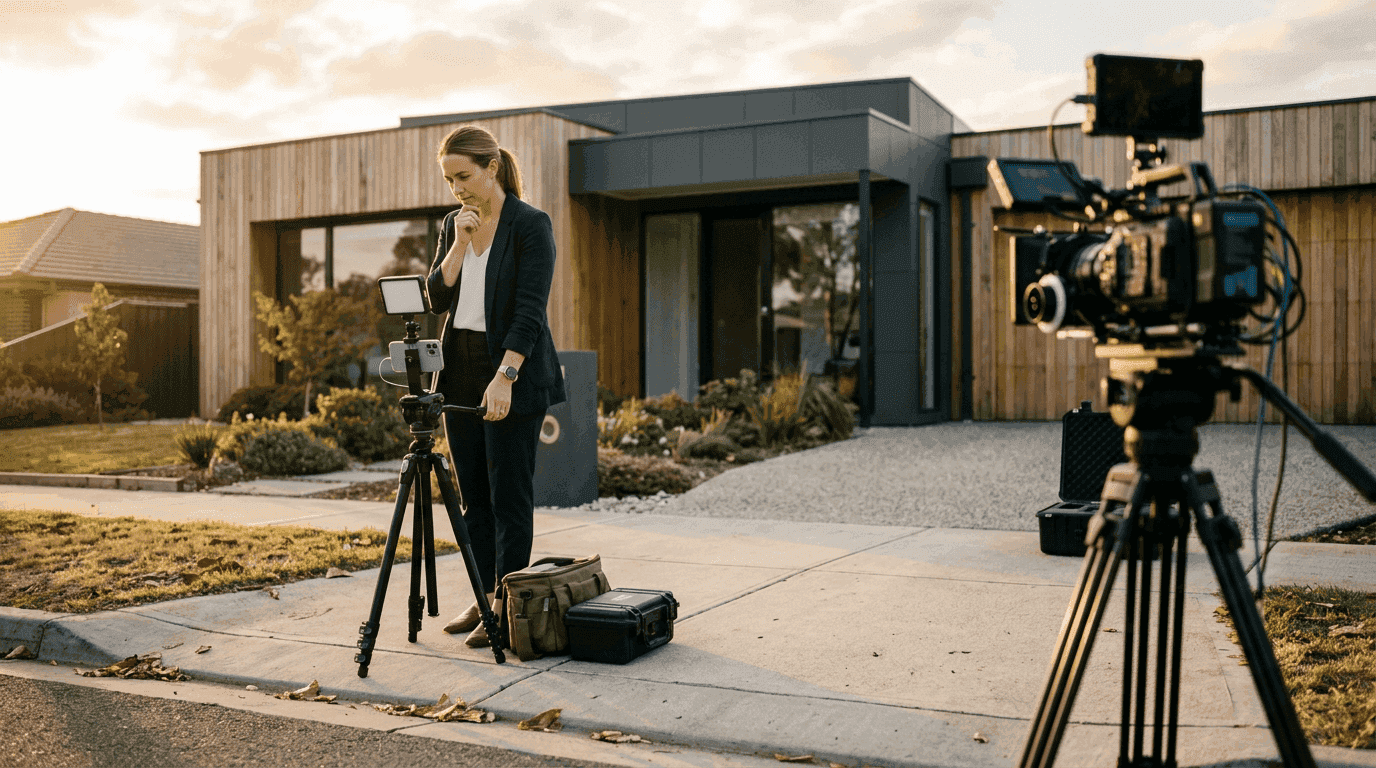
The honest answer is no, you do not need a real estate videographer for every listing. You need a video strategy for every listing. Those are different things.
Agents ask this question like it is a referendum on quality. It is not. It is a workflow question. The right decision depends on inventory, timing, budget, and whether the listing truly benefits from custom production or simply needs a good video asset in circulation.
What a videographer is actually for
A videographer is best when the listing needs a custom story. That usually means a special home, a special setting, or a marketing angle that goes beyond showing the rooms cleanly and persuasively. If the property needs drone sequencing, neighborhood texture, custom pacing, or an in-person walkthrough that would feel silly to fake, that is a real use case.
What a videographer is not for is covering average inventory by default because the team has not built a scalable system. That is the expensive version of avoiding a process problem.
- Luxury or distinctive architecture
- Properties with strong lifestyle or neighborhood storytelling value
- Campaign launches where custom creative is the point

What most listings actually need
Most listings need coverage, speed, and consistency. They need a video asset that can live on a property site, get sliced into social clips, and reinforce the same positioning as the rest of the campaign. They do not need the marketing equivalent of a film festival submission.
That is why AI listing video workflows are such a strong fit for everyday inventory. If you already have the photos, an AI listing video workflow can create the asset agents skip most often because they assume video still means another shoot and another invoice.
The hybrid answer is usually the right answer
This is where the market is actually heading. Use AI or software-based video creation for the majority of listings. Bring in a real estate videographer when the property or campaign clearly justifies it. That keeps the floor high without blowing up the budget.
The hybrid model also makes it easier to manage expectations. Agents no longer have to decide between premium production and nothing at all. They can reserve premium production for the handful of listings where it makes strategic sense.
| Listing type | Best default | Why |
|---|---|---|
| Average resale listing | AI or software video | Faster, cheaper, easier to repeat |
| Rental or property management inventory | AI or software video | Volume and speed matter most |
| Luxury or landmark home | Hybrid or videographer-led | Custom storytelling may pay off |
| New development campaign | Hybrid | Need both baseline scale and selected flagship assets |
Questions to ask before hiring a videographer
Before you hire a videographer, ask whether the listing will actually benefit from custom motion, whether the turnaround still fits the launch timeline, and whether the budget would be better spent creating video for more properties instead of one. That last question usually makes people uncomfortable because it is the one that exposes the trade-off.
If you want a harder cost breakdown, pair this with our videographer cost vs AI guide. The answer becomes much clearer when you stop treating custom production as the only respectable option.
Where Reel-E fits
Reel-E fits the listings that need strong, repeatable video coverage without the coordination tax of a custom shoot. If your real problem is that video is not happening often enough, the answer is usually not another vendor. It is a workflow that turns your existing listing package into finished media fast.
If you want a practical starting point, compare whether video listings sell faster with the tools agents use to get those videos out the door. That tends to answer both the strategy question and the execution question in one shot.
Use custom production when it is strategically justified. Use a scalable system for everything else. If you want the video side of the workflow to stop eating your afternoon, start a Reel-E project and turn one listing shoot into multiple finished video assets.
A decision tree based on listing type, not guilt
A lot of agents ask whether they need a real estate videographer as if there is one respectable answer. There is not. The useful question is what kind of listing you are trying to market and what level of storytelling it actually deserves. Everyday resale inventory usually needs strong, reliable coverage. Luxury homes, architecturally distinct properties, and campaign-style launches may deserve more customized execution. The listing type should drive the workflow, not anxiety about looking cheap.
This matters because guilt is a terrible planning system. Teams often default to the videographer conversation because they do not want to feel like they are downgrading the property. In practice, the downgrade happens when the listing gets no video at all because the custom route felt too heavy to use this time. Consistent, strong video coverage from a scalable process is often better marketing than premium intent followed by no execution.
A simple decision tree helps. If the listing is ordinary inventory and the main need is clean marketing coverage, software should usually be the baseline. If the listing is premium and the custom story materially helps sell it, hybrid or full videographer support can make sense. If the team cannot explain why the property deserves the expensive path, that is usually the answer right there.
| Listing type | Default answer | Why |
|---|---|---|
| Average resale listing | Usually no dedicated videographer | Coverage and speed matter more than bespoke production |
| Rental or property management inventory | Usually no | The workflow has to scale cleanly |
| Luxury or architecturally distinct home | Sometimes yes | The property may truly benefit from custom storytelling |
| Flagship brand campaign | Often yes or hybrid | The media itself is part of the brand message |
What sellers actually notice
Sellers usually notice three things. Did the listing look strong? Did it launch quickly? And did the marketing feel complete? They do not always care how artisanal the workflow was behind the scenes. They care whether the home looked like it got serious attention. That is why a scalable video workflow often satisfies the real seller expectation better than a premium process that only happens when the stars align.
The marketing industry sometimes confuses visible effort with visible value. A seller is not automatically happier because the team paid for a more handcrafted process. They are happier when the listing package feels complete and competitive. If the videographer route means that only some listings get video while others get delayed or skipped, the business is protecting the feeling of premium while undermining the consistency clients actually experience.
That is why the seller conversation should focus on outcome. Strong media coverage. Faster launch. The right mix of property-site, social, and unbranded use. If a dedicated videographer improves those outcomes on a specific listing, great. If a software or hybrid workflow improves them more consistently across the business, that is also a premium decision, even if it sounds less romantic at first.
Where phone capture and hybrid workflows fit
The answer is not always videographer or software with nothing in between. Hybrid workflows can be useful when the listing would benefit from one human moment without needing a full custom production day. That might be a short on-camera intro, a quick neighborhood clip, or a simple property walkthrough recorded on a phone and then paired with a software-based listing media workflow.
What makes hybrid useful is that it gives the team a little more personality without dragging the full videographer cost structure into every listing. The trap is letting hybrid become sloppy custom work. If the phone capture is ad hoc, poorly lit, or difficult to repeat, the workflow quickly loses the operational simplicity that made it attractive in the first place. Hybrid should be selective and systemized, not heroic.
For many teams, the best hybrid policy is simple. Baseline listing media comes from a repeatable software workflow. Human capture is added only when it contributes something specific the listing would otherwise miss. That is a much healthier system than pretending every property needs cinematic treatment or pretending software must work alone in every situation.
Timing matters more than people admit
One reason videographer decisions go wrong is that teams evaluate quality and ignore timing. A custom asset delivered late can lose to a slightly less bespoke asset delivered early and used everywhere. Launch windows matter. The first social push matters. The first follow-up email matters. The property-site hero asset matters. A delayed premium workflow can quietly become worse marketing than a faster, cleaner baseline system.
This is especially true for busy agents and coordinators. If the custom route creates more waiting, more approval cycles, and more scheduling friction, the business starts treating video like an occasional special event instead of a default marketing asset. That behavioral shift is important. Once the team loses trust in the timeline, it starts opting out before the conversation even happens.
So when you ask whether you need a videographer, include a timing question. Can this path support the way we actually launch listings? If the answer is no, the workflow is too premium for the role you are trying to force it to play. Good marketing needs quality, but it also needs timing discipline. One without the other produces a very polished bottleneck.
A policy is better than a debate
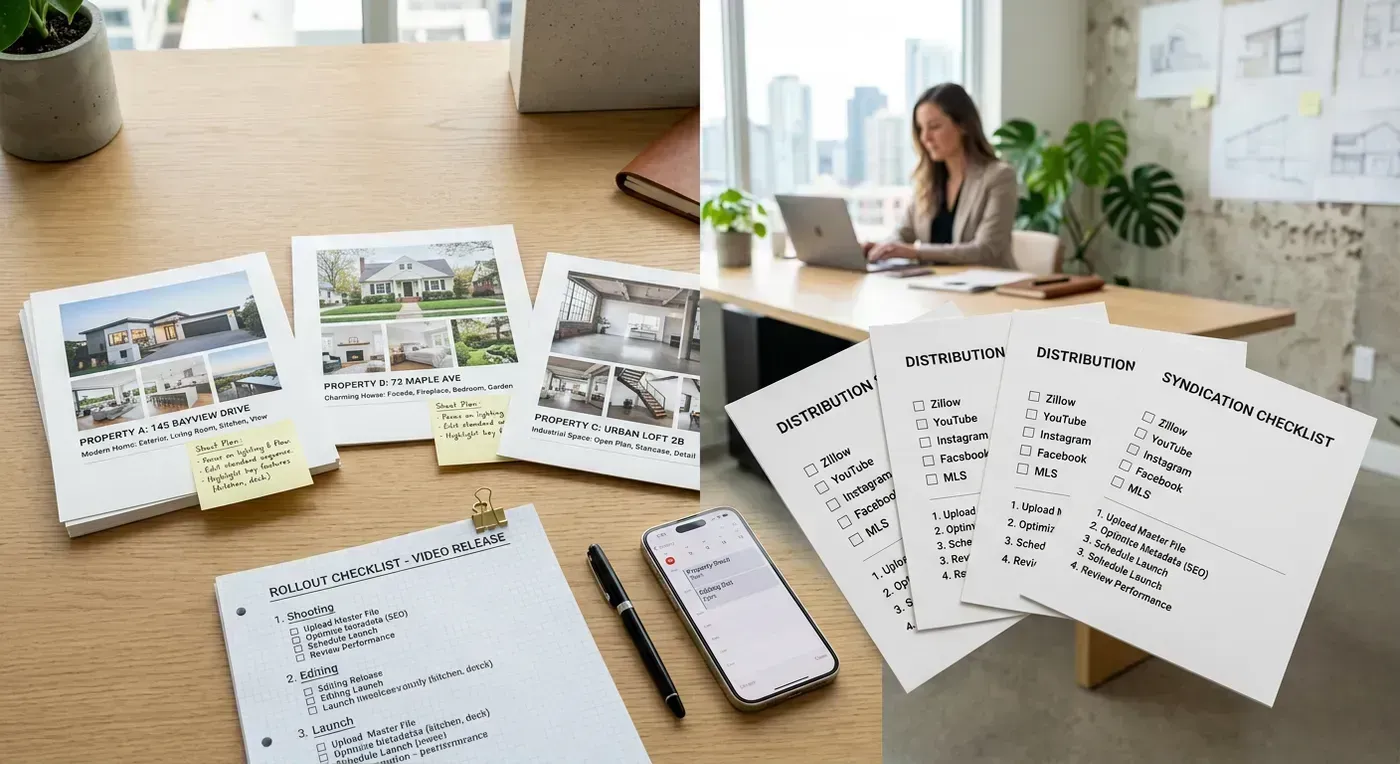
The cleanest teams do not relitigate this decision on every listing. They write a policy. Standard listings use the repeatable system. Premium properties can trigger a hybrid review. True hero listings can justify full videographer support if there is a real distribution plan behind it. That policy makes expectations clearer for agents, coordinators, and sellers at the same time.
Without a policy, the decision tends to get made by mood. One agent likes custom work. Another wants to save money. A coordinator is stuck in the middle trying to guess what counts as special enough. That is how workflows drift and budgets swell. A policy turns the decision into infrastructure instead of opinion.
It also makes performance easier to review. Once the team defines what the default path is, it can measure how many listings received video, how fast those assets shipped, and whether the premium path was actually used where it paid off. That kind of clarity is much healthier than a constant low-grade argument about what professional marketing is supposed to look like.
- Define the baseline video workflow for standard listings.
- Define the triggers for hybrid treatment.
- Define the narrow cases that justify a dedicated videographer.
- Review quarterly whether those rules still match the listing mix.
How to answer the question in one sentence
If you need a simple rule, here it is: you do not need a videographer for every listing. You need a videographer for the listings that genuinely benefit from custom storytelling. Everything else should be covered by the strongest scalable system you can trust. That answer is less dramatic than the all-or-nothing debate, but it is much more useful for an actual business.
That is also why cost versus AI math and services versus software comparisons belong next to this question. Together they show that the issue is not whether videographers are good. The issue is whether custom production is the right default operating model for the inventory you really handle.
For most agents, the answer is no. Not because quality does not matter. Because coverage, speed, and consistency matter too, and modern listing marketing punishes businesses that can only produce strong media when everything lines up perfectly.
How listing volume changes the answer
Volume changes everything. An agent with one flagship listing this month can justify a more custom process than a team pushing ten or fifteen properties through the same window. Once volume rises, even a good custom workflow starts straining because every extra listing requires more scheduling, more approvals, and more patient coordination. That does not mean the custom work got worse. It means the business changed shape around it.
This is the point where many teams keep asking a quality question when they should be asking a capacity question. Can our current process support the number of listings we are actually trying to market? If the answer is no, then the right fix is usually not motivational effort. It is a more scalable workflow. Capacity problems disguised as craftsmanship debates are common in real estate marketing because custom work sounds noble and operational limits sound boring.
The useful rule is that the more listings you need to cover consistently, the less practical it becomes to make a dedicated videographer the default path. Premium custom work can still exist. It just should not be the entire operating system if the team wants broad video coverage across the pipeline.
What buyers and sellers see versus what the team feels
Teams often feel the complexity of the workflow much more than buyers or sellers do. Buyers do not watch a property video and ask whether the production required a custom shoot or a strong software-driven process. They notice whether the asset helps them understand the property, whether it feels polished, and whether it appears where they expect it to appear. Sellers notice whether their listing feels complete and well supported. Those are outcome questions, not vendor questions.
This matters because some of the resistance to scalable video workflows is internal ego masquerading as quality control. The team likes the idea of custom craft, which is fair. But clients do not reward process romance by itself. They reward results. If the more scalable workflow produces strong media faster and more consistently, then the outside experience is improved even if the internal feeling is less cinematic.
That does not mean buyers and sellers are unsophisticated. It means they care about what the media does for the listing, not about which production mythology the team used to create it. Businesses get healthier once they accept that distinction. It frees them to choose the workflow that produces stronger market behavior instead of the workflow that sounds most premium in the office.

What to review every quarter
Quarterly review is the discipline that keeps this decision honest. Look at how many listings received video, how quickly those assets shipped, how often custom production was chosen, and whether the premium path actually correlated with better listing fit. Also look at which properties got no video because the process felt too expensive, too slow, or too annoying. Those missing assets tell the truth just as clearly as the polished hero campaigns do.
The review should also ask whether the workflow is helping the brand promise. If the business wants to say it markets homes aggressively and completely, then video cannot remain a selective luxury except in truly unusual circumstances. A quarter-end audit makes that contradiction visible. It forces the team to compare what it says it does with what the workflow actually allowed it to do.
That is why this question belongs inside a broader operating review, not inside a one-time emotional debate. Businesses evolve. Inventory mix changes. Agent count changes. Seller expectations change. The videographer decision should change with those realities instead of staying frozen because somebody once liked how a premium edit looked on a special listing two years ago.
Questions to ask before you hire one this week
Before you hire a videographer for the next listing, ask what specific storytelling problem the property has that a scalable workflow would not solve. If the answer is vague, that is a warning sign. Good reasons are things like unusual architecture, strong neighborhood lifestyle value, or a flagship campaign where custom production is part of the actual strategy. Bad reasons are things like it feels more premium or we have always done it this way. Those are habits, not marketing logic.
Next, ask what the team expects the finished asset to do. Is it mainly for the property site? Does it need an unbranded version? Will it be sliced into social content? Will the seller expect it to be part of the launch-day story? The more versions and use cases you need, the more important it becomes to choose a workflow that can support variants cleanly. A lot of videographer decisions fall apart because the team approved a beautiful main asset and forgot that modern distribution requires more than a single hero video.
Finally, ask whether the listing can wait for the full custom cycle without losing momentum. If the launch window is tight, the answer may matter more than the creative upside. The right workflow is the one that fits the listing and the calendar. A beautiful asset that arrives after the best attention window is still an operational miss, no matter how flattering the drone pass looked in the preview file.
- What problem does custom production solve on this specific listing?
- Which output variants does the campaign actually require?
- Can the timeline support the custom route without weakening launch timing?
- Would a scalable workflow deliver a strong enough result with much better coverage?
If you need a rule simple enough to remember on a busy Tuesday: hire a videographer for the listings that deserve a custom story. Use a scalable system for the listings that deserve to be marketed well and quickly.
That is not a compromise answer. It is usually the most professional answer available.
It protects quality where quality really matters and protects coverage everywhere else.
That balance is what most real estate businesses actually need.
That is the smarter default now.
FAQ
Do I need to hire a videographer for every listing?
No. Most listings benefit more from consistent video coverage than from custom production. AI and hybrid workflows usually cover the pipeline more effectively.
What listings still benefit from a videographer?
Luxury homes, architecturally distinctive properties, and campaign-style launches that truly need custom storytelling are the best candidates.
Can AI listing video replace a videographer for normal homes?
Usually yes. Normal homes often need broad, timely coverage more than they need custom cinematic production.
What is the best workflow for agents who need video on every listing?
A software-first or hybrid workflow is usually the best fit because it makes video repeatable without forcing premium production onto every property.
Should rental and property management listings use a videographer?
Most of the time, no. Those categories usually benefit more from scalable, lower-friction video output than from full custom shoots.