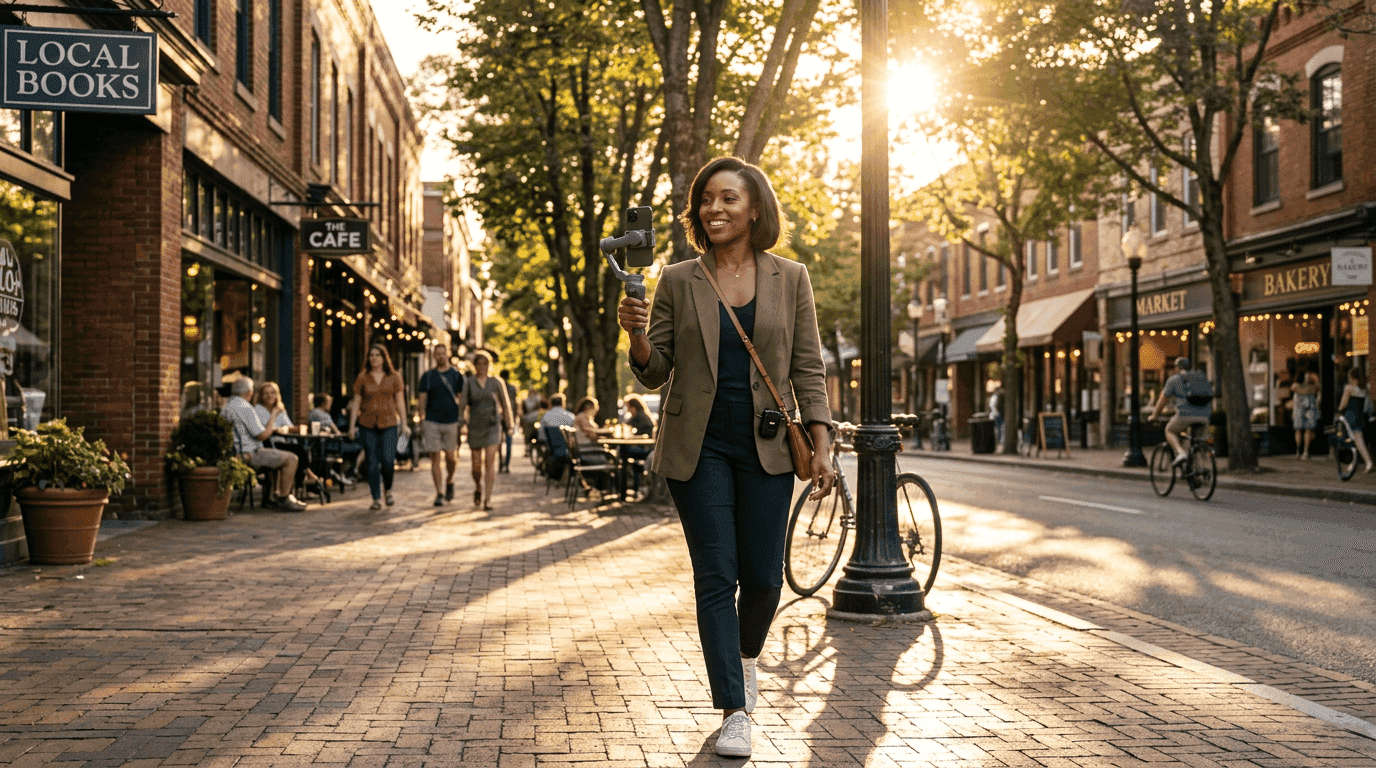
Here is an uncomfortable truth about listing videos: every single one has an expiration date. The house sells (hopefully), the listing comes down, and your video becomes irrelevant. You put in the work, maybe paid a videographer, posted it everywhere, and now it just sits in your camera roll collecting digital dust.
Neighborhood videos do not expire. A well-made neighborhood spotlight from 2024 is still attracting buyers in 2026 because neighborhoods do not go under contract. The parks are still there. The coffee shops are still there. The school district has not sold to a higher bidder. This is the single most underrated content strategy in real estate, and most agents completely ignore it because they are too busy filming the next listing tour.
I get it. Listing tours feel productive. You can point to a specific property and say "I marketed that." But neighborhood content is the slow-burn investment that compounds over time. One agent I talked to traces 30% of her buyer leads to three neighborhood YouTube videos she filmed 18 months ago. That is not a typo. Three videos, 18 months of leads.
This guide covers everything: why neighborhood content works, what to include, how to film it, and how to distribute it so it actually generates business. Whether you are creating full YouTube guides or quick Instagram Reels, the framework is the same. And if you think you need a film crew to pull this off, I have some good news about what a smartphone and two hours can accomplish.
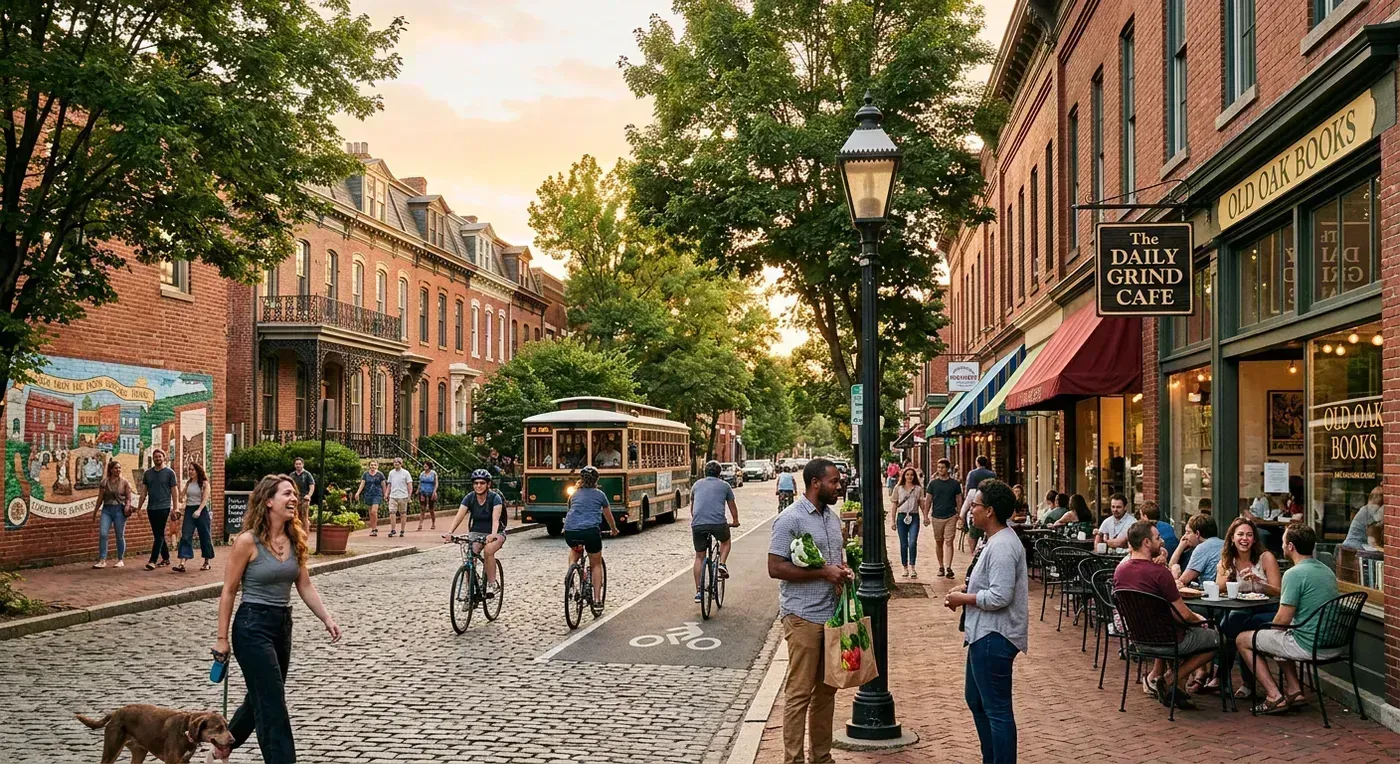
Why Neighborhood Videos Outperform Listing Tours for Lead Generation
I am not saying listing tours are bad. They are essential. But they have a structural limitation that neighborhood videos do not: scarcity of shelf life. Let me explain why community content generates better long-term ROI.
The Evergreen Advantage
A listing video is relevant for 30 to 90 days (the average days-on-market in most US markets). A neighborhood video is relevant for 2 to 5 years before it needs a refresh. That is 10x to 60x the useful lifespan. When you calculate cost per lead over time, neighborhood content wins by a landslide.
Consider this: a listing tour video that costs you $200 (your time plus tools) and generates 3 leads over 60 days costs about $67 per lead. A neighborhood video that costs you $200 and generates 2 leads per month for 24 months costs about $4 per lead. Even if those numbers are roughly directional rather than exact, the magnitude of difference is real.
The Relocation Pipeline
According to the National Association of Realtors, 14% of homebuyers in 2025 relocated from a different metro area. These buyers have a specific research pattern: they Google the city, then the neighborhoods, then the schools, then the homes. If your neighborhood video shows up when they search "best neighborhoods in [your city]" or "what is it like to live in [your area]," you have inserted yourself into their journey before any other agent.
Relocating buyers are also highly motivated. They are not casually browsing Zillow on a Sunday afternoon. They have a job start date, a family to move, and a timeline. When they find an agent who clearly knows the area (because they watched your seven-minute deep dive on the neighborhood), they reach out. These are warm leads, not cold ones. For more strategies on attracting relocating buyers and other high-intent leads, check out our guide on how to find clients in real estate.
The Local Expert Positioning
There is a concept in marketing called "authority transfer." When someone watches your detailed neighborhood video, you are not just showing them a place. You are proving that you know it deeply. That authority transfers to every other interaction: they assume you know the market data, the listing inventory, the negotiation dynamics, and the closing process. One video, positioned correctly, does the work of 20 conversations.
Compare that to a listing tour where your expertise is implicit at best. "This agent has a nice listing" is a weaker trust signal than "This agent knows every street corner, coffee shop, and school in my target neighborhood."
The 6 Types of Neighborhood Videos That Generate Leads
Not all neighborhood content is created equal. Some formats attract buyers. Some attract sellers. Some do both. Here is the breakdown.
1. The Comprehensive Area Guide (YouTube/Website)
Length: 4 to 8 minutes
Best platform: YouTube + website embed
Lead type: Relocating buyers
This is your flagship neighborhood content. A thorough walkthrough of the area covering housing styles, price ranges, schools, dining, shopping, parks, commute times, and overall vibe. Think of it as the video version of the "moving to [city]" article that every local blog writes, except you are putting your face and your expertise on it.
Structure it like this:
- Hook (0 to 15 seconds): "Thinking about moving to [neighborhood]? Here is what 10 years of selling homes here has taught me."
- Overview and location (15 to 60 seconds): Where the neighborhood sits relative to the city. Major roads, highways, distance to downtown.
- Housing and prices (60 to 180 seconds): What types of homes are here (ranch, colonial, modern, condos), typical price ranges, lot sizes, and whether inventory is tight or available.
- Schools (if applicable, 30 to 60 seconds): Elementary, middle, high school names and ratings. Mention if the school district is a major draw.
- Lifestyle (60 to 120 seconds): Restaurants, coffee shops, parks, trails, fitness, nightlife. The stuff that makes a neighborhood feel like home.
- Commute (30 to 45 seconds): Drive times to major employment centers. Public transit options if relevant.
- Honest assessment (30 to 60 seconds): What you love about the area AND what might not be for everyone. This is where you build credibility.
- CTA (15 seconds): "If you are considering [neighborhood], I would love to help. Link in the description."
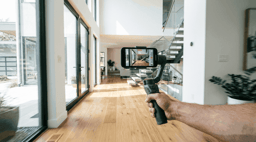
Here is the kind of polished property content that pairs perfectly with a neighborhood guide. Imagine this quality applied to community landmarks and local hotspots:
2. The Quick Neighborhood Vibe Check (Instagram/TikTok)
Length: 30 to 60 seconds
Best platform: Instagram Reels, TikTok
Lead type: Local and relocating buyers
This is the snackable version. Walk through the neighborhood and hit the highlights in under a minute. "Living in [neighborhood]: the 60-second honest truth." Show the best street, the favorite local spot, the park where everyone walks their dog, and one thing that surprises people about the area.
The key word is "honest." Do not make it a tourism commercial. Say "parking is terrible on weekends" and "the elementary school is ranked in the top 10 in the state" in the same video. Honesty is what makes people trust you enough to DM you.
3. The Local Business Spotlight (All Platforms)
Length: 20 to 45 seconds
Best platform: Instagram Reels, TikTok, Facebook
Lead type: Local community (referral pipeline)
Feature one local business per video. The bakery that has been there for 30 years. The new fitness studio everyone is talking about. The family-owned hardware store that sponsors Little League. Interview the owner for 10 seconds, show the space, explain why it matters to the community.
This format is a referral machine. Tag the business. They share your video. Their followers are local people who live in or near the neighborhood. Some of those people will need to buy or sell a house at some point, and you are already in their awareness. I know one agent in Nashville who got three listing appointments in one quarter directly from local business owners she featured in her neighborhood content.
4. The Seasonal Neighborhood Update
Length: 30 to 90 seconds
Best platform: Instagram Reels, YouTube Shorts
Lead type: Both buyers and sellers
The same neighborhood looks different in April versus October. Film it in both seasons. "Spring in [neighborhood]" shows the blooming trees, the farmers market opening, the kids in the park. "Fall in [neighborhood]" shows the foliage, the holiday lights going up, the pumpkin patches nearby. Seasonal content gives you a reason to revisit the same area multiple times per year without feeling repetitive.
5. The "Day in the Life" Neighborhood Edition
Length: 45 to 90 seconds
Best platform: Instagram Reels, TikTok
Lead type: Relocating buyers, lifestyle-oriented buyers
Film a full day in the neighborhood as if you live there. Morning coffee at the local cafe. A jog through the park at 7 AM. Lunch at the farm-to-table spot. Afternoon at the community pool. Dinner at the outdoor patio restaurant on Main Street. Stitched together with a trending audio track, this format gives viewers a visceral sense of what daily life feels like in the area. That emotional connection is what drives someone to say "I want to live there."
6. The Data-Driven Market Snapshot
Length: 30 to 60 seconds
Best platform: Instagram, YouTube, LinkedIn
Lead type: Sellers and investors
Combine neighborhood footage with market data overlays. "Homes in [neighborhood] are selling in an average of 12 days. Median price is up 7% year-over-year. Here is what that means if you are thinking about selling." This format attracts sellers who want to know what their home is worth and investors evaluating areas. It also positions you as the data-savvy agent, not just the friendly tour guide.

What to Include in Every Neighborhood Video (The Content Checklist)
I have reviewed hundreds of neighborhood videos from agents across the country. The ones that generate leads consistently include these elements. The ones that get crickets usually skip three or four of them.
Must-Have Elements
- Your face and name. This is not optional. If you never appear on camera, the video could have been made by anyone. Your face builds the personal connection. Your name and brokerage build the professional trust. You do not need to be on camera the entire time, but the intro and outro should feature you.
- Specific place names. Do not say "there are great restaurants nearby." Say "Lucia's on Oak Street has the best wood-fired pizza in the city, and Tanaka Ramen two blocks over has a line out the door every Friday." Specificity proves you actually know the area.
- Honest pros and cons. Mention the train noise. Mention the limited parking. Mention that the closest grocery store is a 10-minute drive. This is the single most important trust-building tactic in neighborhood content. Buyers know every area has downsides, and an agent who hides them feels untrustworthy. An agent who acknowledges them feels honest. Guess which one gets the DM.
- Price context. "Homes here range from $425K to $680K" gives buyers an immediate filter. If they are a $300K buyer, they know this is not their neighborhood. If they are a $500K buyer, they know it is. This saves everyone time and ensures the leads you get are qualified.
- A clear call to action. "If you are thinking about [neighborhood], I sell homes here every month. Reach out and I will send you the current listings." Direct. Specific. Actionable.
Nice-to-Have Elements
- Drone footage. An aerial establishing shot of the neighborhood immediately signals production quality. If you do not have a drone, a high-angle shot from a hillside or parking garage works.
- Resident testimonials. A 10-second clip of an actual resident saying "We moved here three years ago and the community is incredible" carries more weight than anything you could say yourself.
- Historical context. "This neighborhood was developed in the 1960s as..." gives the area a story. Stories make places memorable.
- Walking score and transit info. For urban and suburban neighborhoods, walkability data is important to a growing segment of buyers.
- Event footage. If the neighborhood has a Fourth of July parade, a farmers market, or a holiday light festival, film it. Community events are the strongest proof of a thriving neighborhood.
How to Film a Neighborhood Video in One Morning
Here is the exact process I would follow to film a comprehensive neighborhood video in about three hours. This assumes you know the area well enough to speak about it without a script (if you do not know it that well, you probably should not be making a video about it yet).
Pre-Production (30 Minutes at Home)
- Pick your 5 to 7 stops. Map them out so you are driving in a logical loop, not zigzagging across town. Include: one restaurant, one coffee shop, one park or outdoor space, one school (if family-oriented area), one "hidden gem" that locals love, the main commercial street, and one residential street that best represents the neighborhood's character.
- Write your bullet points. Not a script. Bullet points. Three to five things you want to say at each stop. Scripts make you sound stiff on camera. Bullets keep you on track while sounding natural.
- Check the weather and light. Overcast is actually great for outdoor filming (soft, even light, no harsh shadows). Golden hour is ideal for beauty shots. Avoid filming between 11 AM and 2 PM when the sun is directly overhead.
Filming (2 Hours on Location)
- Start with the establishing shot. Stand at the best vantage point of the neighborhood and do your intro. "Hey, I am [name] with [brokerage], and today I am walking you through [neighborhood], one of the most [adjective] areas in [city]." Film this 3 times so you have options in editing.
- B-roll at each stop. At every location, film 15 to 30 seconds of "B-roll" (footage of the place without you talking). The coffee shop's interior. Kids playing in the park. The streetscape with trees and sidewalks. This footage fills gaps in your edit and makes the final video feel cinematic rather than vlog-style.
- Talking segments. At 2 to 3 of your stops, stand in frame and share your thoughts. Keep each talking segment under 45 seconds. You can always trim in editing, but it is hard to stretch something that feels too short.
- Drive-by footage. Mount your phone on the dashboard (suction cup mount, $10) and drive down the prettiest residential streets. This footage shows the housing stock, the tree cover, the lot sizes, and the overall feel of the neighborhood without narration.
- The "surprise" moment. Every great neighborhood video has one moment that makes the viewer say "oh, I did not know that." Maybe it is a hidden garden behind a strip mall. Maybe it is the fact that the neighborhood has its own private beach access. Maybe it is that the elementary school was just renovated with a $12M bond. Find that moment and film it.
Post-Production (1 Hour)
If you filmed on your phone, you can edit on your phone. CapCut (free) handles everything you need: trimming clips, adding text overlays, inserting music, and basic color correction. For a more polished look, edit on a laptop with DaVinci Resolve (free) or Final Cut Pro.
Alternatively, if you have photos of neighborhood landmarks, parks, and streetscapes, you can create a polished video without filming at all. Upload your photos to Reel-E's video maker, and the AI generates cinematic camera motion from each still image. You get a professional-looking neighborhood showcase in minutes rather than hours.
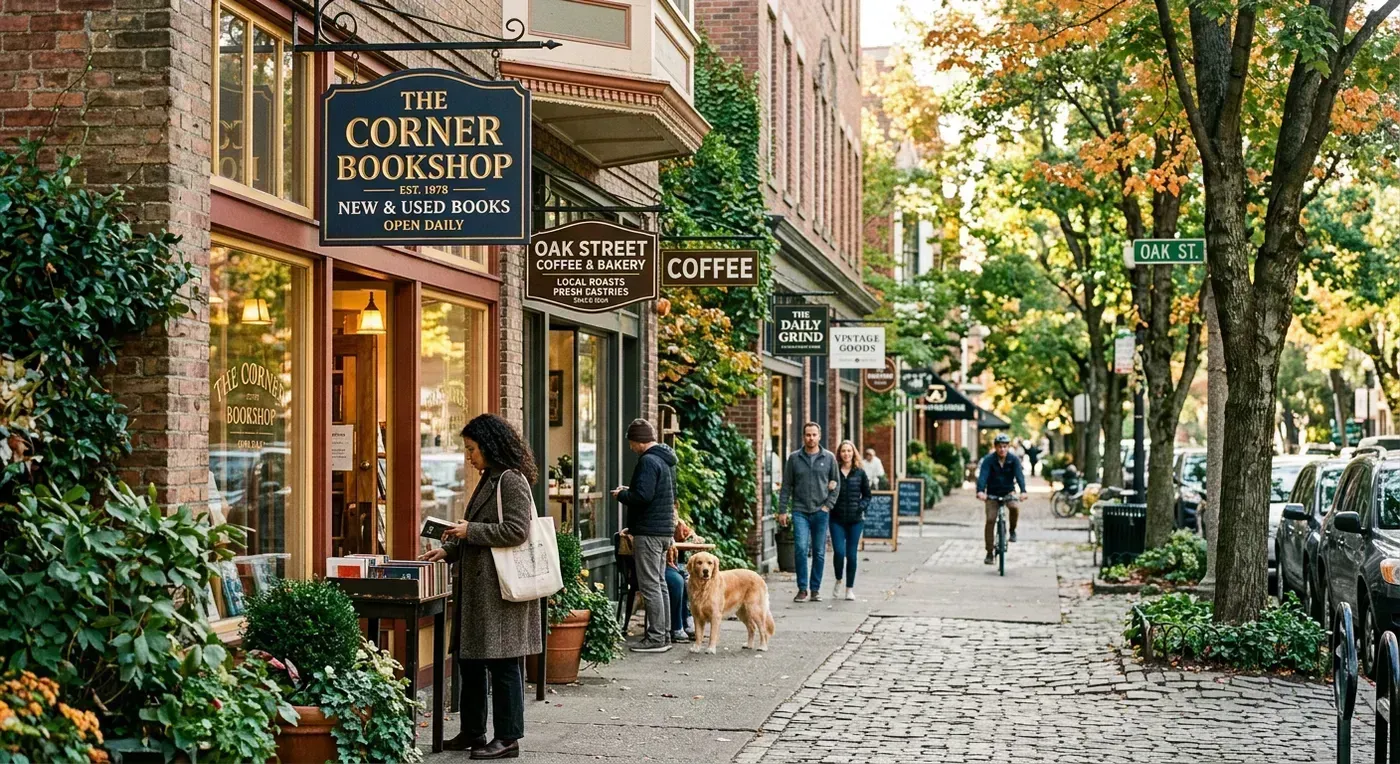
Distribution: Where to Post and How to Optimize
A neighborhood video sitting on your phone's camera roll generates exactly zero leads. Distribution is where the ROI happens. Here is the platform-by-platform strategy.
YouTube (Your Long-Term Lead Engine)
YouTube is the second-largest search engine in the world, and real estate neighborhood searches are growing year over year. This is where your comprehensive 4 to 8 minute guide lives.
Title formula: "Living in [Neighborhood], [City]: Pros, Cons, and Everything You Need to Know ([Year])"
Description optimization: Write 300+ words in the description. Include the neighborhood name, city, state, and surrounding area names. Mention schools by name. Mention major roads and highways. YouTube's algorithm reads descriptions to understand what the video is about, so be thorough.
Tags: "[Neighborhood] homes for sale," "living in [neighborhood]," "moving to [city]," "[neighborhood] real estate," "best neighborhoods in [city]."
Thumbnail: A bright, high-contrast image of the neighborhood with large text overlay: "Living in [Neighborhood]" and a smaller text element with a hook ("Is it worth it?" or "Honest guide").
YouTube neighborhood videos can generate leads for years. I know agents with videos from 2023 that still get 500+ views per month and produce 2 to 3 buyer leads monthly. The effort-to-return ratio is extraordinary.
Instagram Reels (Your Engagement Engine)
Take clips from your full-length YouTube video and create 30 to 60 second Reels. Each Reel should focus on one angle: "The best coffee in [neighborhood]," "What $500K gets you in [neighborhood]," or "3 things nobody tells you about living in [neighborhood]." This is where the quick vibe checks and local business spotlights shine.
Use 5 to 10 hashtags mixing broad reach (#realestate, #movingto[city]) with hyper-local tags (#[neighborhood]homes, #[neighborhood]realestate). Tag any businesses you feature. Post during peak engagement hours for your audience.
Your Website (Your Conversion Engine)
Embed your neighborhood videos on dedicated area guide pages on your website. These pages should include the video at the top, a written summary of the neighborhood below, current listings in the area, and a contact form. This combination of video content plus IDX listings plus lead capture is what converts passive viewers into active leads.
If you have neighborhood pages without video, you are leaving money on the table. Pages with embedded video have 80% higher average time-on-page than text-only pages, according to Wistia's benchmarks. More time on page means more engagement, which means more leads.
Facebook (Your Local Community Engine)
Post neighborhood videos to local Facebook groups (with permission from group admins). This is especially effective in suburban and rural markets where Facebook remains the dominant social platform for adults 35+. Frame it as helpful content, not advertising: "I put together a quick guide to [neighborhood] for anyone considering a move. Hope it is helpful!" Groups centered on the city, the neighborhood, or local parenting are all good targets.
Email (Your Nurture Engine)
Send neighborhood videos to your email list segmented by area interest. If someone inquired about homes in the east side of town six months ago, a new neighborhood video about an east side neighborhood is a perfect re-engagement touchpoint. These emails get opened because the content is genuinely useful, not just another "just listed" blast.
Advanced Strategy: The Neighborhood Video Series
Individual neighborhood videos are good. A structured series is significantly better. Here is how to think about building a neighborhood content library that compounds over time.
The "Best Neighborhoods In [City]" Hub
Create a master video (or blog post) that ranks and reviews 5 to 10 neighborhoods in your market. This page links to individual neighborhood deep-dives. The hub page targets the high-volume keyword ("best neighborhoods in [city]") while the individual videos target the long-tail variations ("living in [specific neighborhood]"). This interlinking structure is SEO gold and gives viewers multiple rabbit holes to fall into.
The Seasonal Rotation
Plan to revisit each neighborhood once per season. Spring content shows the area coming alive (blooming trees, outdoor dining, farmers market). Summer shows the pools, lakes, and outdoor events. Fall shows the foliage and back-to-school energy. Winter shows the holiday lights and cozy indoor spots. Four visits per year per neighborhood gives you 16 to 20 pieces of content annually from just 4 to 5 neighborhoods. That is a content calendar practically built for you.
The Comparison Format
"[Neighborhood A] vs. [Neighborhood B]: Which is Right for You?" This format is incredibly engaging because it creates a natural debate. People who live in one area will comment defending their neighborhood. People who are considering both areas will watch the whole thing. Comparison videos typically get 2x the comments of single-neighborhood videos because viewers have opinions and want to share them.
For a deeper look at how video content fits into your broader marketing strategy, see our complete guide on video marketing for real estate.
Real Examples: Neighborhood Content That Generated Leads
Theory is great. Results are better. Here are three real-world examples of agents who built meaningful business through neighborhood video content. Names and some details changed for privacy, but the strategies and outcomes are real.
Example 1: The YouTube Relocator Magnet
An agent in Raleigh, North Carolina created eight neighborhood guide videos over four months (about two per month). Each video was 5 to 7 minutes long, covering housing, schools, and lifestyle. Within 12 months, those videos had accumulated 45,000 total views and generated an estimated 40 to 50 buyer leads. She closed 7 transactions directly traceable to YouTube neighborhood content. Total video production cost: about $800 (her time plus basic equipment). Commission income from those 7 transactions: over $90,000.
The ROI is almost absurd. And the videos are still generating leads today, two years later. That is the power of evergreen content.
Example 2: The Instagram Community Builder
A newer agent in Denver focused exclusively on one neighborhood (RiNo). He posted three neighborhood Reels per week: a local business spotlight every Monday, a "hidden gem" every Wednesday, and a market data update every Friday. After six months, he had 4,200 local followers and was getting 5 to 8 DMs per week from people interested in buying or selling in RiNo. He went from zero closings to nine in his first year, almost entirely from Instagram.
His secret, if you can call it that, was specificity. He did not try to be the Denver agent. He tried to be THE RiNo agent. And it worked because when people in that neighborhood thought about real estate, they thought about the guy who posts about their neighborhood every single week.
Example 3: The Listing Presentation Differentiator
A veteran agent in Scottsdale started including neighborhood videos in her listing presentations. When pitching to sellers, she would show her neighborhood video for their area and say "This video has been viewed 8,000 times by people interested in your neighborhood. When I list your home, those viewers are my buyer pool." This positioning helped her win 4 listing appointments against competing agents who did not have neighborhood content. The videos were not just lead generators; they were credibility tools in face-to-face sales meetings.
Common Mistakes That Kill Neighborhood Videos
I have watched enough bad neighborhood videos to fill a semester of film school. Here are the mistakes that come up again and again.
- Reading from a script. Nothing kills authenticity faster than an agent clearly reading off a teleprompter or cue cards. Use bullet points, not scripts. Your natural speaking voice, with its pauses and imperfections, is 10x more trustworthy than a rehearsed delivery. If you sound like a flight attendant reading the safety instructions, start over.
- Filming everything from inside a car. Drive-by footage is useful for establishing shots, but if your entire video is shot through a windshield, it feels lazy. Get out of the car. Walk the streets. Stand in the park. Your viewers want to experience the neighborhood, not watch it go by at 25 miles per hour.
- No specific names or details. "There are great restaurants in the area" is worthless. "Mama Rosa's on 4th Street makes fresh pasta daily and has a patio that is perfect on summer evenings" paints a picture. Specificity is credibility.
- Overly promotional tone. A neighborhood video should feel like getting advice from a knowledgeable friend, not like watching a paid advertisement. The moment you sound like a commercial ("This AMAZING neighborhood has INCREDIBLE amenities!"), you lose trust. Dial back the superlatives. Say "I really like this area because..." instead of "This is the BEST neighborhood in the city!"
- Ignoring the audio. Wind noise, traffic noise, and echo in enclosed spaces make videos unwatchable. Use a clip-on lavalier mic ($20) for talking segments. If the ambient noise is too loud, film your talking segments elsewhere and layer them over B-roll footage in editing.
- No call to action. You just spent 5 minutes proving you are the local expert, and you end with "Thanks for watching"? End with a specific CTA: "If you are considering a move to [neighborhood], I help families buy and sell homes here every month. Drop a comment or DM me and I will send you the latest listings." You earned the right to ask for the business. Ask for it.
- Posting once and forgetting about it. One neighborhood video is a nice experiment. A consistent series is a lead generation system. Commit to one neighborhood video per month for six months before judging results. Compounding content strategies need time to work.
Pairing Neighborhood Content with Listing Videos
The most effective content strategy combines listing-specific videos with broader neighborhood content. Here is how they work together.
When you get a new listing, create the listing video (using Reel-E or whatever your preferred tool is). Then create or reshare a neighborhood video for that area. Post them together: "Just listed a stunning 4-bed in [neighborhood]. If you have not seen my guide to this area, here it is." The listing video drives immediate interest in the specific property. The neighborhood video provides context and attracts buyers who might not want that exact house but are interested in the area.
This pairing also helps with the algorithmic distribution. When you post about the same topic (a specific neighborhood) multiple times, platforms start associating your account with that topic and showing your content to people who have expressed interest in it. Over time, you become the algorithm's go-to recommendation for that area.
Think of listing tours as the bait and neighborhood content as the net. The listing tour hooks someone's attention with a specific property. The neighborhood content catches the broader audience of people interested in the area, including those who will need an agent three, six, or twelve months from now.
How to Measure Whether Your Neighborhood Content Is Working
Vanity metrics (views, likes) are fine for ego, but they do not pay the bills. Here is what to actually track.
Primary Metrics (Business Impact)
- Inbound messages referencing neighborhood content. When someone DMs you "I saw your video about [neighborhood] and I am interested in the area," that is a direct lead. Track these religiously. A simple spreadsheet works: date, platform, neighborhood referenced, lead status.
- Website area guide page visits. If you embed neighborhood videos on your website, track visits to those pages and form submissions. Google Analytics makes this straightforward.
- Listing appointments won where neighborhood content was cited. In your listing presentations, if the seller mentions your neighborhood videos or if you used them as a selling point, track that outcome.
Secondary Metrics (Growth Indicators)
- YouTube search impressions for neighborhood keywords. YouTube Studio shows you how often your videos appear in search results for specific queries. If impressions are growing month over month, your content is gaining traction.
- Watch time and completion rate. On YouTube, average watch time over 50% of the video length signals that viewers find the content valuable. On Instagram, completion rate above 40% for a 60-second Reel is solid.
- Subscriber/follower growth from neighborhood content. Track which videos drive the most new followers. These are people who want more of your content, which means they are in your audience for the long haul.
Getting Started This Week
You do not need a perfect plan, professional equipment, or a degree in cinematography. You need to pick a neighborhood, block three hours on your calendar, and start filming. Here is the minimum viable neighborhood video:
- Pick your strongest neighborhood. The one you know best, where you have the most sales, and where you could talk for 20 minutes without notes.
- Plan 5 stops. Your favorite restaurant, the best park, the main commercial strip, a representative residential street, and one hidden gem.
- Film for 90 minutes. Intro at the first stop, B-roll at each location, 2 to 3 talking segments, and drive-by footage of the prettiest streets.
- Edit and publish. Cut it into a 5-minute YouTube video and two 30-second Instagram Reels. Or upload your best photos of the area to Reel-E and generate a polished video in minutes.
- Optimize the YouTube description with neighborhood-specific keywords and your contact information.
That is it. Your first neighborhood video is done. Do it again next month with a different neighborhood. And again the month after that. In six months, you will have a library of community content that works for you 24/7, attracting relocating buyers, impressing listing clients, and positioning you as the agent who knows these neighborhoods better than anyone.
The agents who dominate hyperlocal search in 2026 and beyond are the ones who start building their content library now. Every month you wait is a month your competitors have to claim that territory first. Your neighborhoods are not going to film themselves.