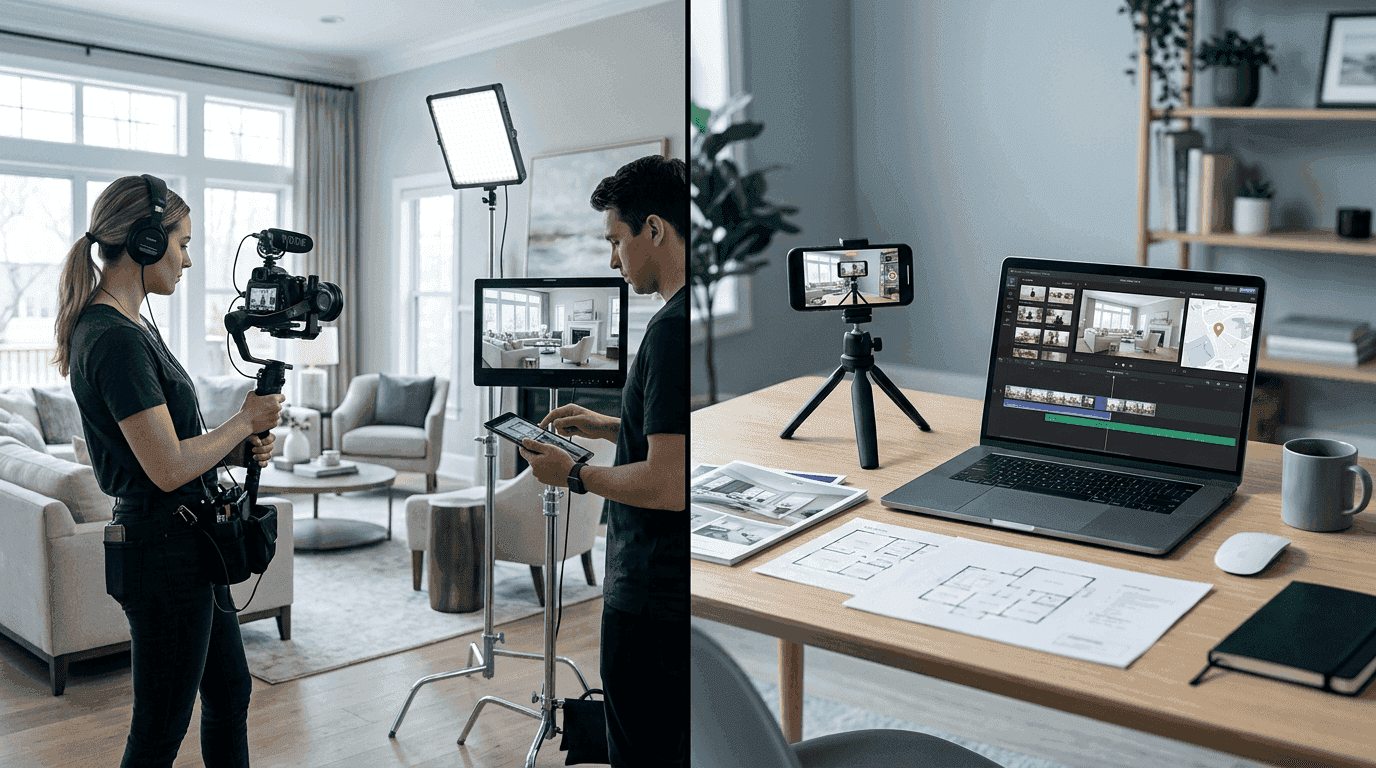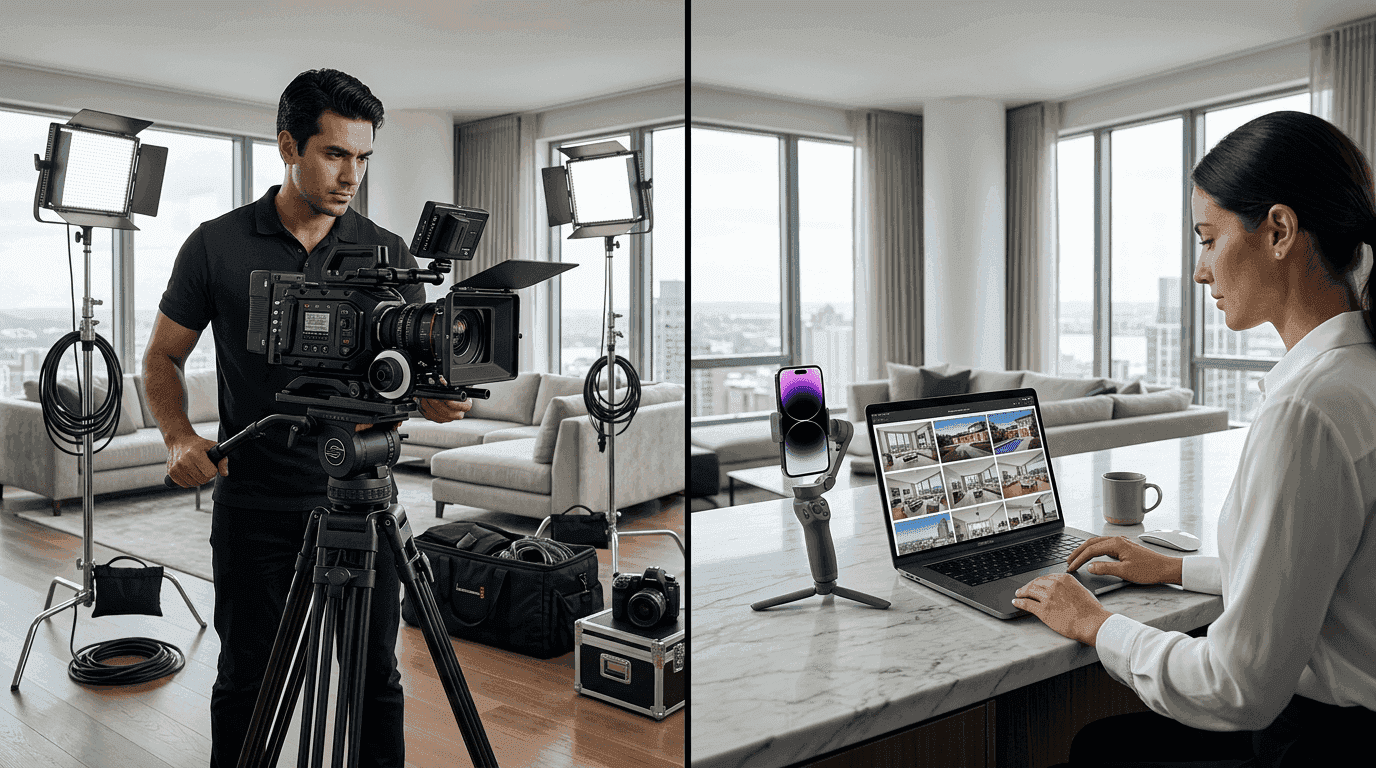
A real estate videographer is not expensive because they are greedy. They are expensive because custom production is labor. That is exactly why the math changes once you need video on every listing.
If you only market one or two premium listings a month, a traditional videographer can still make sense. But once you want repeatable coverage, real estate videographer cost stops being a line item and starts behaving like a tax on your pipeline. That is the point where AI real estate video stops feeling experimental and starts feeling obvious.
What a videographer really costs
Agents often quote the shoot fee and ignore the rest. The real price includes planning, travel, shoot time, editing, revisions, delivery, and the opportunity cost of waiting. A $450 package is rarely just $450 once you count the hours around it. In many markets, the true cost per property ends up closer to the number you were trying not to say out loud.
That does not mean videographers are a bad investment. It means they are a premium service, and premium services should be matched to premium use cases. The mistake is assuming every listing needs a handcrafted mini-documentary when most listings really need fast, strong coverage.
| Scenario | Typical cost shape | Hidden cost |
|---|---|---|
| Basic videographer package | $300 to $700 per listing | Scheduling and edit turnaround |
| Premium or luxury package | $800 to $1,500+ | Drone, revisions, and longer approvals |
| AI listing video workflow | Software subscription or low marginal cost | Requires clean source photos |
| Hybrid workflow | Occasional custom spend plus AI baseline | Needs discipline on when to upgrade |

Where the ROI flips
The ROI flips when your need for consistency becomes more valuable than the extra polish of a custom shoot. That usually happens before agents admit it. If you market ten to fifteen listings a month, or if you want video variants for social and unbranded use on top of the main asset, custom production becomes hard to justify as the default.
This is the strongest case for a real estate video maker. Instead of paying per listing, you create a repeatable workflow that works across the whole pipeline. The polish may be different from a bespoke luxury shoot, but the coverage is dramatically better. Coverage wins more often than ego does.
- If you need video on nearly every listing, AI usually wins on total spend and turnaround.
- If you need social-ready vertical cuts in addition to a main horizontal video, AI compounds even faster.
- If you only need occasional flagship property storytelling, a videographer can still be the right call.
When a videographer still makes sense
There are listings that still deserve a dedicated videographer. Ultra-luxury homes. Architecturally unusual properties. Projects where drone sequencing, custom narration, or neighborhood storytelling is a real part of the sale. In those cases, the service spend is attached to a distinct marketing problem, not just habit.
The mistake is expanding that logic to every property in the pipeline. A clean condo, a suburban four-bedroom, or a rental listing often benefits more from speed and consistency than from cinematic heroics. Nobody needs a crane shot to market a perfectly nice split-level in a hurry.
The hybrid model usually wins
The strongest operating model for a lot of teams is hybrid. Use AI video for baseline coverage on nearly every listing. Bring in a videographer for the small slice of properties that truly benefit from custom production. That gives you consistency without giving up premium creative firepower when it is warranted.
This is also where the decision about whether you even need a videographer becomes much easier. The answer is often yes for some listings and no for most of them. Once you accept that, the budget starts behaving.
If you want video on every listing instead of on the listings you can afford to prioritize, start with the scalable system. If you want the video side of the workflow to stop eating your afternoon, start a Reel-E project and turn one listing shoot into multiple finished video assets.
What to do next
If you are paying custom service rates on average inventory, audit the last ten listings you marketed. Ask how many of them really required bespoke storytelling and how many simply needed a fast, professional video asset. That exercise usually answers itself.
Then compare your current spend to a workflow built around Reel-E’s real estate video maker and the unbranded distribution options covered in our MLS video requirements guide. That is where the financial case stops being theoretical.
A simple break-even model for solo agents
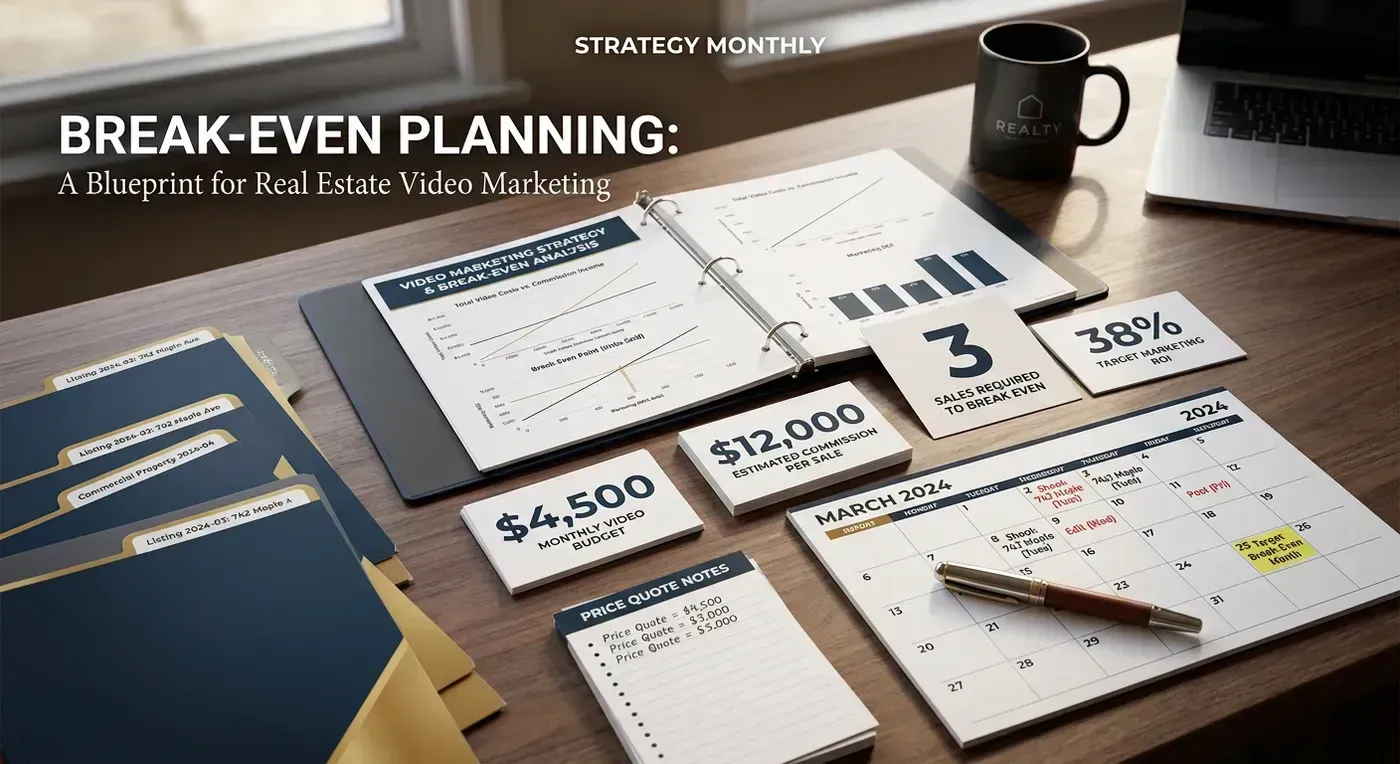
The easiest way to understand the cost difference is to stop talking in abstract ranges and start using a normal month. Imagine a solo agent marketing eight listings in a month. If the videographer package is $500 per listing, that is $4,000 before the first revision, before the extra vertical cuts, before travel premiums, and before the one listing that needed a rush turn because the seller decided they wanted everything online by Thursday. That number gets big quickly because the cost restarts every time the next property hits the pipeline.
Now compare that to a software-first workflow where the listing already has a clean photo set and the main goal is to create reliable, repeatable video coverage. The software cost is usually flatter and easier to plan around, which means the marginal cost of saying yes to one more listing is dramatically lower. That matters because the real value of AI is not only that one video costs less. The real value is that you stop rationing video like it is a luxury dessert.
Solo agents often miss the second-order savings too. When the baseline workflow is software-led, there is less scheduling, less waiting, and less mental overhead around deciding which listings deserve the spend. That means more listings get the asset by default. The moment that happens, the ROI story gets much stronger because the comparison is no longer one premium video against one cheaper video. It is consistent coverage against selective coverage.
| Solo-agent month | Videographer-first | AI-first baseline |
|---|---|---|
| 8 listings | $4,000 at $500 each before extras | Flat software cost plus low marginal cost per listing |
| Urgent revision week | Extra spend or extra waiting | Usually absorbed inside the same workflow |
| Vertical and unbranded variants | Often another request or another fee | Usually part of the baseline output set |
| Decision fatigue | Which listings deserve the spend? | Video can become the default instead of a debate |
A break-even model for teams and coordinators
The team case is even more dramatic because the cost problem compounds with coordination. If a coordinator supports multiple agents, every outsourced shoot creates scheduling, approvals, feedback, and delivery management. That labor does not disappear just because it does not show up as a separate line item. It still burns time, and time is usually the resource teams are shortest on once listing volume rises.
Take a small team marketing twenty listings in a month. Even if only half of those properties receive custom video because the budget is trying to stay reasonable, the business is still living with two problems at once: the spend on the selected listings and the missing visibility on the rest. That is the hidden tax of the service-heavy model. It does not merely cost money. It teaches the team that video is optional because the current process cannot support it at scale.
An AI-first baseline changes that conversation. The coordinator can standardize output, reserve premium custom work for the handful of listings that actually justify it, and stop spending weekly energy deciding whether an average listing is important enough to deserve motion. That kind of standardization is not boring in a bad way. It is operational oxygen. Teams breathe much better once the default path becomes clear.
The cost of waiting is part of the cost
People talk about shoot fees because they are visible. The cost of waiting is less visible, which is why it keeps getting ignored. When a videographer schedule pushes delivery back two or three days, the launch loses momentum. Social clips may not happen on time. The email follow-up drifts. The listing site launches without the strongest media package. By the time the asset arrives, the campaign has already spent part of its best attention window.
This matters even more in markets where the first few days of listing exposure carry disproportionate weight. A property does not care that the final edit is beautiful if it arrives after the team already improvised around its absence. The cleanest workflows protect launch timing. That is one reason software-led media often wins, even before the direct spend comparison gets overwhelming. The team can act faster because the workflow is not waiting on custom production to finish breathing.
Waiting also creates ugly side effects in the business. Agents start skipping video on marginal listings because they do not trust the process to move fast enough. Coordinators stop asking for variants because they assume that will add more delay. Sellers get a campaign that feels partially assembled. The workflow becomes conservative in the wrong places. That is why delay should be counted as a real budget cost, not just an inconvenience.

What sellers think they are paying for
One awkward truth in this category is that sellers often think they are paying for maximum exposure while the team is quietly paying for maximum custom production. Those are not the same thing. A seller usually cares that the home looks strong, gets visibility quickly, and feels well marketed everywhere they see it. They do not necessarily care whether the workflow behind that result involved a videographer, software, or a hybrid approach. They care about outcome.
This is why agents should be careful about confusing premium process with premium value. If the custom route means only selected listings get video, the business may be spending money in a way that feels elegant internally while looking inconsistent externally. The seller whose home never got the asset is not impressed that the other property received a lovingly edited cinematic sequence. They are wondering why their own marketing package still feels thinner.
The smarter pitch is usually about coverage and fit. Reserve custom work for the homes that truly benefit from custom storytelling. Use a scalable system for the rest. That keeps the promise to the seller clearer because the business is matching the tool to the listing instead of using one emotionally satisfying process for everything. Sellers respect consistency more than agents sometimes expect.
A hybrid budget policy that actually works
The best answer for a lot of teams is not AI versus videographer. It is AI plus videographer with clear rules. The baseline should be software-driven video coverage for almost every listing. The upgrade should be custom production only when the property, price point, or campaign goal genuinely justifies it. That sounds obvious. It is not common enough in practice because many teams still make the decision from habit instead of policy.
A healthy policy might look like this: everyday listings use the baseline workflow, higher-value or architecturally distinct listings can trigger a hybrid review, and top-tier hero properties can justify full custom production if there is a real distribution plan behind it. That last clause matters. Premium production is only smart when the team also knows how the asset will be used. Expensive creativity without a stronger launch plan is just nicer waste.
Once the policy exists, budget gets easier to control. The team stops reinventing the decision every week. Agents know which path a listing belongs in. Coordinators know what assets should be standard. Leadership can see when the premium path is being overused. That is how ROI becomes something you can actually manage instead of a vague feeling that the video line item keeps growing.
- Set a software-first baseline for standard inventory.
- Define the price bands or property traits that justify a hybrid review.
- Require a distribution plan before approving full custom production.
- Review quarterly whether premium work is being used where it truly pays off.
How to review the ROI after one quarter
The best quarter-end review is brutally simple. How many listings received video? How fast did those assets reach launch-ready status? How many required expensive custom work? How often did the team get the variants it actually needed for MLS-safe use, property sites, and social? If the answers are fuzzy, the workflow is probably being run on habit and goodwill instead of measurement.
This review should include both spend and behavior. Look at the dollars, but also look at whether agents are still skipping the asset because the process feels annoying. That behavioral piece matters because it tells you whether the workflow is genuinely usable. A cheaper process that nobody trusts is not a better system. A more expensive process that only works for hero listings is not a scalable one. The right answer is the process the team will actually use under deadline.
If the quarter review says the scalable path is working, double down and make it the standard. If it says the premium route is still winning on a narrow slice of properties, keep that slice narrow. Then connect the result to your broader video budget decisions and your distribution requirements. That is how the ROI story becomes operational instead of theoretical.
Why teams cling to the expensive model longer than they should
A lot of teams keep overpaying for custom production because the videographer route feels respectable. It feels serious. It feels like the seller can see where the money went. Software, by comparison, still makes some people nervous because it sounds newer and less artisanal. That emotional bias matters more than people admit. Sometimes the team is not defending ROI at all. It is defending the comfort of paying for something that looks obviously premium from the outside.
The problem is that comfort can hide a bad operating model. If the premium route only works on selected listings, then the business is quietly choosing inconsistency for the rest of the pipeline. Sellers may never say it that way, but they feel it. One listing receives a robust video package, another gets static photos and a promise that the market will understand. That unevenness is much harder to justify now that software can create clean, usable video coverage from the media package you already own.
This is where leadership has to decide what the brand promise really is. Is the promise bespoke craftsmanship on a few properties, or is the promise that every client gets a strong, modern listing package? There is no wrong answer if the business chooses consciously. There is a very expensive wrong answer if the business claims both while only funding one. That is usually the real reason the ROI conversation feels slippery. It is not only about cost. It is about what the team believes every listing deserves.
- Premium spend often survives longer because it feels easier to explain to sellers.
- Teams mistake visible effort for better marketing even when coverage is weak.
- Software starts winning when consistency becomes the bigger competitive advantage.
- The real question is what level of video support the business wants to make standard.
How to explain the shift without sounding cheap
One reason teams hesitate to move toward AI is that they worry the change will sound like cost cutting. That is the wrong framing. The stronger pitch is consistency, speed, and broader listing coverage. Sellers do not usually object to software because they love paying for labor. They object when the result feels weaker. If the software-led workflow creates a professional asset faster and more consistently, the conversation gets much easier.
The language matters. Do not say, "We stopped using videographers because it is cheaper." Say, "We built a faster media workflow that gives every listing stronger coverage by default, and we still bring in custom production when the property truly benefits from it." That is accurate, and it sounds like a strategy instead of a retreat. Good clients respect operational clarity when it improves their outcome.
This also helps internally. Agents stop feeling like they are downgrading the listing and start understanding that they are upgrading the baseline. That mental shift matters because teams behave differently once they believe video can be standard instead of special. The workflow stops being a luxury accessory and starts acting like real marketing infrastructure.
A videographer is still a smart investment in the right situations. But if your current process leaves half your listings without video because the custom route is too slow or too expensive, you do not have a production problem. You have a system problem.
The ROI flips when coverage becomes more valuable than perfectionism. For most working teams, that happens much sooner than they want to admit.
If the business wants video to be standard, the workflow has to be standard too. That is the uncomfortable math hiding underneath most premium production habits.
Once the team sees that clearly, the old budget logic gets much harder to defend.
That is usually the moment AI stops feeling experimental and starts feeling financially obvious.
The question stops being whether custom production looks impressive. The question becomes whether the current spend pattern still matches the way the business actually needs to market listings now.
For most teams, it no longer does.
That matters more now.
FAQ
How much does a real estate videographer cost?
Typical pricing ranges from a few hundred dollars to over a thousand dollars per listing, depending on scope and market. The real cost also includes delay, revisions, and coordination.
When is AI video a better investment than hiring a videographer?
AI video wins when you need repeatable coverage across many listings, faster turnaround, and a lower cost per property than custom service work can support.
How many listings does it take for AI video to beat videographer pricing?
Usually fewer than teams expect. Once video is needed across a normal monthly pipeline, software economics tend to outperform per-listing custom spend quickly.
Is AI video cheaper than hiring a videographer for every listing?
In most working-team scenarios, yes. The savings come from flatter software costs and fewer coordination and revision expenses.
When should teams use a hybrid videographer and AI video budget?
Use hybrid when premium listings deserve custom storytelling but the rest of the pipeline still needs a scalable baseline for everyday video coverage.