Real estate reels are the single fastest way to get a listing in front of thousands of eyeballs without spending a dollar on ads. That is not hype. Instagram, TikTok, and YouTube Shorts all aggressively push short-form vertical video in 2026 because it keeps users scrolling. If you are a real estate agent with listing photos sitting in a folder and zero reels on your profile, you are leaving the easiest distribution channel on the table.
But there is a difference between posting a reel and posting a reel that people actually watch. Most real estate reels get fewer than 200 views because they violate basic rules about hooks, pacing, format, and platform behavior. This guide covers what actually works: the specs, the strategy, the music, the hooks, and how AI real estate reels tools make it possible to produce vertical listing content consistently without spending your entire afternoon in a video editor.
Why Real Estate Reels Outperform Every Other Content Format in 2026
Static photos on Instagram get about 1% to 3% reach relative to your follower count. Reels? The algorithm distributes them to non-followers by default. A reel from a 500-follower account can reach 10,000 people if the watch-through rate is high enough. That is not theoretical. It happens every day to agents who understand the format.
The reason is simple economics for the platforms. Short-form video holds attention longer than photo carousels, and attention is what Meta, TikTok, and Google sell to advertisers. When you post a reel, you are feeding the machine exactly what it wants. In return, the algorithm gives you free reach that would cost $50 to $200 in paid promotion.
For real estate specifically, reels do three things that static posts cannot:
- Show spatial flow. A kitchen photo tells you the kitchen exists. A reel that moves from the entry through the living room into the kitchen tells you how the home feels to walk through. Buyers respond to that on a visceral level.
- Trigger saves and shares. Reels get saved and sent in DMs far more often than static posts. Every save signals the algorithm to push the reel further. A listing reel that gets 50 saves can snowball into thousands of views over 48 hours.
- Position you as an active agent. Buyers and sellers scroll agent profiles before reaching out. An agent with 30 listing reels looks dramatically more active and credible than one with 30 static photo posts, even if the listings are the same.
The data backs this up. According to the latest real estate video statistics, listings with video receive 403% more inquiries than those without. Reels are the most accessible format for getting that video in front of the right local audience.
Platform Specs: Instagram Reels vs. TikTok vs. YouTube Shorts
Before you create anything, you need to know the technical constraints. Each platform has slightly different rules, and violating them kills your reach before the content even has a chance.
| Spec | Instagram Reels | TikTok | YouTube Shorts |
|---|---|---|---|
| Aspect ratio | 9:16 (vertical) | 9:16 (vertical) | 9:16 (vertical) |
| Resolution | 1080 x 1920px minimum | 1080 x 1920px minimum | 1080 x 1920px minimum |
| Max duration | 90 seconds | 10 minutes (60s recommended) | 60 seconds |
| Ideal duration | 15 to 30 seconds | 15 to 60 seconds | 15 to 45 seconds |
| Max file size | 4 GB | 287 MB (mobile), 4 GB (web) | 256 MB |
| Format | MP4, MOV | MP4, MOV, WebM | MP4, MOV |
| Safe zone (text/captions) | Top 15%, bottom 20% obscured | Top 10%, bottom 25% obscured | Top 10%, bottom 20% obscured |
The critical number across all three platforms is 9:16 vertical at 1080x1920. If you are uploading horizontal video and hoping for the best, stop. Horizontal video gets cropped or letterboxed in a vertical feed, which kills engagement immediately. Viewers scroll past anything that looks like it does not belong in the feed format.
For a deeper breakdown of every spec across all social platforms and MLS systems, see the complete social media video specs guide.
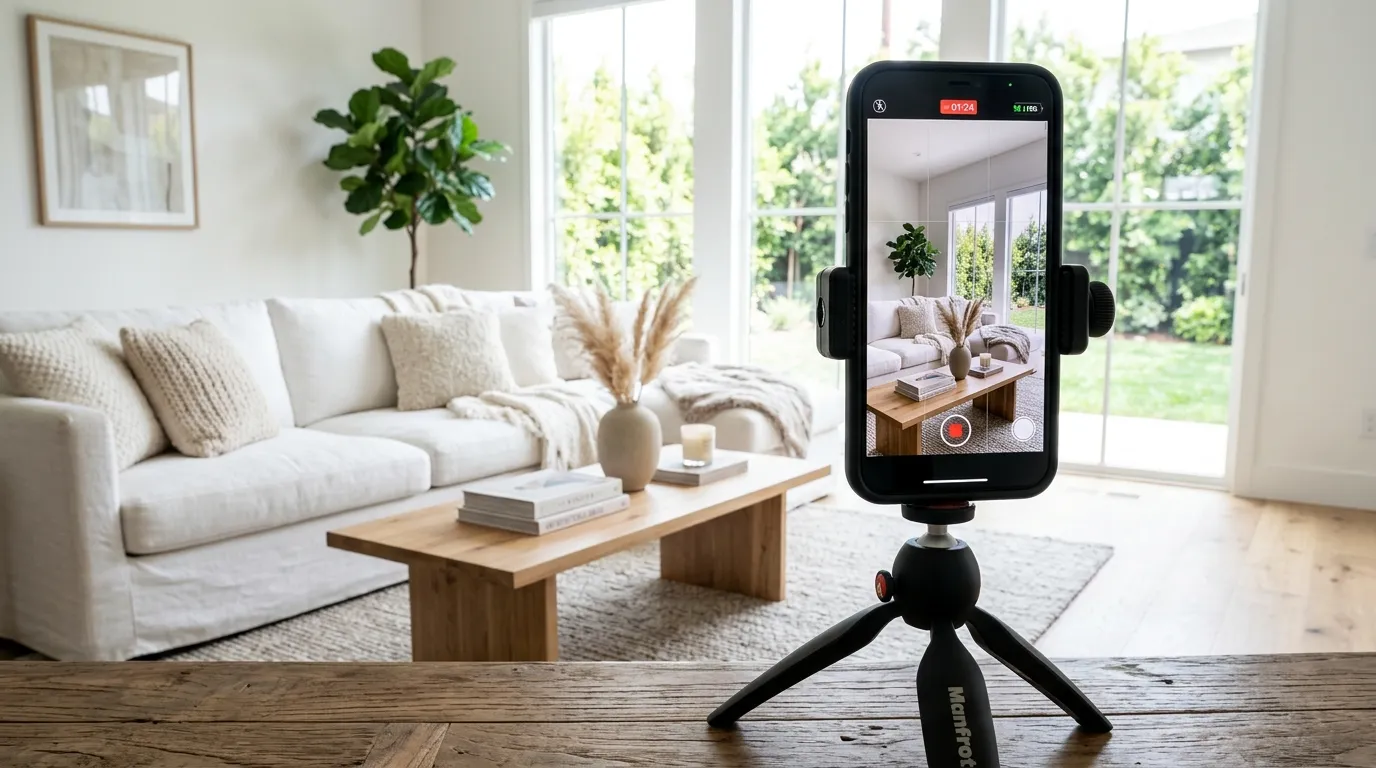
The Anatomy of a Real Estate Reel That Gets Views
Every high-performing real estate reel follows the same structure, whether the agent knows it or not. Understanding this structure is the difference between 200 views and 20,000 views.
1. The Hook (First 1.5 Seconds)
You have about 1.5 seconds before a viewer decides to keep watching or keep scrolling. That is not a metaphor. Platform analytics show that the majority of skip decisions happen before the 2-second mark. Your hook needs to be one of two things:
- Visual hook: The most striking room or angle of the property fills the screen immediately. No logo intro, no "welcome to" text card, no fade from black. Start with the money shot. A dramatic kitchen with waterfall marble, a pool at golden hour, or a panoramic view from the balcony.
- Text hook: A one-line text overlay that creates curiosity or states a specific fact. "This $425K condo has a rooftop pool" works. "Beautiful home for sale" does not. Specificity is the hook. Price, square footage, a unique feature, or a neighborhood reference that locals recognize.
The best hooks combine both. Show the best room. Overlay a specific text line. The visual stops the thumb. The text gives a reason to keep watching.
2. The Reveal Sequence (Seconds 2 to 20)
After the hook, you have about 15 to 18 seconds to show the property. This is where most real estate reels fail. They either show too many rooms (each getting 1.5 seconds of screen time, which feels frantic) or too few rooms (making the reel feel like a slideshow).
The formula that works: 5 to 8 shots, 2 to 3 seconds each, in a logical spatial sequence. Move through the home the way a buyer would walk through it. Entry to living room to kitchen to primary bedroom to one standout feature (pool, view, yard). Each shot should use motion, not static frames. Even subtle camera movement, like a slow push-in or a gentle orbit, reads as cinematic on a phone screen.
This is where AI motion effects become genuinely useful. Tools like Reel-E's AI real estate video platform apply camera movements to still photos automatically: orbit, push-in, pull-out, and Ken Burns zoom effects. Each photo gets transformed into a motion clip, which means you get reel-ready footage from the same listing photos you already uploaded to MLS.
3. The Close (Final 3 to 5 Seconds)
The last few seconds should include a clear call-to-action or property identifier. This can be:
- A text overlay with the address and price
- Your branded contact card (name, brokerage, phone)
- A simple "DM for details" or "Link in bio" prompt
Do not overload the close with information. Viewers who watched to the end are already interested. Give them one clear next step, not a billboard.
Hook Strategies That Work for Real Estate Reels
The hook is worth discussing in more detail because it is the single highest-impact element. A great property with a bad hook gets 200 views. An average property with a strong hook gets 10,000. Here are the hook formulas that consistently perform for real estate reels in 2026:
The Price Anchor
"What does $650K get you in Austin?" followed by the best room. This works because people have a mental model of what money buys in their market, and they want to see if the listing confirms or challenges that model. Works especially well in markets where prices have shifted recently.
The Feature Callout
"This kitchen has a hidden pantry behind the island." One specific, interesting feature. Not the whole property. People watch to see the specific thing you promised. This hook has the highest save rate because viewers bookmark it for later reference.
The Neighborhood Pin
"New listing in [specific neighborhood]." For local audiences, the neighborhood name is the hook. People who live nearby or want to live nearby stop scrolling when they see a name they recognize. This is why local agents outperform national accounts on real estate reels. Geographic specificity is a competitive advantage the algorithm rewards.
The Contrast
"Exterior says 1970s ranch. Inside says 2026 modern." Before-and-after energy works on every platform. The viewer needs to see the payoff, so they watch through. Renovated homes and homes with unexpected interiors are perfect for this hook.
The Question
"Would you live here?" or "Rate this kitchen 1-10." Engagement bait, yes. But it works. Comments signal the algorithm that the content is worth distributing. Use this sparingly so your profile does not become a comment farm, but once every 5 to 10 reels it can boost overall account visibility.
Music Selection: What to Use and What to Avoid
Music is the second most important element after the hook. The right track makes a reel feel polished and professional. The wrong track makes it feel like a PowerPoint presentation at a conference nobody wanted to attend.
Rules for Real Estate Reel Music
- Trending audio gets a boost. Instagram and TikTok both prioritize reels that use currently trending sounds. Check the "trending" section in each app before posting. If a trending track fits your property vibe, use it.
- Instrumental beats outperform songs with lyrics for listing tours. Lyrics compete with any text overlay you add and distract from the property itself. Clean beats with a clear rhythm let the visuals lead.
- Match energy to property type. A $4M modern penthouse should not have the same soundtrack as a cozy $350K starter home. Warm acoustic for family homes. Clean electronic for modern builds. Upbeat and energetic for lifestyle properties. Atmospheric and minimal for luxury.
- Sync transitions to the beat. This is the single biggest quality difference between amateur reels and professional-looking reels. When photo or clip transitions land on downbeats, the reel feels intentional and produced. When they are random, it feels sloppy even if the viewer cannot articulate why.
Beat-synced transitions are hard to do manually in a standard video editor. You need to identify the BPM, mark the downbeats, and align every cut precisely. Reel-E handles this automatically. The platform pre-analyzes every music track for BPM and downbeat positions, then aligns transitions to land on the beat. The result looks like a professional editor spent 30 minutes on timing, but it happens in the rendering pipeline without any manual work.
For more on how music selection and video length interact, see the ideal real estate video length guide.
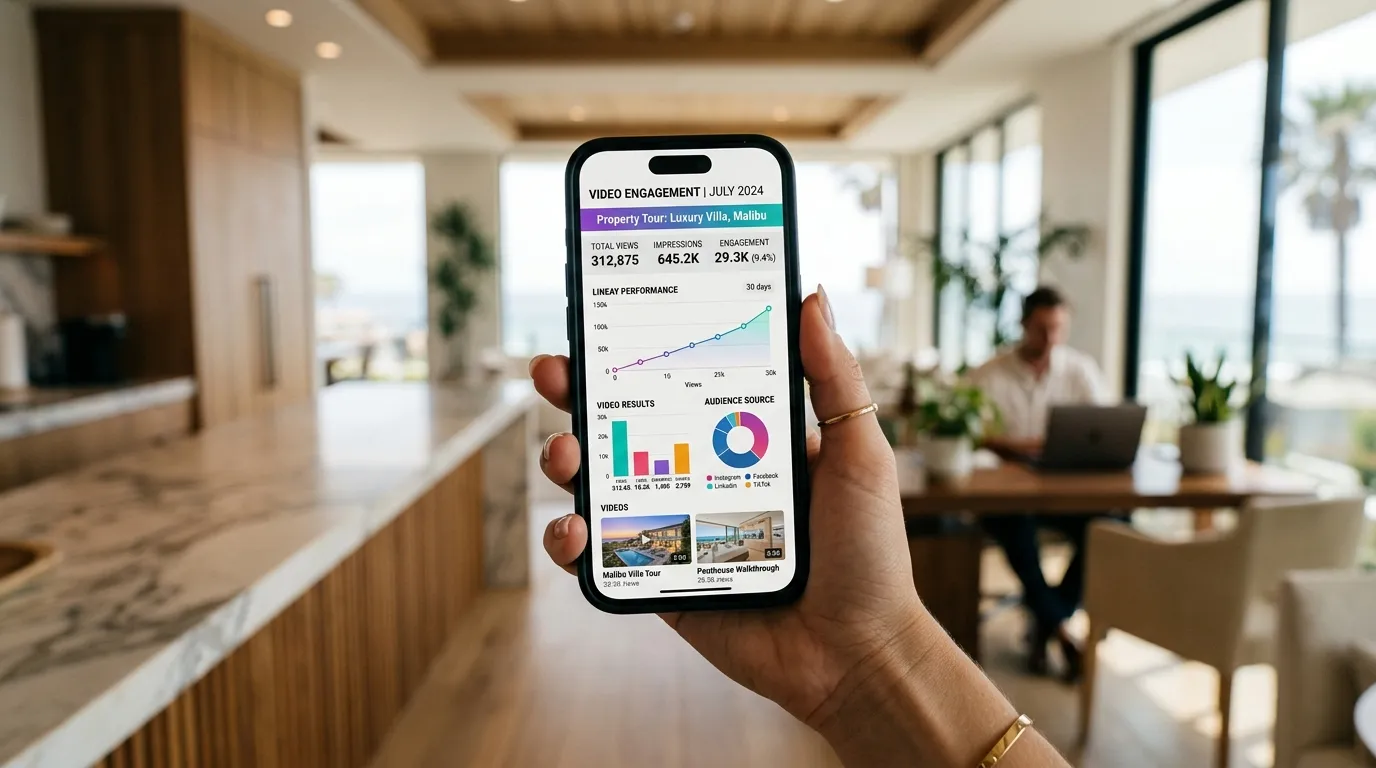
How to Produce Real Estate Reels at Scale (Without Burning Out)
The agents who get real results from reels are not the ones who create one masterpiece a month. They are the ones who post three to five reels a week, every week. That volume is only sustainable if the production process is fast and repeatable.
Here are the three production methods, ranked by efficiency:
Method 1: AI Real Estate Reel Maker (Fastest)
AI real estate reels are the fastest path from listing photos to a finished vertical video. The entire workflow takes minutes instead of hours, which is why this method is replacing manual editing for most listing-specific content.
Upload listing photos. Pick a music track. Get a vertical reel back in minutes. This is the workflow that Reel-E's real estate video maker was built for. The platform applies AI motion effects to each photo (orbit, push-in, pull-out, Ken Burns), syncs transitions to the beat, and renders four video variants automatically: horizontal branded, horizontal unbranded, vertical branded, and vertical unbranded.
The vertical branded variant is your ready-to-post reel. The horizontal unbranded version goes to MLS. One upload covers every output format you need.
The time investment: about 2 minutes per listing. That means you can create reels for five listings in the time it takes to manually edit one reel in CapCut. If you are trying to maintain a three-to-five reels per week cadence, this is the only method that scales without hiring someone.
Method 2: Phone Walkthrough + CapCut/InShot (Medium Effort)
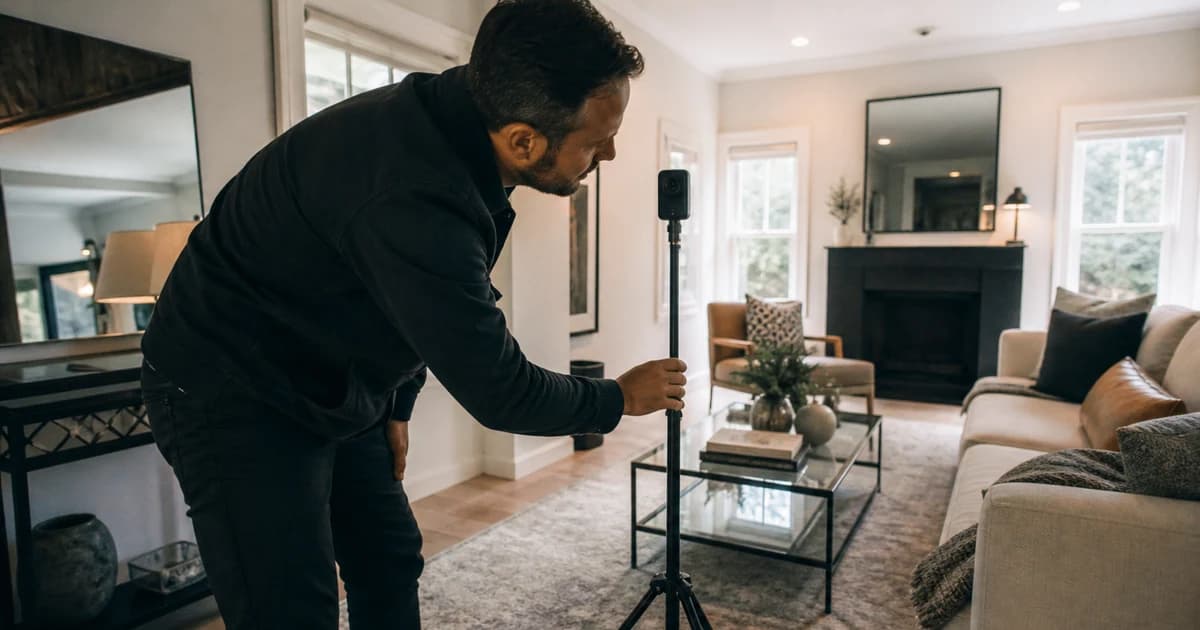
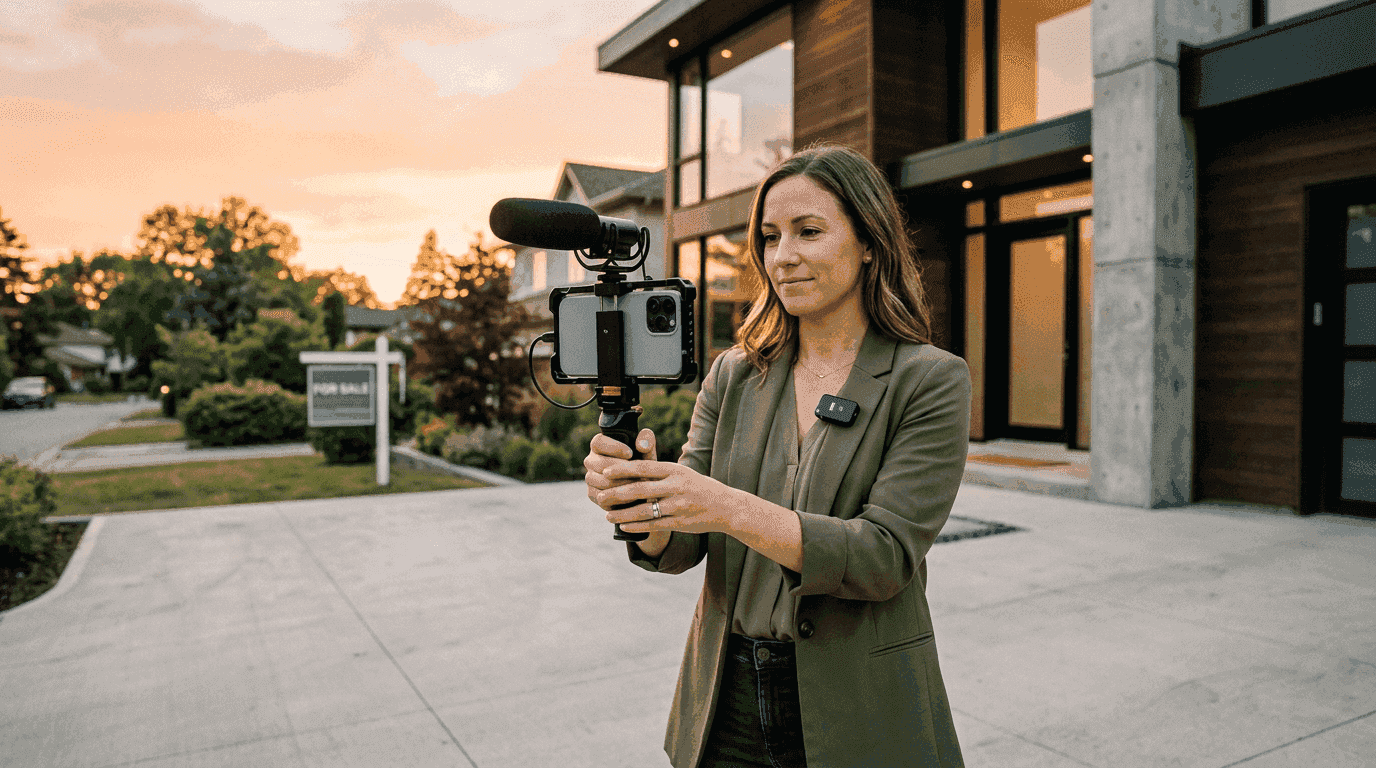
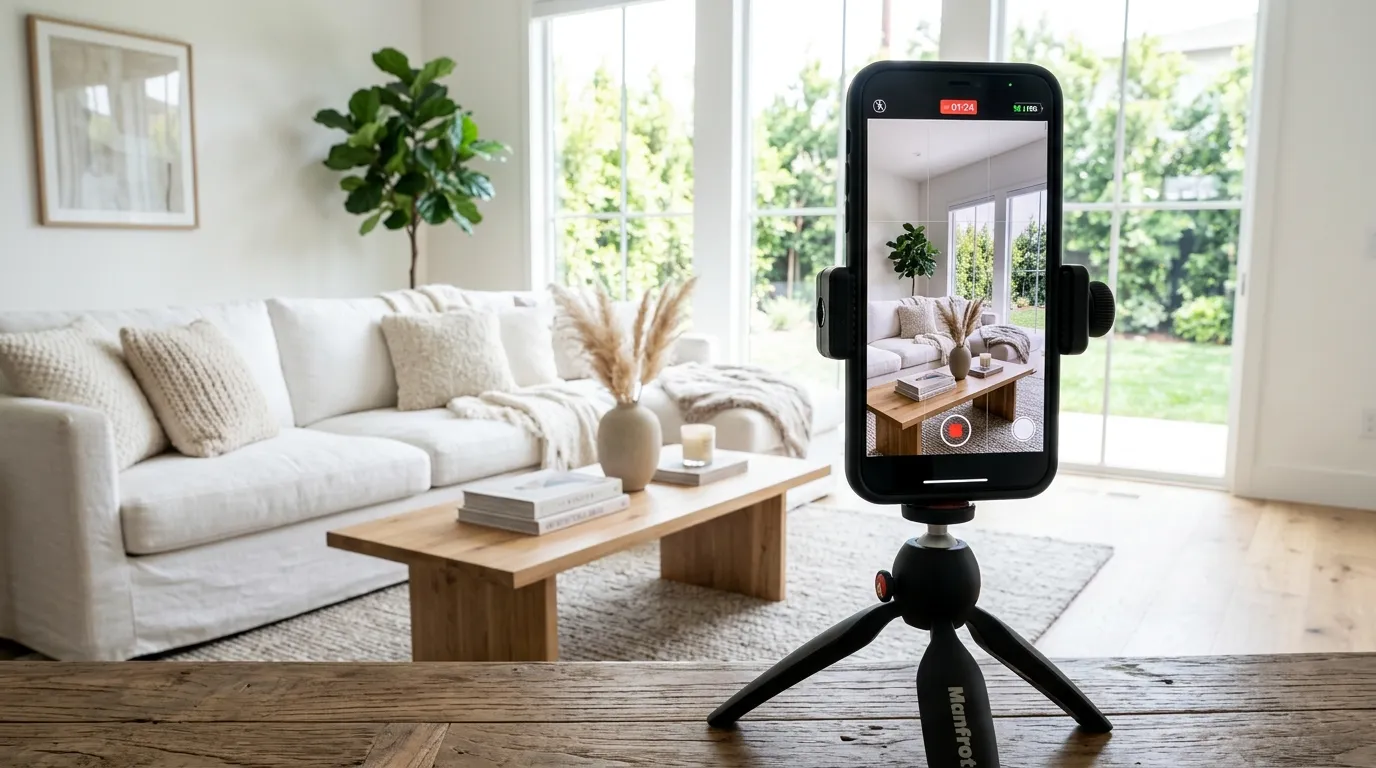
Film a quick walkthrough on your phone during the showing or photoshoot. Import into a mobile editor like CapCut or InShot. Add music, text overlays, and trim to 15 to 30 seconds. This method gives you more authentic, "in-person" footage that performs well for neighborhood content and behind-the-scenes reels.
The tradeoff: each reel takes 15 to 30 minutes to film, edit, and export. That is fine for one or two reels a week, but it becomes a time sink at higher volume. The footage also tends to be shaky and inconsistent unless you use a gimbal or have steady hands. Most agents start here and eventually move to an AI reel maker for listing-specific content, keeping the phone workflow for personal brand content.
Method 3: Professional Videographer Clips (Highest Quality, Lowest Scale)
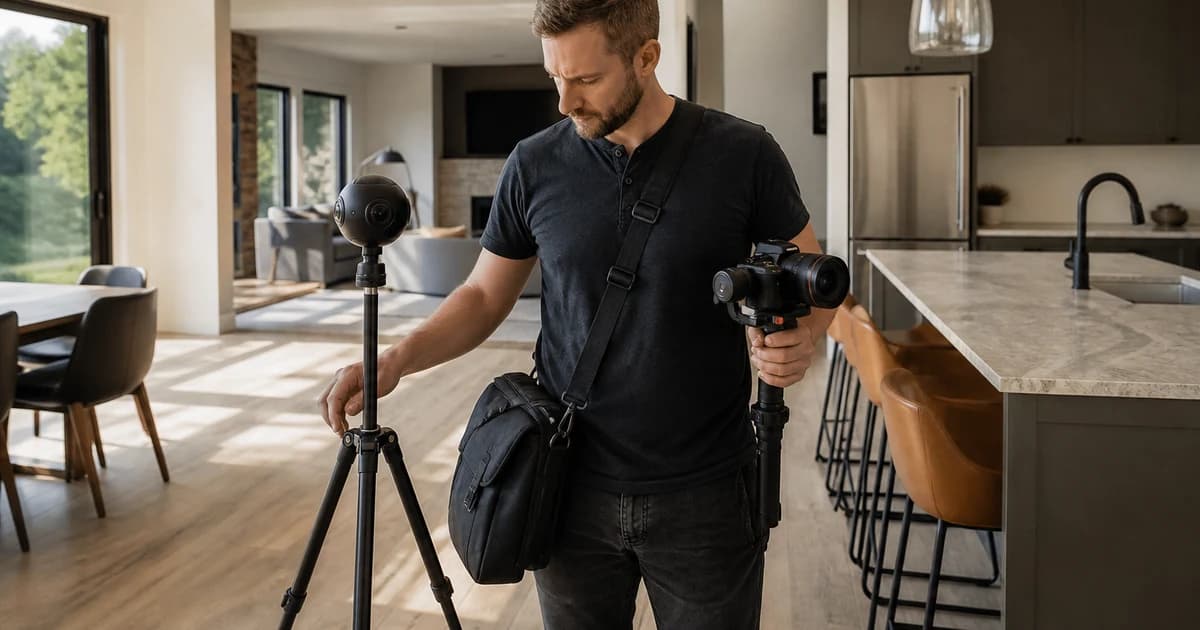
If you already hired a videographer for a listing, ask for the raw vertical clips. Edit them into a reel or hand them to your marketing coordinator. The quality ceiling is the highest here, but the production cost ($300 to $1,200 per listing) and turnaround time (3 to 7 days) make it impossible to use for every listing.
For a detailed cost comparison, see the full real estate video cost breakdown.
The smart play is a hybrid approach: AI real estate reels for every listing (coverage), phone walkthroughs for personal content (authenticity), and professional video for your hero listings (premium quality). That way you never have a content gap, and your best properties still get the production they deserve.
Platform-Specific Tips: Instagram
Instagram Reels remain the most important platform for most real estate agents in 2026 because Instagram is where buyers and sellers already follow local businesses. Here is what works specifically on Instagram:
- Post reels directly (not from TikTok). Instagram suppresses reels that have the TikTok watermark. If you cross-post, remove the watermark first or upload the original file.
- Use 3 to 5 targeted hashtags. The days of 30-hashtag spam are over. Instagram's algorithm now prioritizes relevance over volume. Use your city name, neighborhood name, and 1 to 2 real estate hashtags. Example: #AustinRealEstate #MuellerATX #NewListing.
- Optimal posting times: Tuesday through Thursday, 11 AM to 1 PM and 7 PM to 9 PM local time. These are when real estate audiences (working professionals, dual-income couples) are browsing between meetings or after dinner.
- Enable "also share to Feed." This puts your reel in both the Reels tab and your main grid, doubling its surface area. Some agents worry it clutters the grid, but in 2026, Reels are the grid for most users.
- Add a location tag. Always tag the property's city or neighborhood. Location tags increase discoverability for local searches, which is exactly the audience you want.
- Write a caption with context. Unlike TikTok where captions are minimal, Instagram captions can include property details, your take on the neighborhood, or a question to drive comments. Two to four sentences is the sweet spot.
For more Instagram strategies, see the full real estate Instagram Reels ideas guide.
Platform-Specific Tips: TikTok
TikTok has the youngest audience of the three platforms, but "youngest" in real estate terms means first-time buyers in their late 20s and early 30s. That is a massive and underserved market segment. Here is what works on TikTok:
- Use TikTok-native trends when they fit. TikTok rewards trend participation more aggressively than Instagram. If a trending sound or format can be adapted for real estate, do it. "POV: you just listed this" with a trending sound can outperform a polished listing tour.
- Longer reels perform better on TikTok than Instagram. TikTok users are conditioned to watch 30 to 60 second videos. A full property walkthrough that would feel slow on Instagram can do well here, especially if the hook is strong.
- Talk to the camera sometimes. TikTok's culture is more personality-driven than Instagram. Reels where the agent walks through the property and narrates ("Check out this hidden laundry room") feel native to the platform. Purely visual reels work too, but mixing in narrated content builds a stronger personal brand.
- Reply to comments with new reels. TikTok's "reply to comment" feature turns a viewer question into a new video. If someone asks "What's the backyard like?" you film a 15-second reel of the backyard with the comment pinned. This creates engagement loops that the algorithm loves.
- Post frequency matters more on TikTok. Five to seven reels per week is ideal on TikTok. The algorithm tests each post independently (unlike Instagram, which weighs account history more heavily), so more posts mean more chances to hit.
For a deeper TikTok strategy, see the complete TikTok for real estate agents guide.
Platform-Specific Tips: YouTube Shorts
YouTube Shorts is the most underutilized platform for real estate reels in 2026. Most agents ignore it because they think YouTube means long-form. That is wrong. Shorts get surfaced in Google search results, which means your reel can appear when someone Googles "homes for sale in [neighborhood]." No other short-form platform has that search integration.
- Titles matter on YouTube Shorts. Unlike Instagram and TikTok where the visual hook does the work, YouTube titles appear in search results. Use "[Address] | [Price] | [City] Home Tour" format for discoverability.
- YouTube Shorts live forever. Instagram Reels and TikTok videos have a 24 to 72 hour peak discovery window. YouTube Shorts can get views months later through search and suggested video. This makes them the best long-term investment per reel.
- Link to a full-length YouTube tour. If you have a longer property video, pin a comment linking to it. Shorts viewers who want more detail will click through, which boosts your long-form video's performance too.
- Use YouTube's hashtag system. Add 3 to 5 hashtags in the description. YouTube uses these for categorization and search, not just aesthetics.
- Shorts fuel your channel's subscriber growth. YouTube pushes channels with consistent Shorts to new viewers. Even if someone does not subscribe from a Short, the algorithm remembers the engagement and shows your next video to that viewer.
Vertical Video: Why 9:16 Is Non-Negotiable for Reels
This point deserves its own section because agents keep making this mistake. You cannot post a horizontal (16:9) listing video as a reel and expect it to perform. When horizontal video appears in a vertical feed, it occupies roughly 30% of the screen. The rest is black bars. Viewers scroll past because it looks like content that was not made for the platform they are on.
Vertical (9:16) video fills the entire phone screen. It is immersive. The viewer is inside the property, not watching the property through a small window. That difference in screen real estate directly correlates with watch time, and watch time is the primary signal every platform uses to decide whether to show your reel to more people.
This is where most agents hit a practical problem. Their photographer shoots horizontal. MLS requires horizontal. The marketing assets they already have are 16:9. Reformatting horizontal footage into vertical is tedious, often requires cropping out important parts of the frame, and looks awkward when the subject was composed for a wide aspect ratio.
The smarter approach is to generate vertical and horizontal versions simultaneously from the same source photos. Reel-E does this by default. Every project creates four output variants:
- Horizontal branded (16:9 with logo) for your website and presentations
- Horizontal unbranded (16:9 without logo) for MLS
- Vertical branded (9:16 with logo) for Instagram Reels, TikTok, YouTube Shorts
- Vertical unbranded (9:16 without logo) for paid ads or co-branded use
One photo upload. Four finished videos. The vertical variant is your reel, ready to post. No cropping, no reformatting, no compromise on composition. The AI motion effects are applied independently for each aspect ratio so the framing looks intentional, not hacked together from horizontal footage.
For more on how vertical and horizontal versions compare and when to use each, see the guide on social media videos for real estate.
Common Mistakes That Kill Real Estate Reel Performance
After watching thousands of real estate reels (occupational hazard of building a listing video maker), here are the mistakes that consistently tank performance:
1. Logo Intro Before the Content
A 3-second animated logo intro at the start of a reel is instant death. The viewer does not know who you are yet and does not care about your brand. They care about the property. Lead with the property. Put your branding in the last 3 seconds or as a small watermark.
2. Too Many Text Overlays
Agents who treat reels like an infographic lose viewers fast. One text overlay at a time. Let it breathe. If you need to communicate a lot of property details, put them in the caption instead of stacking text blocks on the video.
3. Generic Music That Does Not Match the Energy
Corporate background music (you know the sound: ukulele and hand claps) makes every property feel like a real estate franchise ad from 2018. Match the music to the property. Silence with natural sound effects can even work for the right listing.
4. Posting Horizontal Video in a Vertical Feed
Covered above, but it is so common it needs repeating. Black bars on a vertical feed are a signal to the viewer (and the algorithm) that this content was not made for this platform.
5. No Hook in the First 1.5 Seconds
Starting with a slow pan of the front exterior, a title card, or a fade from black. The viewer is already gone. Your best shot must be the first shot.
6. Inconsistent Posting
Posting five reels one week, then nothing for three weeks. The algorithm rewards consistency. A steady cadence of three reels per week beats sporadic bursts of ten. Batch-creating AI real estate reels with a tool like Reel-E makes consistency possible even during your busiest listing months.
For the complete list, see the full real estate video mistakes guide.

How Reel-E Generates Vertical Reels From Listing Photos
Since this is the part that makes the production problem actually solvable, here is how the workflow works end to end:
- Upload your listing photos. The same photos you shot for MLS. Reel-E accepts standard real estate photography (JPEG, PNG). No special preparation needed.
- Choose a music track. Every track in the library is pre-analyzed for BPM and downbeat positions. Pick a track that matches the property vibe. The platform previews how the transitions will land on the beat before rendering.
- Add branding (optional). Upload your logo and contact details for the branded variants. Or skip it for clean unbranded output.
- Render. Reel-E's AI applies motion effects to each photo (the camera movements that make stills feel cinematic), builds a timeline where transitions sync to the music's downbeats, and renders all four variants simultaneously: horizontal branded, horizontal unbranded, vertical branded, vertical unbranded.
- Download and post. Grab the vertical branded variant. Post it to Instagram, TikTok, and YouTube Shorts. Use the horizontal unbranded variant for MLS. One set of photos covered every distribution channel.
The total time from photo upload to finished reel is under 2 minutes for the agent. The rendering happens on GPU servers in the cloud, so there is nothing to install or update on your laptop.
For a detailed walkthrough, see how Reel-E works or start your first project.
A Weekly Reel Content Calendar for Real Estate Agents
Knowing what to post is half the battle. Here is a five-reel-per-week calendar that balances listing content with personal brand content:
| Day | Reel Type | Source | Time to Create |
|---|---|---|---|
| Monday | New listing tour | AI reel from photos | 2 minutes |
| Tuesday | Market tip or stat | Phone + CapCut | 15 minutes |
| Wednesday | Listing highlight (single feature) | AI reel from photos | 2 minutes |
| Thursday | Neighborhood spotlight | Phone walkthrough | 20 minutes |
| Friday | Just sold / open house recap | AI reel or phone | 2 to 15 minutes |
Total weekly time investment: roughly 45 minutes to 1 hour. That is manageable even during a week with three showings and a closing. The AI reels handle the listing-specific content (which needs to be polished and consistent), while the phone content handles the personality-driven posts (which should feel authentic and informal).
For more content ideas, see 25 real estate video ideas that generate leads.
Measuring What Works: Reel Metrics That Actually Matter
Not all metrics are equal. Here is what to track and what to ignore:
Track These
- Watch-through rate (or average view duration). This is the most important metric. It tells you whether people are watching your reel to the end. A 15-second reel with 80% watch-through will get pushed far harder by the algorithm than a 60-second reel with 20% watch-through. If your watch-through rate is below 50%, your hooks need work.
- Saves. A save means someone found the content valuable enough to reference later. High save rates signal quality to the algorithm and often correlate with future DMs and inquiries.
- Shares. When someone sends your reel to a friend, that is the highest-quality engagement signal. It means the viewer thought of a specific person who should see the property.
- Profile visits from Reels. This measures whether the reel drove enough curiosity for someone to check out your profile. Profile visits are the precursor to follows and DMs.
Ignore These (Mostly)
- Likes. Nice for vanity, weak as a signal. Many viewers watch a reel fully, save it, and never tap the heart. Likes do not correlate strongly with lead generation.
- Follower count growth per reel. Growth happens over time with consistent posting. Obsessing over followers-per-reel leads to engagement bait that hurts your brand.
- View count in isolation. A reel with 50,000 views and zero profile visits did nothing for your business. A reel with 2,000 views and 30 profile visits was far more valuable.
FAQ
What is the best length for a real estate reel?
For Instagram Reels, 15 to 30 seconds performs best in 2026. TikTok allows more room (15 to 60 seconds) for property tours. YouTube Shorts should stay under 60 seconds. The algorithm on every platform rewards watch-through rate more than raw length, so a tight 20-second reel that people finish will outperform a 90-second reel where 80% of viewers leave at the 15-second mark.
How do I make real estate reels without video editing experience?
AI real estate reel makers like Reel-E generate vertical video from listing photos automatically. You upload photos, pick music, and the platform handles motion effects, beat-synced transitions, and aspect ratio formatting. No timeline editing or software skills needed.
What music should I use for real estate reels?
Use trending audio on the platform when it fits the property vibe. For listing reels, instrumental tracks with a clear beat work best because they sync with transitions and do not distract from the visuals. Reel-E offers pre-analyzed music with BPM and downbeat data so transitions land on the beat automatically.
Should I post the same real estate reel on Instagram, TikTok, and YouTube Shorts?
You can, but results improve when you tailor the format slightly. Remove platform-specific watermarks before cross-posting (TikTok watermarks get suppressed on Instagram). Adjust caption style and hashtags for each platform. The video itself can be identical if it meets all three platforms' specs (9:16 vertical, under 60 seconds).
How often should real estate agents post reels?
Consistency matters more than volume. Three to five reels per week is the sweet spot for most agents. If you can only manage two, that still works as long as you do not disappear for weeks between posts. Batch-creating reels from each new listing keeps the pipeline steady without burning hours on content every day.
Do real estate reels actually generate leads?
Yes, but usually indirectly. Reels build top-of-funnel visibility and position you as an active agent in a specific market. The leads come from profile visits, DMs asking about a property, and website clicks from your bio link. Agents who post listing reels consistently report more inbound inquiries within 60 to 90 days.
What is the best AI tool for creating real estate reels?
Reel-E is built specifically for real estate agents who want to create listing reels from photos. It generates vertical (9:16) video variants automatically with AI motion effects and beat-synced transitions. Other options like Canva and InVideo offer general templates but require manual editing.
Can I use AI-generated real estate reels on MLS?
Most MLS systems accept horizontal (16:9) video, not vertical reels. Reel-E solves this by generating four variants from one upload: horizontal branded, horizontal unbranded, vertical branded, and vertical unbranded. Use the horizontal version for MLS and the vertical version for social reels.