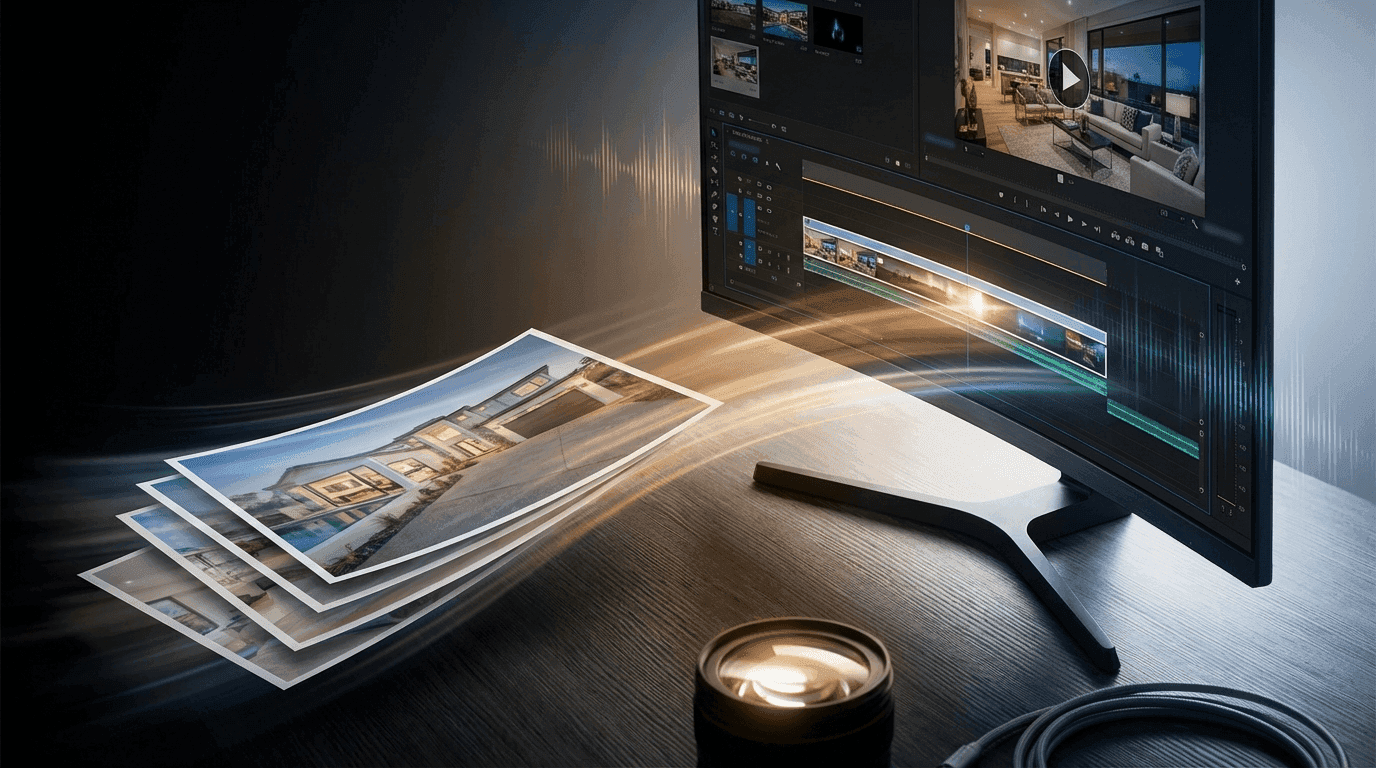
Key Takeaways
- Reel-E turns flat listing photos into cinematic video with AI camera motion that looks like a professional videographer filmed your property.
- Four things agents love: beat-synced transitions, cinematic camera movements, smooth pacing between scenes, and four video formats from one upload.
- Every listing video is delivered in under 2 minutes with four variants (horizontal/vertical, branded/unbranded).
- Your photos are processed on Reel-E's own infrastructure. Nothing is shared, nothing is outsourced.
Most AI-generated listing videos look the same: photos sliding across the screen with a generic zoom effect and whatever royalty-free track was on shuffle. They feel automated because they are. We built Reel-E to fix that.
Our team has spent over a decade producing property video for clients including Blackstone, Greystar, and MrBeast's real estate projects. We have over 200 million views on real estate video content. When we started building Reel-E, we asked one question: what makes a professional listing video feel professional?
Why most AI listing videos look "off"
The problem is not AI itself. The problem is that most tools treat video creation as a slideshow problem. Drop photos onto a timeline, add a transition, slap on some music, export. The result is technically a video, but it does not feel like one. It is a slideshow with extra steps.
Professional videographers do three things that slideshow tools cannot replicate: they move the camera, they cut to the beat, and they use pacing to create rhythm. These are the three pillars of Reel-E's AI listing video technology.
Beat-synced editing
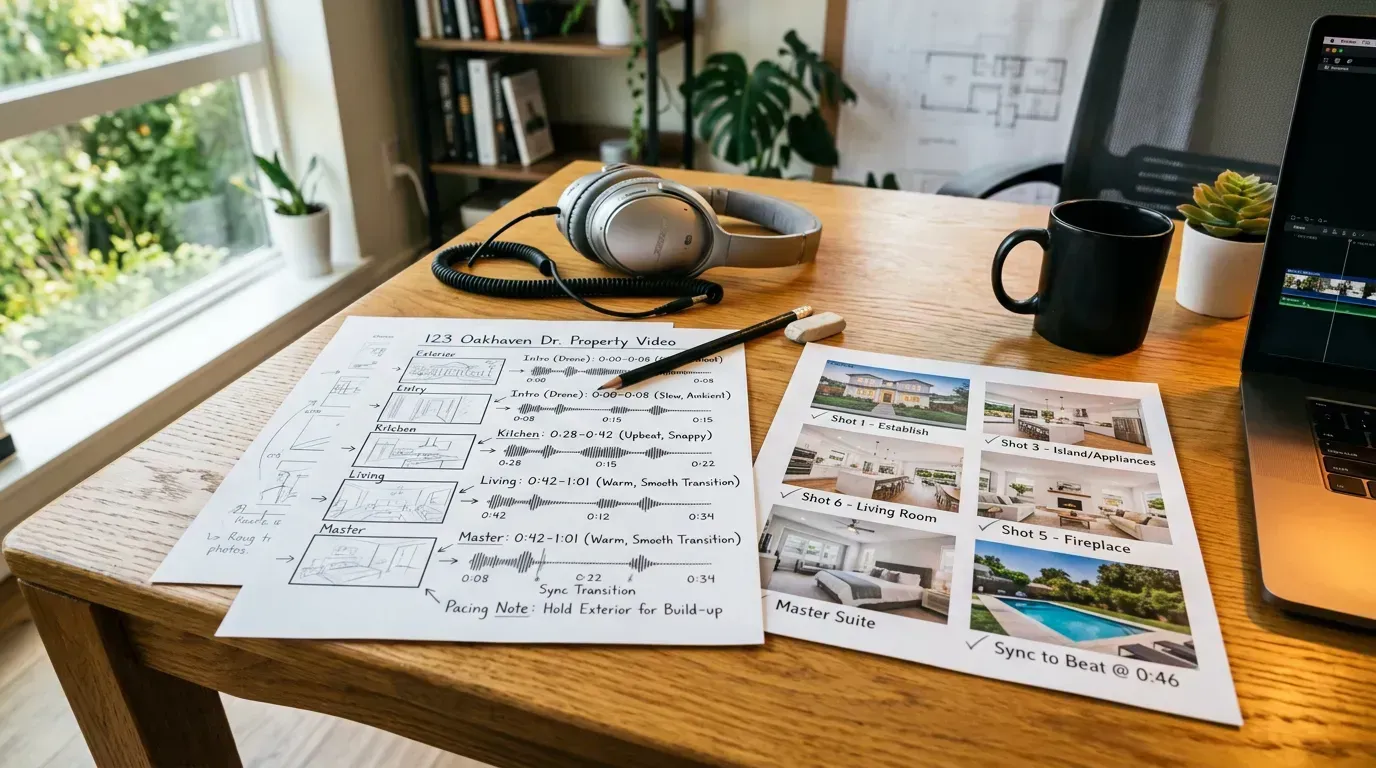
When a professional editor cuts a property video, every transition lands on a musical beat. It is subtle, but your brain notices when cuts align with the rhythm. It is the difference between a video that feels polished and one that feels like a school project.
Reel-E makes this happen automatically. Your photo transitions land on the music's rhythm, every single time. You pick the track. The AI handles the timing. The result sounds intentional because it is.
AI camera motion
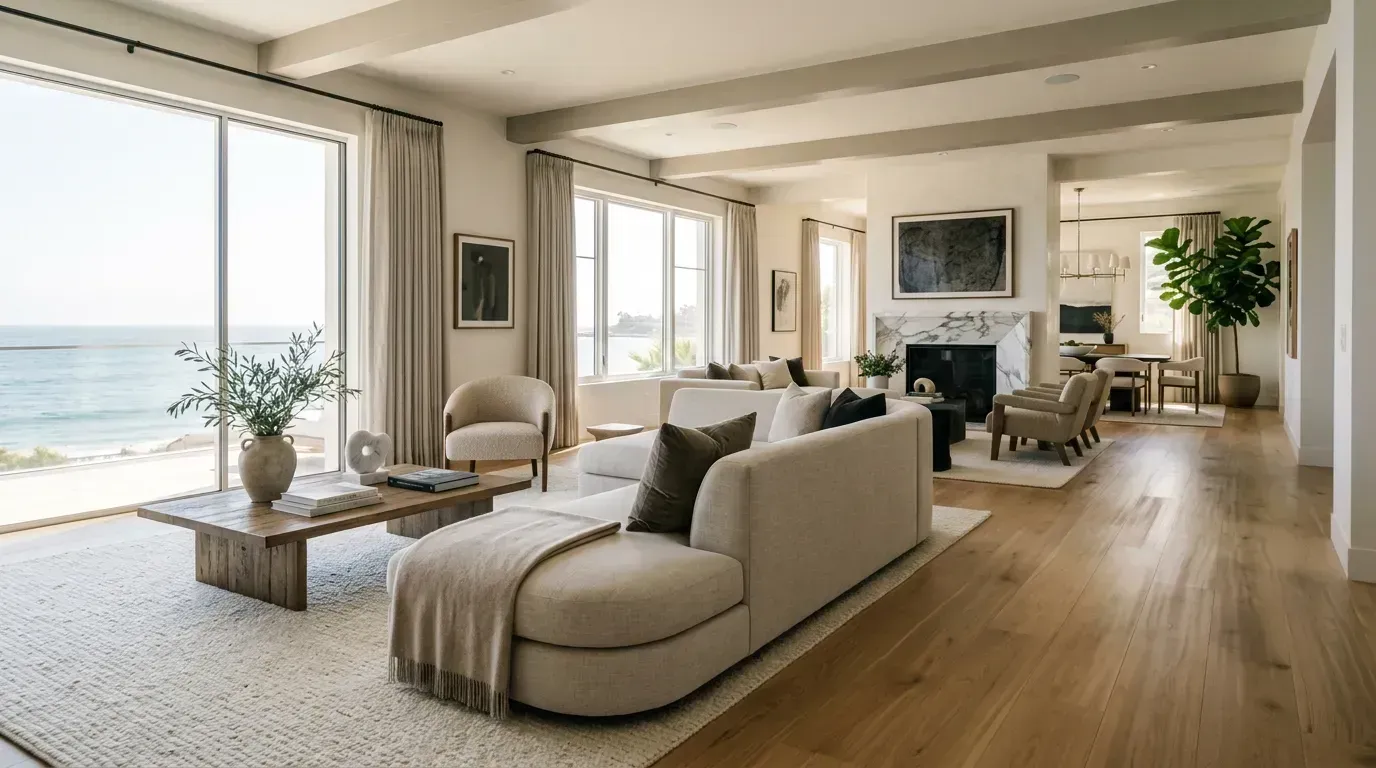
This is what separates Reel-E from every other tool on the market. When you upload a flat photo of a kitchen, our AI turns it into a cinematic camera movement through the space. Not a simple pan and zoom. The kind of smooth, dimensional motion that makes it look like a camera operator is walking through the room.
Four motion types bring your photos to life:
- Orbit: The camera circles around a focal point, creating a sense of three-dimensional space
- Push-in: A slow move toward the subject, drawing the viewer deeper into the room
- Pull-out: A reveal that starts close and pulls back to show the full scene
- Ken Burns: A classic documentary-style slow zoom with subtle drift
The AI selects the right motion for each photo automatically. Wide-angle shots get orbits. Detail shots get push-ins. You get visual variety across every scene without making a single editing decision.
Four-format output
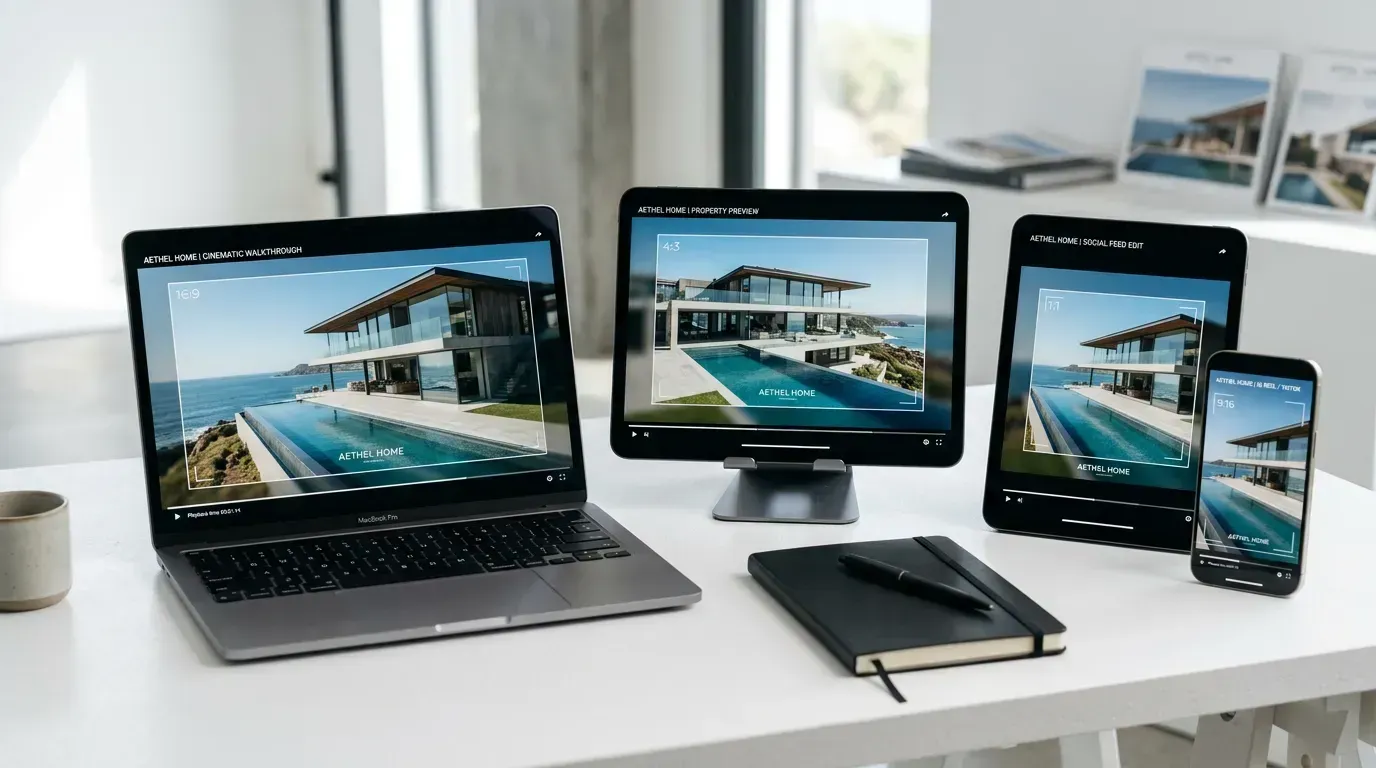
Every Reel-E render produces four videos simultaneously:
- Horizontal branded (16:9 with your logo) for MLS and YouTube
- Horizontal clean (16:9 without logo) for platforms that require unbranded content
- Vertical branded (9:16 with your logo) for Instagram Reels and TikTok
- Vertical clean (9:16 without logo) for Realtor.com and other platforms
You upload once, and you get video for every platform. No re-exporting. No re-editing. No rebuilding a vertical version from scratch.
Quality control
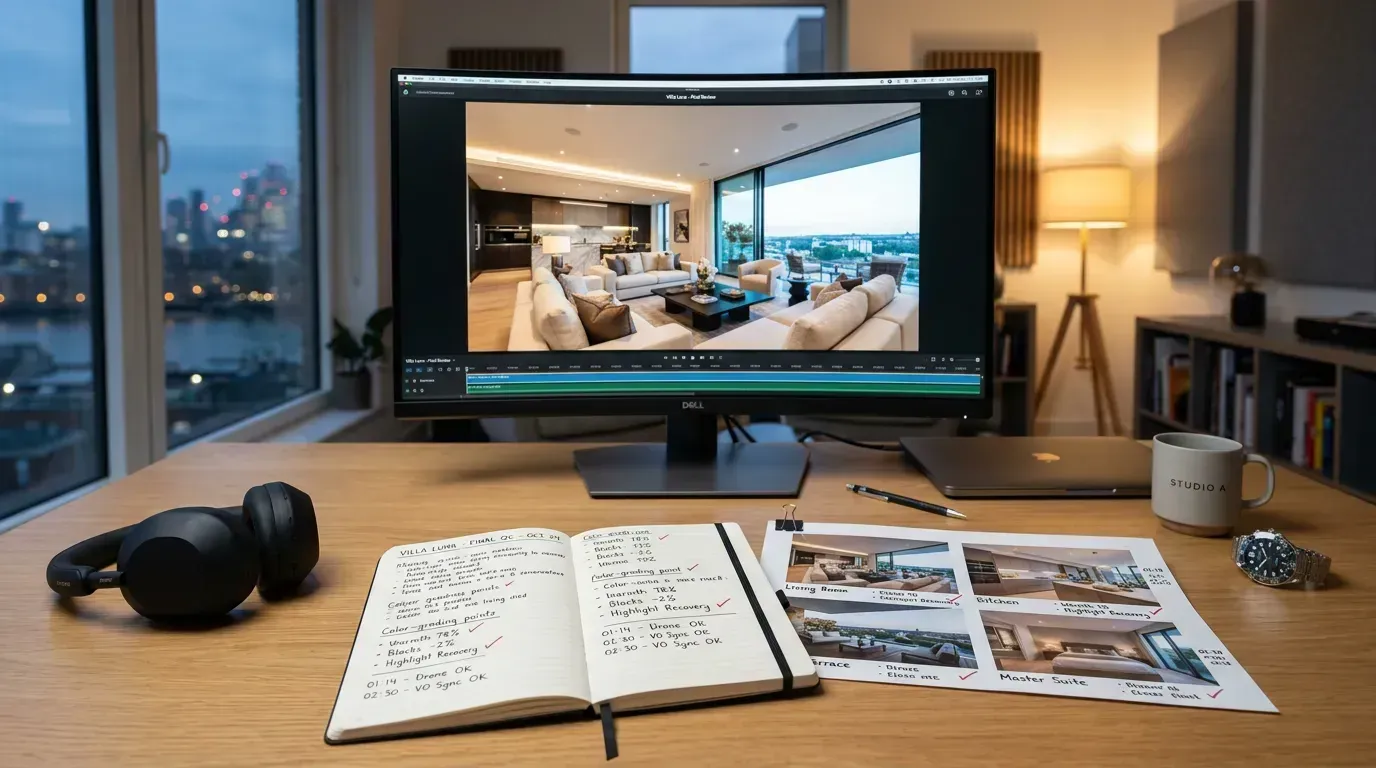
Before any video is delivered, the system runs validation checks on resolution, audio sync, and render integrity. If anything is off, the video is re-rendered automatically. You only see the finished product when it passes every check.
The result is an AI listing video that looks like a professional videographer spent a day on your property. It takes under two minutes.
What makes an AI listing video different from a slideshow
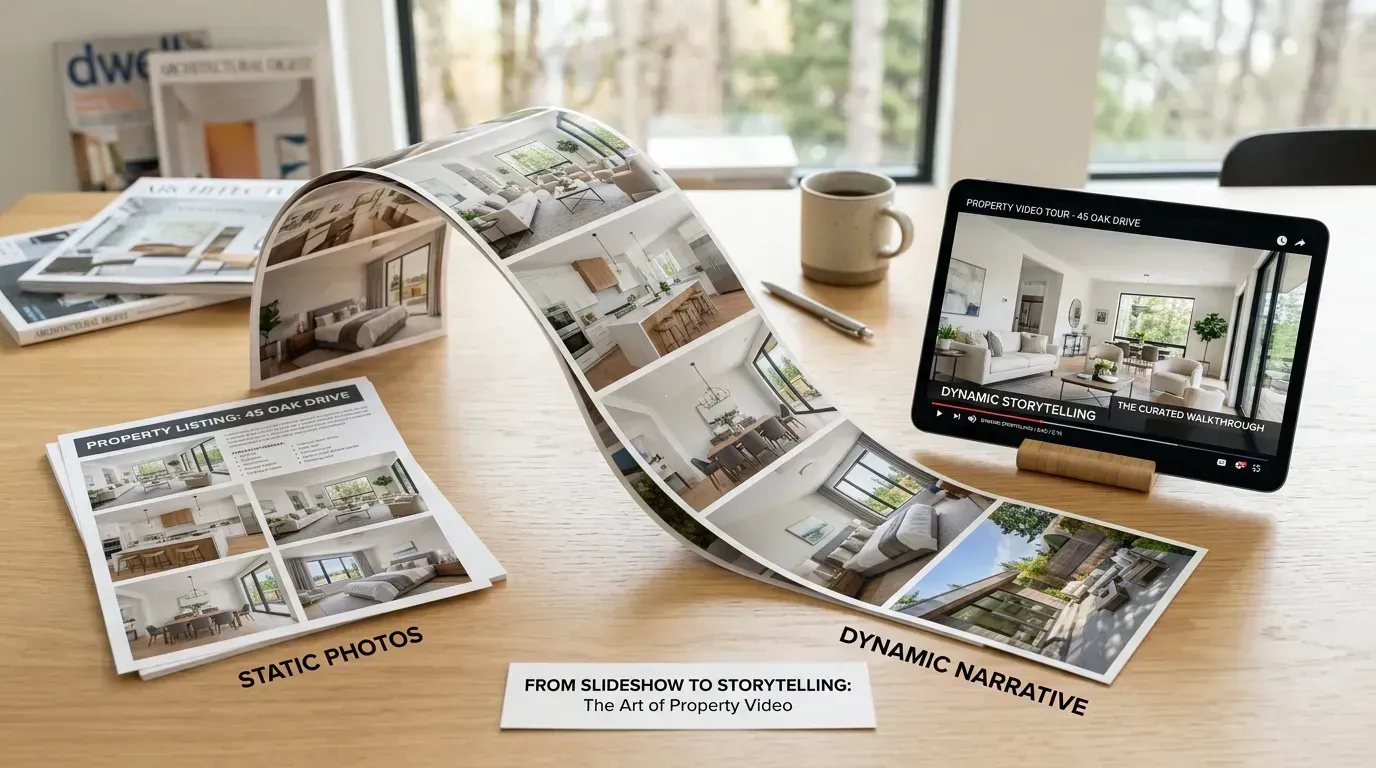
This is the question we get asked most, and it is a fair one. On the surface, both start with photos and end with a video. The difference is what happens in between.
A slideshow takes your photos and displays them sequentially with a transition effect between each one. Cross-dissolve, wipe, slide. The photo sits flat on screen for 3 to 5 seconds, then the next photo appears. Add some music in the background and you have a slideshow video. Every template-based tool (Canva, Animoto, FlexClip) creates some version of this.
An AI listing video does something fundamentally different. When Reel-E processes a photo of your kitchen, the AI turns it into a cinematic camera movement through the space. Not a pan. Not a zoom. A smooth, dimensional motion that makes it feel like a camera operator is walking through the actual room. Each photo gets its own unique camera path, so the video has visual variety from scene to scene.
Add beat-synced transitions on top of that and the difference becomes obvious within the first three seconds. A slideshow says "here are some photos of a house." An AI listing video says "let me walk you through this property." That distinction matters because buyers make snap judgments. Research from NAR shows listings with video get 403% more inquiries, but only if the video holds attention. Slideshows lose viewers in the first five seconds. Cinematic motion keeps them watching.
Here is a practical way to think about it. If you sent your listing slideshow to a buyer and your competitor sent a cinematic AI listing video of a comparable property, which listing gets the first showing request? That is the gap Reel-E closes.
What it actually looks like: a 25-photo luxury listing
Let us walk through what happens when an agent uploads photos of a $1.2M waterfront property in Sarasota. Not a hypothetical. A real listing.
The agent uploads 25 photos: three exterior shots (front approach, dock, sunset angle), the grand foyer, living room from two angles, kitchen wide and kitchen detail, formal dining room, four bedrooms, three bathrooms, the home office, laundry room, garage, pool and patio from two angles, and the view from the master balcony.
Here is what the finished video looks like. The wide-angle living room shot becomes a slow orbit that makes you feel like you are standing in the room and turning your head. The kitchen detail shot (close-up of the quartzite island with pendant lights overhead) starts tight on the countertop and slowly reveals the full kitchen. The sunset exterior with the dock draws you forward toward the water. Every photo gets the camera motion that best showcases the space.
Wide rooms get orbits that show off their scale. Detail shots get push-ins or pull-outs that highlight finishes. Exteriors get movements that pull you into the scene. The AI reads each photo and picks the motion that makes it look its best. No two photos in the same video get the same treatment.
On top of the camera motion, every transition in the video lands on the music. The agent picked an elegant, mid-tempo instrumental track. The exterior hero shot opens on the first beat. The transition from foyer to living room hits the rhythm. The reveal of the pool and patio lands right when the energy builds. It sounds intentional because the AI maps every cut to the music automatically.
The pacing between scenes feels smooth and cinematic, not choppy. A human editor would spend 2 to 3 minutes per clip getting that same feel manually. The AI handles all 25 clips in seconds.
When it is done, the agent gets four videos: 16:9 horizontal with their branded contact card, 16:9 horizontal clean (no branding) for Realtor.com and MLS systems that prohibit agent branding, 9:16 vertical branded for Instagram Reels and TikTok, and 9:16 vertical clean. The entire process takes about 90 seconds from upload to download.
That Sarasota waterfront listing got 47 showing requests in its first week. Did the AI listing video cause all of them? Of course not. But the agent reported that three buyers specifically mentioned the video in their initial inquiry. For a $1.2M property, three additional interested buyers can change the negotiation dynamic entirely.
Four things agents love about the result
We obsess over the technical details so you do not have to. Here is what the output actually delivers, and why agents keep coming back after their first listing video.
1. It looks like you hired a videographer. The camera movements are smooth, dimensional, and specific to each room. A wide living room gets a cinematic orbit. A detail shot of a kitchen island gets a slow reveal. An exterior gets forward motion that draws the viewer in. Nobody watching the final video would guess it started as still photos. That is the bar we hold ourselves to.
2. The music and editing feel intentional. Transitions land on the beat. Pacing varies with the energy of the track. The overall rhythm feels like a professional editor spent hours on it. This is the thing that separates "AI video" from "slideshow with extra steps." When cuts align with the music, your brain registers the video as polished. When they do not, something feels off. Reel-E never feels off.
3. One upload, four videos, every platform covered. You get horizontal branded (16:9 with your logo) for MLS and YouTube, horizontal clean for platforms that prohibit branding, vertical branded (9:16) for Instagram Reels and TikTok, and vertical clean. No re-exporting, no re-editing, no rebuilding. Upload once, download four.
4. Your photos stay private. Everything runs on Reel-E's own infrastructure. Your listing photos are not shared with third-party AI services, not sent to shared GPU queues, and not used to train anyone else's models. When the video is delivered, we keep your data safe and your competitive advantage intact.
We also offer an "AI+" feature for specific situations where AI really shines at adding life to a scene: animating fire in a fireplace, water in a pool, or atmospheric elements like fog and clouds. This is a separate toggle because some photos benefit from it and others do not. We use it where it makes sense rather than applying it everywhere.
The goal of all this is simple: make your listing photos look like a professional videographer spent a day at the property. The fact that it takes under two minutes instead of two days is the whole point. Realtor video content that looks cinematic but takes less time than writing an email. That is what we built.
Want to see it in action? Read our step-by-step guide to creating listing videos, or check the data on whether video listings actually sell faster. You can also see how we compare to other tools in our roundup of the best AI real estate video makers, or try our AI real estate video generator.
See it in action
Upload your listing photos and watch Reel-E's AI transform them into a cinematic property video in under 2 minutes.
Try Reel-E FreeTurn the Video Into a Marketing System
Exporting the video is not the finish line. It is the point where the asset starts doing useful work across the channels you already own.
Frequently asked questions
What is an AI listing video?
An AI listing video is a property tour video created by artificial intelligence from your listing photos. Unlike slideshows, AI listing tour videos feature cinematic camera movements, beat-synced transitions, and professional pacing that make static photos look like filmed footage.
How long does it take to create an AI listing tour video with Reel-E?
Under two minutes. Upload your photos, pick a music track, confirm your branding, and the AI handles everything: camera motion, beat-synced transitions, cinematic pacing, and rendering in four formats.
Do I need editing experience to use Reel-E?
No. There is no timeline, no editor, and no templates. The AI makes all creative decisions based on your photos and the music you select.
What makes Reel-E different from other AI video tools?
Three things: AI camera motion that turns flat photos into cinematic movements, beat-synced transitions that align every cut with the music, and four-format output (horizontal/vertical, branded/unbranded) in a single render. Everything runs on Reel-E's own infrastructure, so your photos stay private and secure.
Can I use Reel-E for realtor video content beyond listings?
Reel-E is purpose-built for listing videos. For other realtor video content like market updates, neighborhood spotlights, and personal branding videos, you would use a different tool. Many agents pair Reel-E with a general-purpose editor for non-listing content.
Recommended Next Steps for Agents
Turn this strategy into a production workflow with AI real estate video, real estate video maker workflows, and listing video maker templates. For deeper tactical planning, review video marketing for real estate and real estate video statistics before your next campaign sprint.