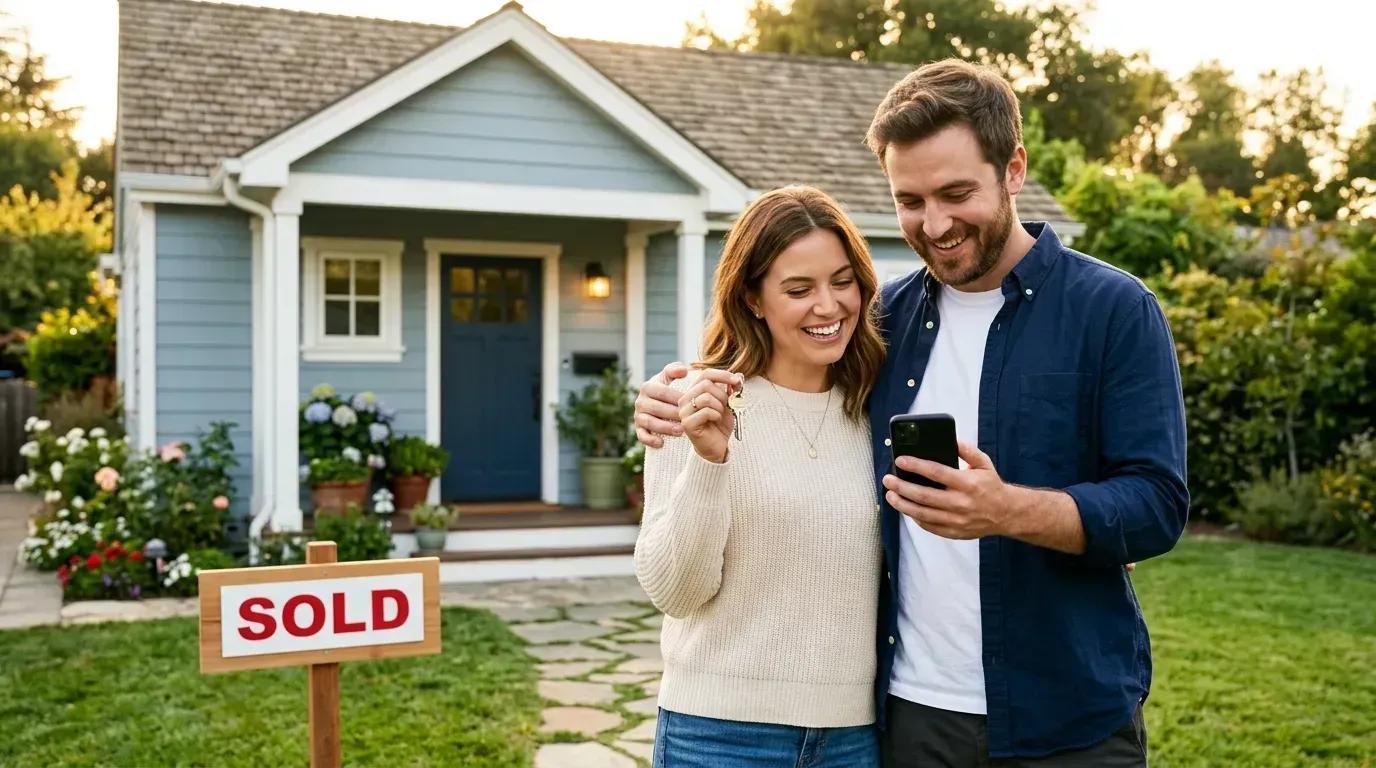
First-time homebuyers made up 24% of all home purchases in 2025, according to NAR. That is roughly 1.3 million transactions. And here is what most agents overlook: this demographic researches differently, consumes differently, and decides differently than repeat buyers. They watch more video. They scroll more social. They need more hand-holding through the process, and the agent who provides that education through video wins the deal before the first showing.
This guide breaks down why first-time buyers are uniquely responsive to video content, exactly what types of videos to create for them, how to distribute that content on the platforms where they actually spend time, and how to build this into a repeatable marketing system that does not eat 15 hours of your week.
Why First-Time Buyers Consume More Video Than Repeat Buyers
The data here is not subtle. First-time buyers are overwhelmingly millennials and Gen Z (ages 25 to 42 made up 71% of first-time purchases in 2025, per NAR). These are digital-native generations who grew up with YouTube, graduated into Instagram, and now default to TikTok and Reels for everything from restaurant recommendations to mortgage advice.
But it goes deeper than generational habits. First-time buyers have a fundamental information gap that repeat buyers do not. Someone who has bought and sold two homes already knows what a closing disclosure looks like. They know that the "charm" in the listing description usually means "small." They have reference points. First-time buyers have none of that context, and video fills the gap better than any other medium.
The Information Gap Creates Video Demand
Consider what a first-time buyer needs to understand before they even start touring homes: how pre-approval works, what earnest money is, why a home inspection matters, how property taxes affect monthly payments, what closing costs actually include, and about forty other concepts that feel obvious to agents but are completely foreign to someone who has been renting for the last decade.
Text articles cover this information, sure. But they require active reading effort. A 90-second explainer video on Instagram Reels delivers the same information while the buyer is brushing their teeth or riding the subway. The barrier to consumption is near zero, which is exactly why video content gets 403% more inquiries than text-only listings.
NAR's 2025 Home Buyer and Seller Survey found that 87% of buyers aged 25 to 33 watched at least one property video before scheduling their first showing. For buyers aged 55 to 64, that number dropped to 41%. The difference is not that older buyers dislike video. It is that younger buyers require video as a trust signal before they will pick up the phone.
Video Builds Trust Faster Than Any Other Format
First-time buyers are inherently nervous. They are about to make the largest financial commitment of their lives, and they are doing it with less experience than a seasoned investor buying their fifth rental property. They need to trust their agent, and video accelerates trust in a way that a headshot and a Zillow bio simply cannot.
When a first-time buyer watches you walk through a $325,000 three-bedroom in their target neighborhood, explaining what to look for in a kitchen layout or pointing out that the water heater was replaced last year, you become a real person with visible expertise. You are not a name on a business card anymore. You are someone they have spent five minutes with, virtually, before they ever call. By the time they do reach out, they already trust you. The sales cycle shortens dramatically.
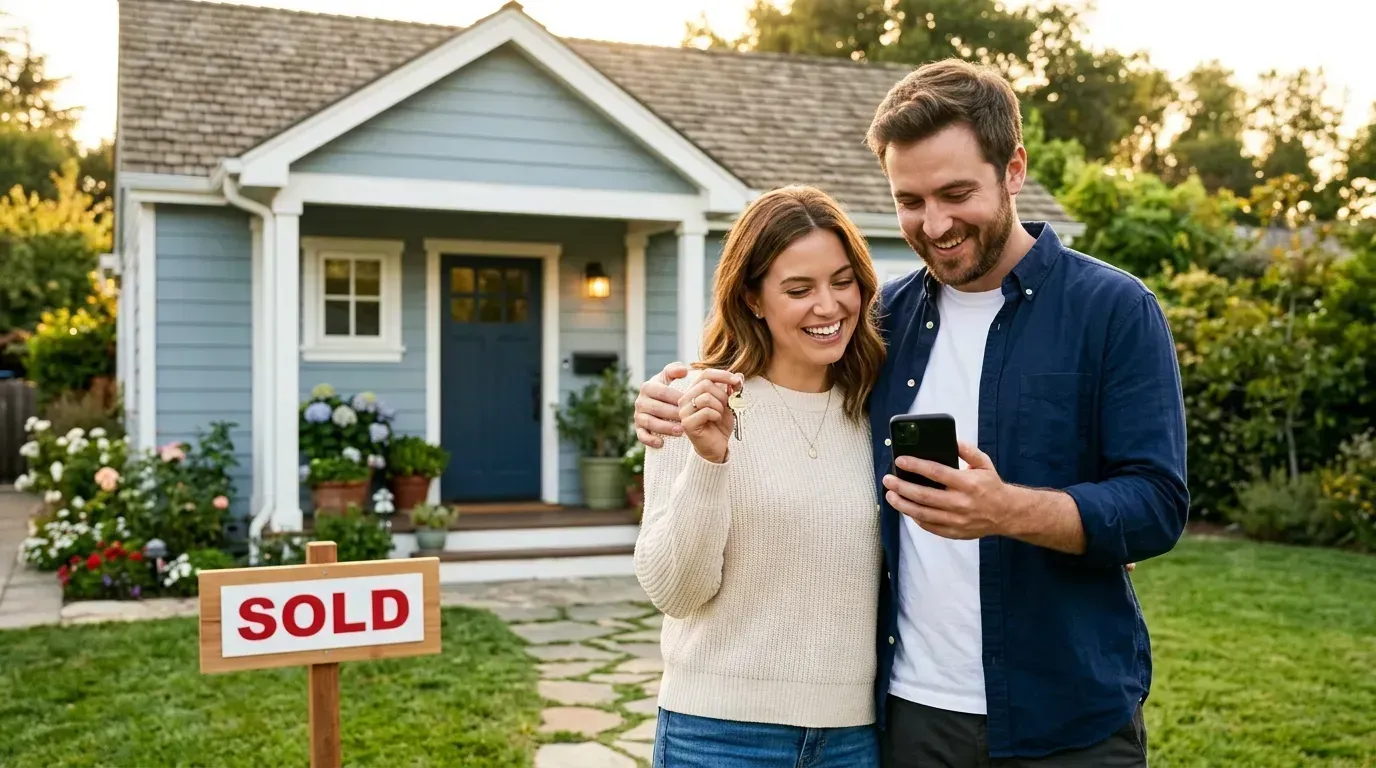
10 Video Content Ideas That Win First-Time Buyers
Not all video content is equal for this audience. A luxury drone flyover of a $4 million estate is not going to resonate with someone searching "homes under $350K near me." The content needs to match where first-time buyers are in their journey, which means a mix of educational, property-focused, and community-oriented videos.
1. "What $X Gets You" Market Tours
This is the single most effective video format for first-time buyer engagement. Pick a price point that matches your local entry-level market ($250K, $325K, $400K) and show three to four properties at that price. Walk through each one. Compare square footage, finishes, neighborhoods, and lot sizes. Be honest about tradeoffs.
These videos work because first-time buyers have almost no calibration for what their budget actually buys. They have been scrolling Zillow, but photos do not convey spatial relationships or neighborhood feel. When you show them three $325,000 homes back to back, you are giving them the context they desperately need, and positioning yourself as the agent who knows this market cold.
Production tip: you do not need drone footage or a film crew. Shoot each property on your phone in 45 seconds, then use Reel-E to generate polished listing videos from the photos you already have. String the clips together in your editing app, or post each property as a separate Reel.
2. First-Time Buyer Process Explainers
Short-form videos (60 to 90 seconds) that explain one step of the buying process per video. Topics include: "What happens at a home inspection," "Earnest money explained in 60 seconds," "Why your lender needs your tax returns," "What a title company actually does," "Closing costs breakdown for first-time buyers."
Create a series. Number them. Post one per week. First-time buyers will binge the entire series and follow your account because they know more useful content is coming. This is textbook video marketing strategy that compounds over time.
3. Neighborhood Guide Videos
First-time buyers are not just buying a house. They are buying a neighborhood, a commute, a grocery store, a vibe. They want to know what the streets feel like at 7 PM on a Tuesday. Is there a coffee shop within walking distance? What is the school district rating? How far is the nearest park?
Neighborhood guide videos answer all of this in a format that static listing data never can. Drive through the area. Stop at the local taco spot. Show the bike path, the farmers market, the playground where kids are actually playing. These videos get shared like wildfire because people forward them to friends who are also considering the area.

4. Property Walkthrough Videos (Cinematic, Not Shaky)
The bread and butter. Every listing targeted at first-time buyers should have a walkthrough video. But here is the difference between a video that works and one that gets scrolled past: production quality.
You do not need a Hollywood budget. You need smooth motion, good lighting, and music that matches the energy of the home. A $280,000 two-bedroom with updated finishes deserves the same cinematic treatment as a $2 million estate. First-time buyers are spending their entire budget on this purchase. Respect the investment by presenting it well.
This is where tools like Reel-E become genuinely useful. Upload your listing photos, select music, and the AI generates a walkthrough-style video with smooth camera movements and beat-synced transitions. The output quality matches what you would get from a videographer, and it takes under two minutes instead of a week.
5. "First Home vs. Forever Home" Expectation-Setting Videos
First-time buyers often walk in with champagne expectations on a beer budget. Not because they are unreasonable, but because their entire frame of reference is HGTV renovation reveals and Instagram interior accounts with $80,000 kitchens.
A video that honestly addresses what a first home typically looks like versus a third home is incredibly valuable. Talk about which compromises are smart (cosmetic updates, smaller yard) versus which are risky (foundation issues, bad location). This positions you as a trusted advisor, not just a transaction facilitator.
6. Mortgage and Financial Literacy Shorts
Topics like "Fixed vs. adjustable rate in 60 seconds," "How much house can you afford on $75K salary," "Down payment assistance programs in [your state]," and "PMI explained: when it kicks in and when it goes away."
These perform exceptionally well on TikTok and Instagram because they answer urgent, specific questions. First-time buyers are actively Googling these terms. If your video shows up when they search "FHA loan requirements 2026," you just captured a lead that would have gone to a lender's generic blog post.
7. Open House Recap Videos
After hosting an open house for a starter home, record a 60-second recap. Show the best features, mention the foot traffic, and hint at interest level. This creates urgency ("12 groups came through this weekend") while also showing first-time buyers what the open house experience is like. Many have never been to one and are nervous about the etiquette.
8. Client Testimonial Videos
Nothing converts first-time buyers like hearing from someone who was recently in their exact position. A 90-second video of a young couple standing in their new kitchen saying "We were terrified of the process, but [agent name] made it so much easier than we expected" is worth more than fifty paid ads.
Keep these authentic. iPhone quality is fine. Over-produced testimonials feel like infomercials and younger audiences see through them instantly.
9. "Day in the Life" Agent Content
First-time buyers want to know what working with an agent actually looks like. Shoot a quick "day in the life" showing your morning prep, a showing, a client call, an offer negotiation. This demystifies the agent relationship and makes first-time buyers feel more comfortable reaching out because they already understand what to expect.
10. Local Market Update Videos
Monthly or biweekly videos covering local inventory, median price changes, and days on market for starter-home price ranges. First-time buyers are obsessively watching the market, trying to time their entry. If you are the agent delivering this data in an easy-to-digest video format, you become their go-to source. And when they are ready to buy, you are the first call.
How to Use Reel-E for First-Time Buyer Listing Videos
Every listing in the starter-home price range should have video, full stop. The problem is that traditional videography at $350 to $750 per listing does not scale when you are handling a dozen entry-level listings per month. The margin on a $300,000 transaction does not support $500 in video production the way a $1.5 million listing does.
This is exactly the use case Reel-E was built for. Here is how agents targeting first-time buyers can use it to build a consistent video pipeline without the cost or time overhead of traditional production.
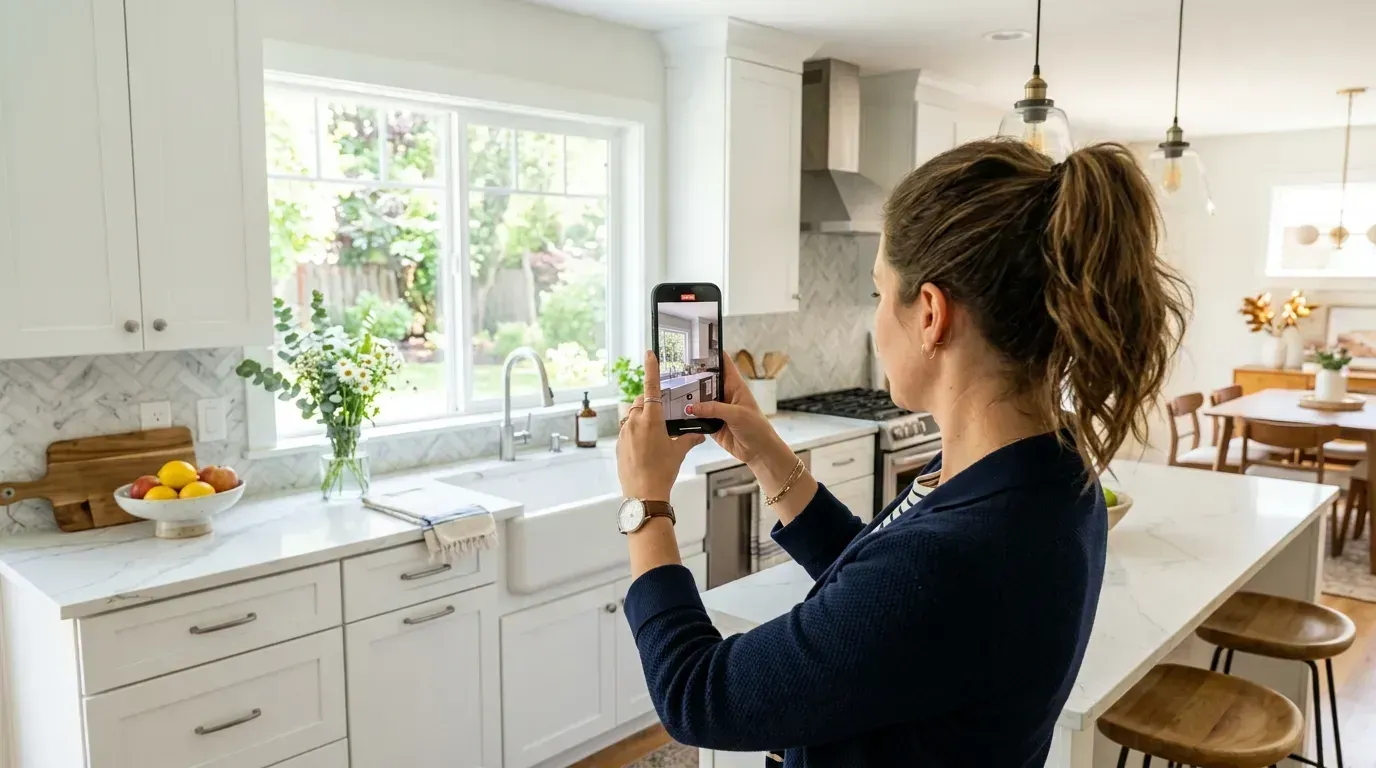
Step 1: Upload Your Listing Photos
You already have photos for every listing. If you are using a professional photographer (and you should be for most listings), those photos are ready to go. If you are shooting on your phone for a quick-turnaround listing, that works too. Reel-E's AI handles both professional and smartphone-quality photos.
Upload the full set: exterior, kitchen, living areas, bedrooms, bathrooms, backyard. The more photos you provide, the more complete the video walkthrough feels. For a typical three-bedroom starter home, 15 to 20 photos is the sweet spot.
Step 2: Choose Music That Matches the Vibe
Music selection matters more than most agents realize. A hip-hop beat on a quiet suburban colonial sends mixed signals. A soft acoustic track on a trendy urban loft feels wrong too. Reel-E offers a curated music library with genres sorted by property vibe, and the AI automatically syncs transitions to the beat.
For starter homes targeting young buyers, upbeat indie or light electronic tracks tend to perform best. They feel modern without being aggressive, and they match the optimistic energy of a first purchase.
Step 3: Get 4 Video Variants Automatically
This is where the efficiency advantage kicks in. From one upload, Reel-E generates four variants: horizontal branded (16:9 with your logo), horizontal unbranded (16:9 clean), vertical branded (9:16 with your logo), and vertical unbranded (9:16 clean).
Why does this matter? Because first-time buyers live on multiple platforms, and each one has different format requirements:
- MLS and Zillow: Horizontal unbranded (most MLS boards do not allow agent branding in listing media)
- Instagram Reels and TikTok: Vertical branded (9:16 with your logo for brand recognition)
- Facebook and YouTube: Horizontal branded (16:9 with your logo)
- Email campaigns: Horizontal unbranded (clean, professional look)
Without the four-variant system, you would need to re-edit each video manually for each platform. With Reel-E, you get all four from a single two-minute process. That is the difference between posting on one platform because you ran out of time, and distributing across every channel where first-time buyers actually are.
Step 4: Download and Distribute
Once the videos generate (usually under two minutes), download all four variants. Post the vertical version to Reels and TikTok immediately. Upload the horizontal branded version to your YouTube channel. Attach the horizontal unbranded version to your MLS listing. Include the branded version in your next lead nurture email.
The total time investment from photo upload to full multi-platform distribution: about 10 minutes per listing. Compare that to the traditional workflow of scheduling a videographer, waiting 3 to 5 business days for delivery, requesting edits, receiving a single horizontal version, then manually cropping it for social. That process takes a week minimum and costs $350 or more.
Social Media Strategy for First-Time Buyer Video Content
Creating the videos is half the battle. The other half is putting them where first-time buyers actually spend their time. And that distribution strategy looks very different from the one you would use for luxury or move-up buyers.
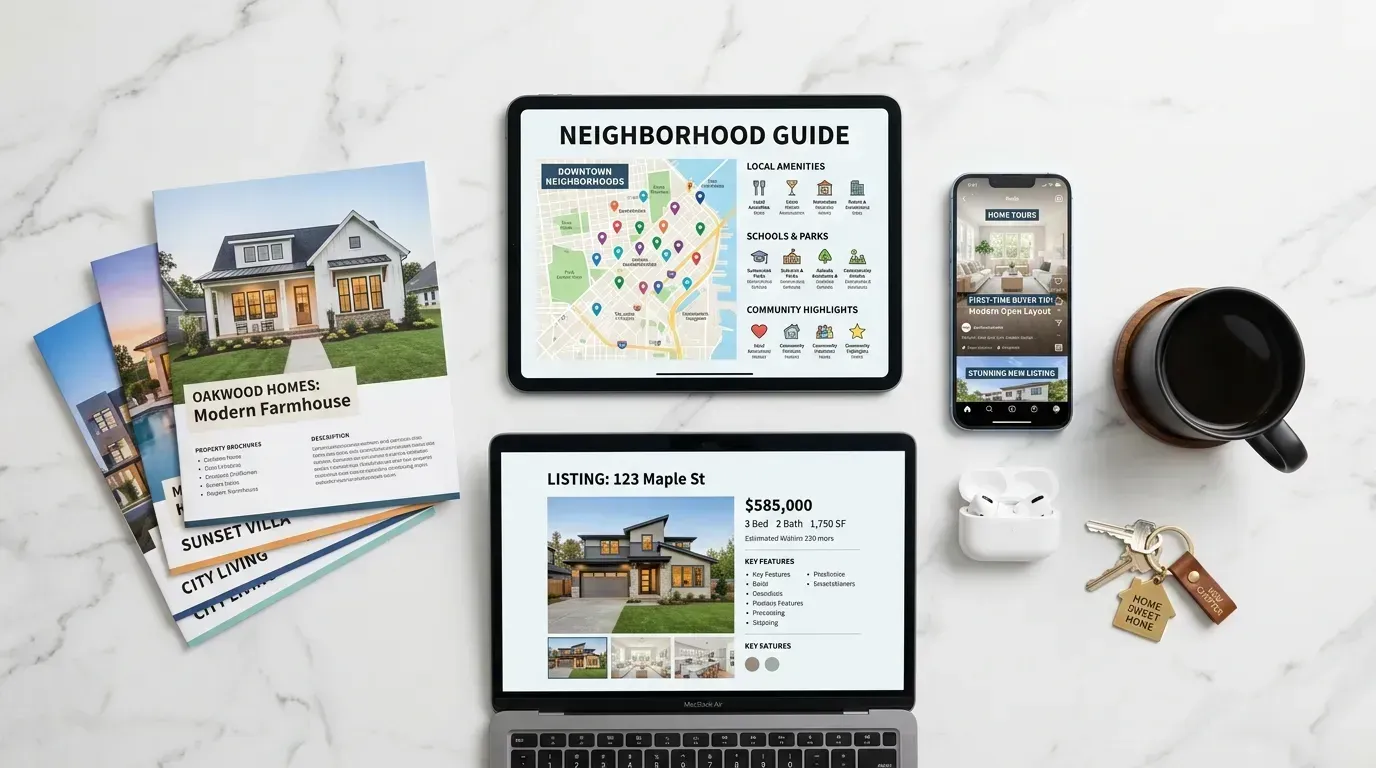
TikTok: Where First-Time Buyers Discover Agents
If you think TikTok is just for dance videos, you are about three years behind. Real estate is one of the platform's fastest-growing content categories, and the audience skews directly into the first-time buyer demographic. NAR reported that TikTok usage among agents doubled year-over-year to 28% in 2025, and the agents on TikTok are pulling leads that traditional agents never see.
Here is what works on TikTok for first-time buyer content:
- Property tours under 60 seconds. Show the best 4 to 5 rooms with quick cuts. Use trending audio when it fits naturally (forced trend-jacking feels desperate and younger audiences call it out immediately).
- "Did you know?" financial education clips. "Did you know you can buy a home with 3.5% down?" performs extremely well because it challenges a common misconception (most first-time buyers think they need 20%).
- Before/after staging reveals. Fast-paced transformations get massive engagement. If you have a listing that was staged, show the empty versus staged version.
- Market hot takes. Short, opinionated takes on local market conditions. "Starter homes in [city] are sitting 15 days longer than last month. Here is what that means for buyers." These position you as a local authority.
Posting frequency matters more on TikTok than on any other platform. Three to five posts per week is the minimum to gain traction with the algorithm. This is where having a fast video pipeline becomes essential. You cannot sustain that posting cadence if each video takes a day to produce.
Instagram Reels: The Trust-Building Platform
Instagram is where first-time buyers go after they discover you on TikTok (or Google, or a referral). They check your grid to see if you are legit. Your Reels feed functions as a portfolio and credibility signal.
Effective Instagram Reels strategy for first-time buyers:
- Carousel-style property tours. Instagram's algorithm currently favors Reels that hold attention past the 3-second mark. Start with the most visually striking room (usually the kitchen or a dramatic exterior shot) to hook the viewer.
- Educational series with consistent branding. Use a branded intro frame (your logo, series name) so viewers recognize your content in their feed. "First-Time Buyer Fridays" or "Starter Home Saturdays" give your audience a reason to come back.
- Testimonials and closing day celebrations. These are gold for first-time buyer conversion. Post the key handover, the family walking through the front door, the "we just closed" selfie. Tag the clients (with permission) for extended reach.
- Stories for behind-the-scenes. Use Stories for showing attendance (not offers), open house previews, and "which property do you prefer" polls. Stories are less polished and more personal, which builds the trust layer that Reels alone cannot.
Post Reels 4 to 5 times per week. Use 5 to 10 relevant hashtags (not 30; Instagram penalizes hashtag stuffing in 2026). Include location tags on every post. Respond to every comment within 2 hours during business hours. The algorithm rewards engagement velocity.
YouTube: The Long-Form Discovery Engine
YouTube is where first-time buyers go for deep research. They are not browsing casually. They are typing "first time home buying process step by step" and watching 10 to 15 minute videos. If you are not there, someone else is.
YouTube content strategy for first-time buyers:
- Full property tours (3 to 5 minutes). More detailed than TikTok or Reels. Walk through every room. Talk about the neighborhood, the school district, the commute times. These videos rank in Google search, which means they generate traffic for months or years.
- Educational deep-dives (8 to 15 minutes). "The Complete Guide to Buying Your First Home in [City]" or "Every Cost of Buying a Home, Explained." These pillar videos become your top-of-funnel lead magnets.
- Market update series. Monthly videos analyzing local market data for the starter-home segment. These build a subscriber base of future buyers who are watching the market and will buy when conditions feel right.
YouTube Shorts (vertical, under 60 seconds) also work well for repurposing your TikTok and Reels content. Post them consistently and they drive subscribers to your long-form content.
Facebook: Still the Referral Amplifier
Facebook is not where first-time buyers discover you. But it is where their parents, coworkers, and friends share your content. A listing video posted on Facebook gets shared by the seller's network, the neighborhood community group, and anyone who knows someone looking to buy.
For first-time buyer content on Facebook: post horizontal branded videos natively (not as YouTube links; Facebook suppresses external video links in the algorithm). Join and post in local community groups (not as spam, but as a genuine local resource). Run targeted ads to the 25 to 35 age range within your target ZIP codes, using your best listing videos as creative.
Building a Repeatable First-Time Buyer Video System
The biggest mistake agents make with video marketing is treating it as a one-off effort. You create a few videos, post them, see some engagement, then get busy with closings and stop posting for three weeks. The algorithm forgets you exist, and you have to rebuild momentum from scratch.
First-time buyer video marketing only works as a system. Here is a weekly framework that takes about 4 hours total:
Monday: Batch Your Listing Videos (45 Minutes)
Take every new listing from the past week. Upload photos to Reel-E. Generate all four variants for each listing. Download and organize into folders by platform (TikTok/Reels, YouTube, MLS, Email). Total time for 3 listings: about 45 minutes including upload, selection, and downloads.
Tuesday: Shoot One Educational Video (30 Minutes)
Pick one topic from your content calendar (you should have 12 weeks planned ahead). Record a 60 to 90 second explainer on your phone. No fancy setup required. Clean background, natural light, look at the camera, talk like a human. Edit in CapCut or directly in Instagram's editor. Done.
Wednesday: Post Listing Videos + Engage (30 Minutes)
Post your best listing video of the week to TikTok, Reels, and YouTube Shorts. Share a different listing to Facebook. Spend 15 minutes responding to comments on your recent posts. Follow and engage with 5 to 10 local accounts (mortgage lenders, home inspectors, staging companies) to build your local network on each platform.
Thursday: Neighborhood or Market Content (30 Minutes)
Post your educational video from Tuesday. Or, if you visited a neighborhood this week, post a quick neighborhood highlight. Alternate between educational content and location-based content to keep your feed diverse.
Friday: Community Engagement + Planning (30 Minutes)
Reply to DMs. Check analytics from the week (which videos got the most views, saves, shares). Plan next week's educational topic based on what performed. Share any client wins or testimonials to Stories.
That is about 3 hours of active work per week, plus 45 minutes of video generation that mostly runs in the background. The consistency compounds. After 8 to 12 weeks, you will have a library of 40+ videos, a growing follower base, and inbound leads from first-time buyers who found you through content, not cold outreach.
Content Distribution: Platform Specs and Best Practices
Knowing the technical specs for each platform matters more than most agents realize. A horizontal video cropped awkwardly for TikTok looks amateur, and first-time buyers (who are digital natives) notice immediately.
| Platform | Optimal Format | Max Length | Best Posting Time | Reel-E Variant |
|---|---|---|---|---|
| TikTok | 9:16 vertical | 10 min (aim for 30-60s) | Tue/Thu 11 AM, Sat 9 AM | Vertical branded |
| Instagram Reels | 9:16 vertical | 90s (aim for 30-60s) | Mon/Wed/Fri 12 PM | Vertical branded |
| YouTube Shorts | 9:16 vertical | 60s | Fri/Sat 2 PM | Vertical branded |
| YouTube | 16:9 horizontal | Unlimited (aim for 3-8 min) | Sat/Sun 10 AM | Horizontal branded |
| 16:9 horizontal | 240 min (aim for 30-90s) | Wed/Thu 1 PM | Horizontal branded | |
| MLS | 16:9 horizontal | Varies by board | At listing launch | Horizontal unbranded |
The vertical branded variant from Reel-E covers TikTok, Instagram Reels, and YouTube Shorts. The horizontal branded variant covers Facebook, YouTube long-form, and your website. The horizontal unbranded variant covers MLS. Three of your four variants are in constant rotation across six platforms. That is the efficiency math that makes a consistent posting cadence possible.
Measuring What Works: KPIs for First-Time Buyer Video
Vanity metrics (views, likes) feel good but do not pay the bills. Here are the metrics that actually indicate whether your first-time buyer video strategy is working:
- Saves and shares: These indicate genuine intent. When a first-time buyer saves your "closing costs breakdown" Reel, they are flagging it for reference during their purchase. Saves are the strongest engagement signal on Instagram.
- DM conversations initiated: Track how many DMs you receive per week from video viewers. This is your direct lead pipeline.
- Profile visits from Reels/TikTok: High profile visit rate means your content is creating curiosity. If profile visits are high but follows are low, your bio or grid needs work.
- Watch time percentage: On YouTube, aim for 50%+ average view duration. On Reels and TikTok, anything above 80% completion on a 30-second video is excellent. Low watch time means your hooks are weak or your content does not match the audience expectation set by the thumbnail.
- Lead-to-client conversion from video: The metric that matters most. Ask every new first-time buyer client how they found you. Track the percentage that cite social media or video. If you are doing this right, 30 to 50% of your first-time buyer clients should be coming from content within 6 months.
Common Mistakes Agents Make With First-Time Buyer Video
After watching hundreds of agents attempt video marketing for this segment, these are the patterns that kill results:
- Speaking in industry jargon. "DOM is declining in the 200K-350K tranche" means nothing to a first-time buyer. Say "Starter homes are selling faster this month. Homes under $350,000 are going under contract in 18 days instead of 30." Translate everything.
- Only posting listing videos. If your feed is nothing but property walkthroughs, you are a billboard, not a resource. Mix in educational content at a 40/60 ratio (40% listings, 60% educational and community content).
- Inconsistent posting. Three videos one week, nothing for two weeks, then five videos the next Monday. The algorithm punishes inconsistency. Pick a sustainable cadence and stick to it for at least 90 days before adjusting.
- Ignoring vertical video. Some agents still only create horizontal video because "it looks more professional." First-time buyers consume 80%+ of their social content vertically. If you are not creating vertical content, you are invisible on the platforms where this demographic lives.
- Waiting for perfection. Your first 10 videos will not be great. Neither were anyone else's. The agents who build audiences pushed through the awkward phase. The agents who quit after 3 videos because they "did not look right on camera" never got there.
- Not including a call to action. Every video should end with a clear next step. "DM me 'BUYER' for my free first-time buyer checklist." "Link in bio for available homes under $400K." "Follow for more first-time buyer tips every Tuesday." Without a CTA, engagement stops at the view.
Getting Started: Your First 30 Days
If you are reading this and have zero video content right now, here is a realistic 30-day launch plan:
Week 1: Set up TikTok and Instagram business accounts if you do not have them. Create a Reel-E account and generate listing videos for your 2 to 3 active listings. Post one listing video per platform. Record one 60-second educational video on your phone ("3 things every first-time buyer should know before touring homes").
Week 2: Post 3 videos total (2 listing, 1 educational). Start engaging with local accounts and responding to comments on your posts. Study which of your Week 1 videos performed best and note why.
Week 3: Post 4 videos total. Add a neighborhood guide or market update video to the mix. Start using Stories for behind-the-scenes content. Create a highlight reel on Instagram for "First-Time Buyers."
Week 4: Post 5 videos total. Review your analytics dashboard. Which content type got the most engagement? Which platform drove the most profile visits? Double down on what works. Start planning your Month 2 content calendar.
By day 30, you will have 15+ pieces of video content across multiple platforms, a developing feel for what resonates with your local first-time buyer audience, and the beginnings of a repeatable system. That is more video content than 90% of agents produce in an entire year.
The agents who will dominate the first-time buyer segment in 2026 and beyond are the ones building their video presence right now. The tools exist. The audience is waiting. The only variable is whether you start.
Try Reel-E free and generate your first listing video in under 2 minutes. No production crew required.