
Property management companies usually have two marketing problems hiding inside one budget. Owners want proof that their asset will be protected and operated well. Renters want an accurate home, a fair process, and a responsive next step. One generic funnel cannot do both jobs without becoming vague to everyone.
My property-management perspective comes from producing media around institutional portfolios and watching owners, operators, leasing teams, and residents evaluate the same asset differently. I do not pretend that makes me the person fixing the midnight leak. It does make the proof problem very clear.
Who this is for: property management companies balancing owner acquisition, leasing support, and resident communication.
Research note: Researched vertical operating framework using current fair-housing and video-practice sources where applicable. Local rules, asset facts, platform terms, and performance claims require project-specific verification.
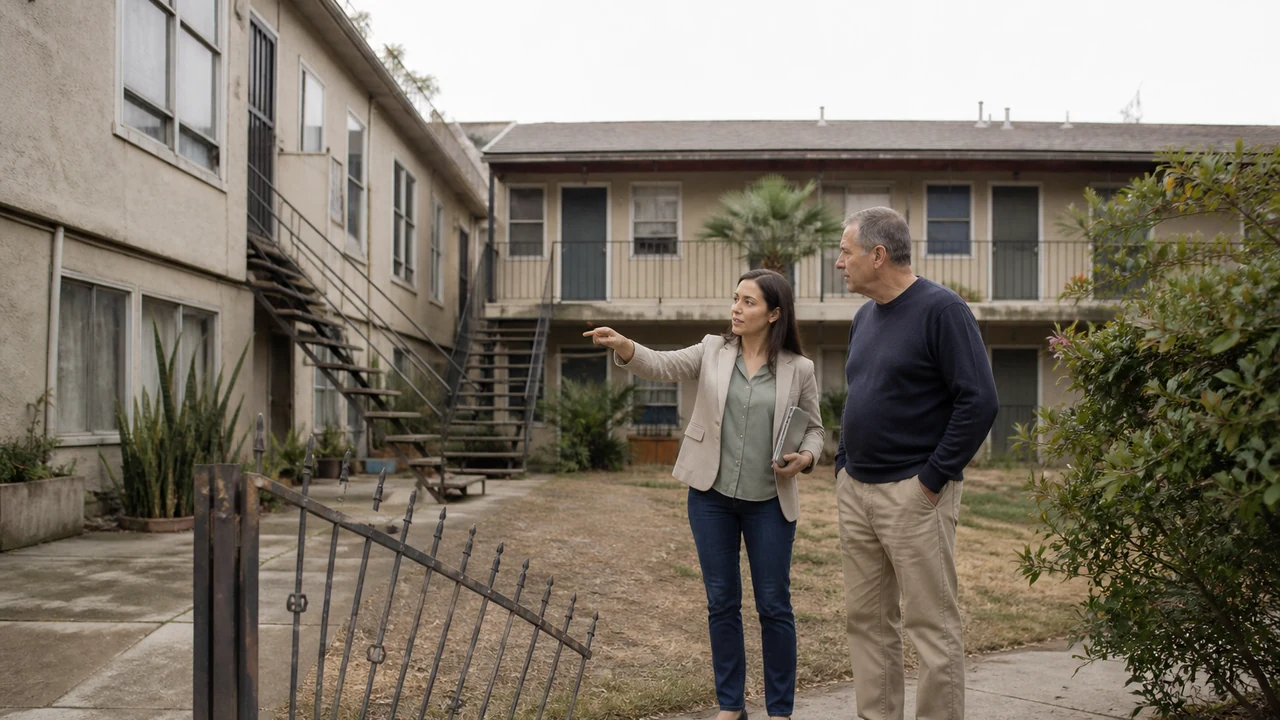
Build Two Funnels, Not One Blurry One
Build one path for owners evaluating the management company and another for renters evaluating a home. They can share operating evidence, but they should not receive the same promise or land on the same generic page.
| Path | Use It When | Reconsider It When |
|---|---|---|
| Owner Acquisition | This audience is the constraint on profitable owner relationships and healthy property-level leasing performance and the team has proof and response capacity for it. | The same creative and destination are being used for a different stakeholder journey. |
| Prospect Leasing | prospect leasing is the constraint on profitable owner relationships and healthy property-level leasing performance, and the team can prove property media plus scoped performance reports at the owned destination. | owner acquisition and prospect leasing still share one generic promise, response queue, or campaign page. |
| Resident Communication and Retention | resident communication and retention depends on longer-cycle trust, permissioned vendor controls, and a response path through property listings or email. | The property management team cannot maintain vendor controls or identify the owner who advances resident communication and retention. |
Owner Acquisition
- Best Fit: This audience is the constraint on profitable owner relationships and healthy property-level leasing performance and the team has proof and response capacity for it.
- Pause If: The same creative and destination are being used for a different stakeholder journey.
- Review: Share of the property management audience taking the defined action that advances profitable owner relationships and healthy property-level leasing performance within owner acquisition, prospect leasing, or resident communication and retention. Improve the promise, operating process, destination, or qualification for the weak property management journey.
- Control: Mixing Owner and Renter Promises. Use separate destinations, proof, and calls to action.
Prospect Leasing
- Best Fit: prospect leasing is the constraint on profitable owner relationships and healthy property-level leasing performance, and the team can prove property media plus scoped performance reports at the owned destination.
- Pause If: owner acquisition and prospect leasing still share one generic promise, response queue, or campaign page.
- Review: Time and conversion between named property management stages under a consistent cohort and source definition. Fix the owner, response standards, or handoff between owner acquisition, prospect leasing, and resident communication and retention.
- Control: Unsupported Performance Guarantees. Scope reports to actual properties, periods, assumptions, and management contribution.
Resident Communication and Retention
- Best Fit: resident communication and retention depends on longer-cycle trust, permissioned vendor controls, and a response path through property listings or email.
- Pause If: The property management team cannot maintain vendor controls or identify the owner who advances resident communication and retention.
- Review: Contribution toward profitable owner relationships and healthy property-level leasing performance compared with production, search and local discovery distribution, and response cost. Change the property management channel, scope, or audience instead of optimizing impressions alone.
- Control: Housing-Ad Compliance. Review leasing creative and targeting under current fair-housing guidance.
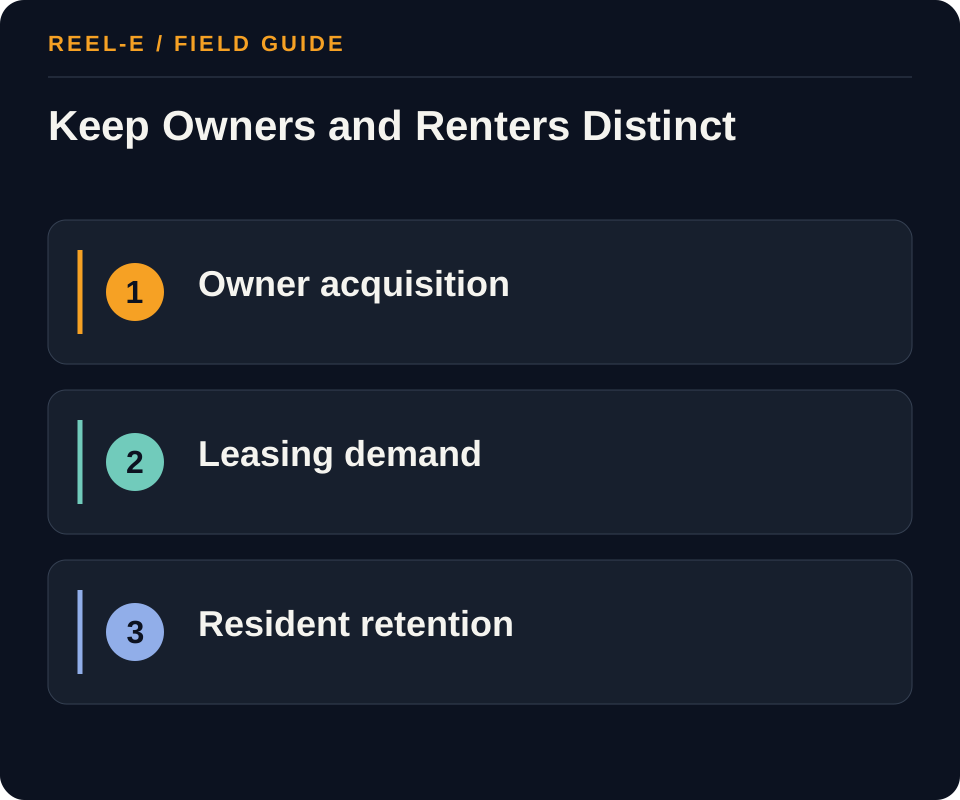
Where the Marketing Has to Meet the Operation
Owners Want to See Judgment
A clear reporting sample, inspection standard, maintenance communication path, leasing process, and decision example reveal more than a long list of services. The evidence should match the property types the firm is equipped to manage.
Renters Need Current Truth
Condition, availability, price, fees, policies, and response expectations age quickly. The leasing campaign should pull from a controlled source instead of asking every channel to remember what changed.
Local Reputation Is an Operating Artifact
Reviews and referrals are shaped by communication, maintenance, move-in, and move-out experiences. Marketing can make those signals easier to find and answer, but it cannot manufacture them indefinitely.
Two Pages I Would Never Combine
The Owner Proof Page
Lead with the property types and markets the firm actually serves, then show the management process, communication rhythm, reporting example, leasing evidence, maintenance coordination, team roles, and a clear evaluation step. Explain assumptions and avoid guarantees. The page should help an owner decide whether a serious conversation is worthwhile, not imply that every asset will receive the same result because the website used a confident percentage.
The Renter Property Page
Lead with the specific home or community, current condition and availability, full cost context, policies, truthful media, accessibility information where available, tour or application path, and response expectation. Keep fair-housing controls active in copy and targeting. The page should make the next step easier for a prospective renter without asking them to decode the management company's owner-acquisition pitch first.
The Proof I Would Ask the Firm to Produce
Show the Process Without Exposing the Client
Use a redacted owner report, communication timeline, inspection standard, maintenance triage example, leasing checklist, or decision case with permission and clear assumptions. Explain who owns each step and what the artifact does not prove. This turns operations into credible marketing while protecting residents, owners, addresses, financial details, and vendor information. A process sample should demonstrate judgment, not accidentally become a public property file.
The Handoff That Protects Both Funnels
Use One Intake With Two Clear Routes
Identify whether the person is an owner, prospect, resident, partner, vendor, or another audience; capture the property and market context; record permission; and route to the appropriate team with a response expectation. Do not ask renters to choose from owner-service categories or make owners enter a property address into a unit inquiry form. A clear intake respects the relationship before the first human response and gives reporting a stable starting point.
Use Operations as the Proof
Do Not Mix Owner Acquisition and Renter Leasing
Owners evaluate process, reporting, communication, maintenance control, leasing capability, risk management, market knowledge, and economics. Renters evaluate a specific property, unit, price and fees, availability, policies, tour, application, and service expectations. Use separate pages, messages, proof sets, actions, owners, and measurement. A generic campaign speaking to both often satisfies neither and can create housing-ad risk when owner tools are reused for leasing.
Draw two funnels and assign every campaign to exactly one.
Build Owner Proof from Scoped Evidence
Document service model, coverage, onboarding, leasing workflow, maintenance triage, vendor controls, communication standards, reporting example, and escalation. Use performance evidence only with property, period, definition, assumptions, and management contribution clear. Avoid universal rent, occupancy, return, or savings guarantees. A transparent process and sample report can be more credible than an unsourced headline result.
Use scoped evidence cards with source and limitation.
Connect Leasing Truth and Dual-Funnel Economics
Use one source for availability, pricing context, fees, policies, labels, plans, tours, and application. Distinguish exact units, models, similar units, and renderings. Track owner inquiries, managed-unit fit, proposals, agreements, contribution, and retention separately from leasing sessions, response, tours, applications, leases, days, and source cost. Allocate shared production cost transparently and diagnose service capacity before increasing volume.
Maintain separate owner and renter scorecards.
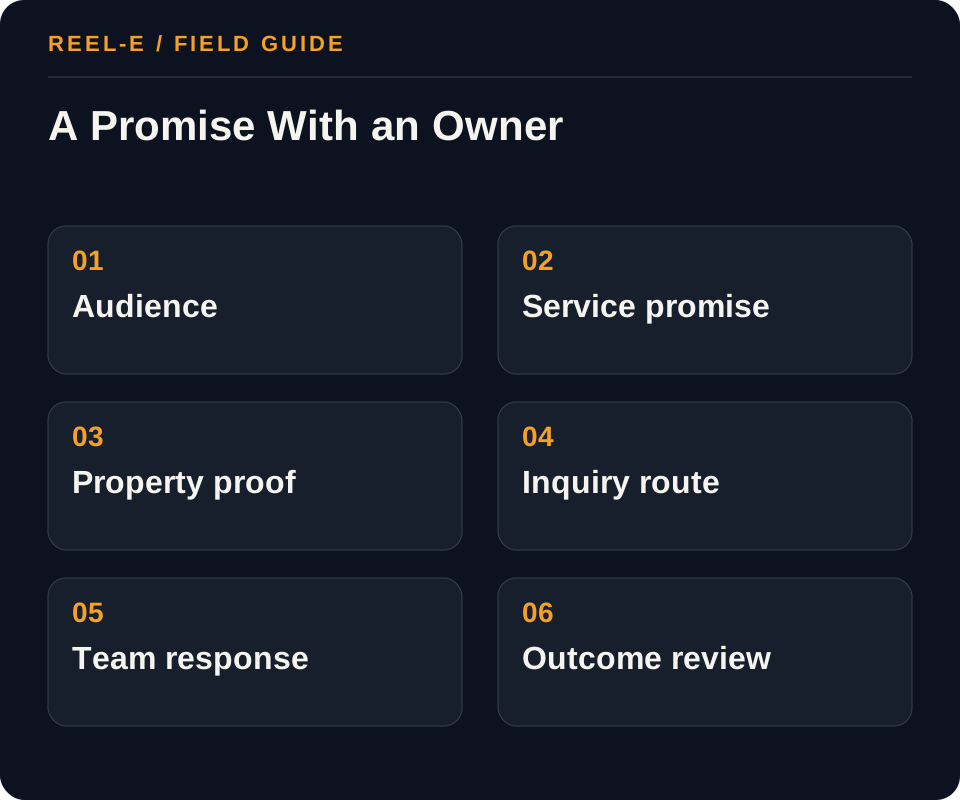
Connect Local Discovery to a Real Handoff
Map both funnels from discovery through response and handoff. Name the shared evidence, the separate destinations, and the person responsible for every point where a prospect can reasonably expect an answer.
1. Separate the Journeys
Map owner acquisition, prospect leasing, and resident communication and retention independently. For each, record the triggering event, core uncertainty, required facts, people involved, typical objections, destination, conversion action, response owner, and sales or leasing stage.
- Record: Audience in the Dual-Funnel Map
- Control: Use separate destinations, proof, and calls to action.
- Review: Share of the property management audience taking the defined action that advances profitable owner relationships and healthy property-level leasing performance within owner acquisition, prospect leasing, or resident communication and retention. Improve the promise, operating process, destination, or qualification for the weak property management journey.
2. Create the Verified Proof Set
Assemble current, permissioned evidence such as operating process, response standards, property media, scoped performance reports, vendor controls, resident service workflows. Date time-sensitive facts, disclose renderings or staged imagery, distinguish aspiration from delivered condition, and remove any asset that cannot be licensed or substantiated.
- Record: Period in the Owner Evidence Card
- Control: Scope reports to actual properties, periods, assumptions, and management contribution.
- Review: Time and conversion between named property management stages under a consistent cohort and source definition. Fix the owner, response standards, or handoff between owner acquisition, prospect leasing, and resident communication and retention.
3. Build the Owned Destination
Give the property management campaign an owned page or sales asset that combines operating process, response standards, and property media with the current status, next action, accessibility, and analytics needed for profitable owner relationships and healthy property-level leasing performance. Posts in search and local discovery and owner education should route to this source rather than carry every changeable detail.
- Record: Promise in the Dual-Funnel Map
- Control: Review leasing creative and targeting under current fair-housing guidance.
- Review: Contribution toward profitable owner relationships and healthy property-level leasing performance compared with production, search and local discovery distribution, and response cost. Change the property management channel, scope, or audience instead of optimizing impressions alone.
4. Plan Capture and Derivatives
Write the property management media brief from unanswered questions in owner acquisition and prospect leasing. Capture operating process, response standards, property media, then produce horizontal, vertical, still, thumbnail, presentation, or email derivatives only for named jobs in search and local discovery, owner education, broker/referral partners, property listings. Label exceptions that affect resident communication and retention instead of hiding them in cinematic coverage.
- Record: Baseline in the Owner Evidence Card
- Control: Keep one verified property management asset library, but give owner acquisition, prospect leasing, and resident communication and retention distinct messages, destinations, and actions.
- Review: Share of the property management audience taking the defined action that advances profitable owner relationships and healthy property-level leasing performance within owner acquisition, prospect leasing, or resident communication and retention. Improve the promise, operating process, destination, or qualification for the weak property management journey.
5. Assign Channel Roles
Use search and local discovery, owner education, broker/referral partners, property listings, email, sales enablement video selectively. Label each as discovery, proof, nurture, retargeting, sales enablement, or retention; set owner, cadence, spend, audience rule, destination, and stop condition.
- Record: Destination in the Dual-Funnel Map
- Control: Define the qualified action, movement toward profitable owner relationships and healthy property-level leasing performance, and source economics before launching through search and local discovery.
- Review: Time and conversion between named property management stages under a consistent cohort and source definition. Fix the owner, response standards, or handoff between owner acquisition, prospect leasing, and resident communication and retention.
6. Run the Operating Review
For the property management program, review operating process completion and response through search and local discovery weekly, movement toward profitable owner relationships and healthy property-level leasing performance biweekly, and source economics monthly. Diagnose whether owner acquisition, prospect leasing, or resident communication and retention is constrained by proof, destination, channel, or follow-up before concluding that demand is weak.
- Record: Constraints in the Owner Evidence Card
- Control: Use separate destinations, proof, and calls to action.
- Review: Contribution toward profitable owner relationships and healthy property-level leasing performance compared with production, search and local discovery distribution, and response cost. Change the property management channel, scope, or audience instead of optimizing impressions alone.

A 90-Day Rollout
| Window | Work | Finish Line |
|---|---|---|
| Days 1-30 | Separate the Journeys; Create the Verified Proof Set | Baseline and first complete path |
| Days 31-60 | Build the Owned Destination; Plan Capture and Derivatives | Repeatable production and handoff |
| Days 61-90 | Assign Channel Roles; Run the Operating Review | Review, correction, and next allocation |
A Worked Example: Property Management Campaign with Three Stakeholder Journeys
The situation: The team has credible property assets but one generic brochure and campaign currently attempts to serve owner acquisition, prospect leasing, and resident communication and retention. Engagement is reported, but nobody can show which journey advances.
The approach: The team creates separate messages and destinations, reuses one verified media library, and shows operating process, response standards, property media only where each is relevant. search and local discovery, owner education, broker/referral partners receive distinct hooks and next actions, while one owner handles every qualified response.
The result to review: Reporting now shows which journey contributes to profitable owner relationships and healthy property-level leasing performance. The team can improve the weak stage without replacing the entire campaign or publishing more generic content.
The firm becomes clearer to both audiences because it stops asking one broad page to prove two different businesses. The operating evidence stays shared, while the next step becomes specific.
Measure Owner Economics and Leasing Speed Separately
Owner acquisition needs qualified opportunities, close economics, and retention context. Leasing needs response speed, tour and application progression, days vacant, and contribution. Keep the scoreboards connected but separate.
| Metric | Definition | How to Use It |
|---|---|---|
| Property Management Qualified Next-Action Rate | Share of the property management audience taking the defined action that advances profitable owner relationships and healthy property-level leasing performance within owner acquisition, prospect leasing, or resident communication and retention. | Improve the promise, operating process, destination, or qualification for the weak property management journey. |
| Property Management Stage Velocity | Time and conversion between named property management stages under a consistent cohort and source definition. | Fix the owner, response standards, or handoff between owner acquisition, prospect leasing, and resident communication and retention. |
| Property Management Contribution Economics | Contribution toward profitable owner relationships and healthy property-level leasing performance compared with production, search and local discovery distribution, and response cost. | Change the property management channel, scope, or audience instead of optimizing impressions alone. |
Tools You Can Use
Dual-Funnel Map
Keep owner and renter promises, proof, and actions distinct.
- Audience: Current fact, source, owner, approval date, effect on separate the journeys, and fit with owner acquisition.
- Decision: Current fact, source, owner, approval date, effect on create the verified proof set, and fit with prospect leasing.
- Promise: Current fact, source, owner, approval date, effect on build the owned destination, and fit with resident communication and retention.
- Proof: Current fact, source, owner, approval date, effect on plan capture and derivatives, and fit with owner acquisition.
- Destination: Current fact, source, owner, approval date, effect on assign channel roles, and fit with prospect leasing.
- Response Owner: Current fact, source, owner, approval date, effect on run the operating review, and fit with resident communication and retention.
- Stage: Current fact, source, owner, approval date, effect on separate the journeys, and fit with owner acquisition.
- Economics: Current fact, source, owner, approval date, effect on create the verified proof set, and fit with prospect leasing.
- Compliance: Current fact, source, owner, approval date, effect on build the owned destination, and fit with resident communication and retention.
Owner Evidence Card
Use performance proof without unsupported guarantees.
- Property and Scope: Current fact, source, owner, approval date, effect on create the verified proof set, and fit with prospect leasing.
- Period: Current fact, source, owner, approval date, effect on build the owned destination, and fit with resident communication and retention.
- Metric Definition: Current fact, source, owner, approval date, effect on plan capture and derivatives, and fit with owner acquisition.
- Baseline: Current fact, source, owner, approval date, effect on assign channel roles, and fit with prospect leasing.
- Management Contribution: Current fact, source, owner, approval date, effect on run the operating review, and fit with resident communication and retention.
- Constraints: Current fact, source, owner, approval date, effect on separate the journeys, and fit with owner acquisition.
- Source: Current fact, source, owner, approval date, effect on create the verified proof set, and fit with prospect leasing.
- Approval: Current fact, source, owner, approval date, effect on build the owned destination, and fit with resident communication and retention.
Where This Usually Breaks
Avoid unsupported performance guarantees, mixed owner and renter claims, stale listing facts, privacy problems, and housing-ad violations. Operational credibility is valuable precisely because it can be checked.
| Risk | Practical Control |
|---|---|
| Mixing Owner and Renter Promises | Use separate destinations, proof, and calls to action. |
| Unsupported Performance Guarantees | Scope reports to actual properties, periods, assumptions, and management contribution. |
| Housing-Ad Compliance | Review leasing creative and targeting under current fair-housing guidance. |
| One Creative for Every Property Management Stakeholder | Keep one verified property management asset library, but give owner acquisition, prospect leasing, and resident communication and retention distinct messages, destinations, and actions. |
| Property Management Vanity Measurement | Define the qualified action, movement toward profitable owner relationships and healthy property-level leasing performance, and source economics before launching through search and local discovery. |
Mixing Owner and Renter Promises
- Control: Use separate destinations, proof, and calls to action.
- Review Stage: Separate the Journeys
- Early Warning: Share of the property management audience taking the defined action that advances profitable owner relationships and healthy property-level leasing performance within owner acquisition, prospect leasing, or resident communication and retention.
- Response: Improve the promise, operating process, destination, or qualification for the weak property management journey.
Unsupported Performance Guarantees
- Control: Scope reports to actual properties, periods, assumptions, and management contribution.
- Review Stage: Create the Verified Proof Set
- Early Warning: Time and conversion between named property management stages under a consistent cohort and source definition.
- Response: Fix the owner, response standards, or handoff between owner acquisition, prospect leasing, and resident communication and retention.
Housing-Ad Compliance
- Control: Review leasing creative and targeting under current fair-housing guidance.
- Review Stage: Build the Owned Destination
- Early Warning: Contribution toward profitable owner relationships and healthy property-level leasing performance compared with production, search and local discovery distribution, and response cost.
- Response: Change the property management channel, scope, or audience instead of optimizing impressions alone.
One Creative for Every Property Management Stakeholder
- Control: Keep one verified property management asset library, but give owner acquisition, prospect leasing, and resident communication and retention distinct messages, destinations, and actions.
- Review Stage: Plan Capture and Derivatives
- Early Warning: Share of the property management audience taking the defined action that advances profitable owner relationships and healthy property-level leasing performance within owner acquisition, prospect leasing, or resident communication and retention.
- Response: Improve the promise, operating process, destination, or qualification for the weak property management journey.
Property Management Vanity Measurement
- Control: Define the qualified action, movement toward profitable owner relationships and healthy property-level leasing performance, and source economics before launching through search and local discovery.
- Review Stage: Assign Channel Roles
- Early Warning: Time and conversion between named property management stages under a consistent cohort and source definition.
- Response: Fix the owner, response standards, or handoff between owner acquisition, prospect leasing, and resident communication and retention.
Verify current primary guidance for the actual jurisdiction, platform, campaign, property, and professional relationship. This researched guide is not individualized legal, aviation, financial, privacy, or compliance advice.
My Bottom Line
Separate the owner and renter journeys, then support both with evidence from the way the company actually operates. ‘Full service’ can stay, but it finally has to bring receipts.
Sources and Research Notes
Open the source ledger- HUD guidance on digital housing advertising. Primary federal guidance on Fair Housing Act considerations in digital targeting and delivery. Accessed August 12, 2026.
- National Association of REALTORS Fair Housing resources. Industry resource for fair-housing education; local counsel and brokerage policy remain controlling. Accessed August 12, 2026.
- NAR video marketing practice article. Industry practice source for concise, audience-centered real-estate video planning. Accessed August 12, 2026.
- U.S. Census housing data. Primary federal housing context. Accessed August 12, 2026.
- Buildium owner-acquisition ideas. Format and coverage reference. Credible owner-focused guide measured at 1,672 words and 18 images; does not fully separate owner and renter systems. Accessed August 12, 2026.
- Hemlane strategies. Format and coverage reference. Current tactical breadth; limited shared proof governance and dual-funnel economics. Accessed August 12, 2026.
- DoorLoop strategies. Format and coverage reference. Broad list and software context; less complete on leasing compliance and response ownership. Accessed August 12, 2026.
Sources support only the claims described in their notes. Reopen current primary sources before a purchase, launch, or compliance decision.