
Apartment marketing idea lists are easy to write and surprisingly hard to use. A rooftop event, resident referral, pet feature, neighborhood video, and paid retargeting campaign do not share the same goal, inputs, owner, cost, or compliance check. Treat ideas as stage-specific campaigns, not a bowl of tactics.
Filming apartment communities and institutional properties has made me wary of idea lists that ignore the actual building. The best campaign usually begins with a real leasing constraint, a real resident experience, or a question prospects keep asking, not with whatever theme happened to perform well for a property three states away.
Who this is for: property managers and leasing teams translating strategy into property-level campaigns.
Research note: Researched vertical operating framework using current fair-housing and video-practice sources where applicable. Local rules, asset facts, platform terms, and performance claims require project-specific verification.

Choose Ideas by Funnel Stage
Choose ideas by the stage that needs help. Discovery, tour conversion, application completion, resident advocacy, and renewal are different jobs. A rooftop event cannot solve all five, although it may produce a heroic amount of leftover sparkling water.

| Path | Use It When | Reconsider It When |
|---|---|---|
| New Renter Discovery | This audience is the constraint on more qualified tours, completed applications, and resident referrals without undifferentiated discounting and the team has proof and response capacity for it. | The same creative and destination are being used for a different stakeholder journey. |
| Tour and Application Conversion | tour and application conversion is the constraint on more qualified tours, completed applications, and resident referrals without undifferentiated discounting, and the team can prove amenity use cases plus commute/access facts at the owned destination. | new renter discovery and tour and application conversion still share one generic promise, response queue, or campaign page. |
| Resident Advocacy and Renewal | resident advocacy and renewal depends on longer-cycle trust, permissioned staff response process, and a response path through short-form video or email/SMS where permitted. | The apartment team cannot maintain staff response process or identify the owner who advances resident advocacy and renewal. |
New Renter Discovery
- Best Fit: This audience is the constraint on more qualified tours, completed applications, and resident referrals without undifferentiated discounting and the team has proof and response capacity for it.
- Pause If: The same creative and destination are being used for a different stakeholder journey.
- Review: Share of the apartment audience taking the defined action that advances more qualified tours, completed applications, and resident referrals without undifferentiated discounting within new renter discovery, tour and application conversion, or resident advocacy and renewal. Improve the promise, real unit walkthroughs, destination, or qualification for the weak apartment journey.
- Control: Ideas Disconnected from Availability. Route every campaign to current units, dates, and terms.
Tour and Application Conversion
- Best Fit: tour and application conversion is the constraint on more qualified tours, completed applications, and resident referrals without undifferentiated discounting, and the team can prove amenity use cases plus commute/access facts at the owned destination.
- Pause If: new renter discovery and tour and application conversion still share one generic promise, response queue, or campaign page.
- Review: Time and conversion between named apartment stages under a consistent cohort and source definition. Fix the owner, floor-plan context, or handoff between new renter discovery, tour and application conversion, and resident advocacy and renewal.
- Control: Resident Privacy or Unapproved Testimonials. Use explicit permissions and documented media rights.
Resident Advocacy and Renewal
- Best Fit: resident advocacy and renewal depends on longer-cycle trust, permissioned staff response process, and a response path through short-form video or email/SMS where permitted.
- Pause If: The apartment team cannot maintain staff response process or identify the owner who advances resident advocacy and renewal.
- Review: Contribution toward more qualified tours, completed applications, and resident referrals without undifferentiated discounting compared with production, listing portals distribution, and response cost. Change the apartment channel, scope, or audience instead of optimizing impressions alone.
- Control: Protected-Class Proxies in Targeting. Review creative, audiences, optimization, and delivery under fair-housing guidance.
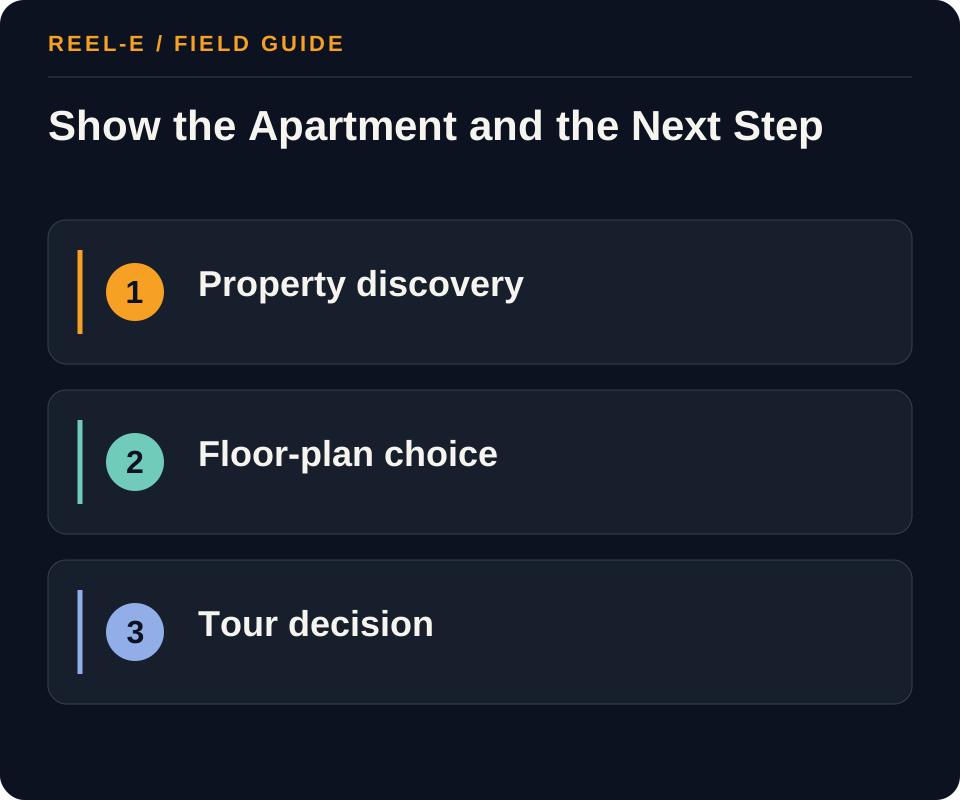
How I Decide Whether an Idea Has Legs
The Input Has to Be Real
A resident story needs consent and a genuine experience. A neighborhood series needs local knowledge. A floor-plan campaign needs current availability. If the proof is not available, the idea is not ready.
One Question Is Enough
A short video that answers where packages go, how a one-bedroom lays out, or what the walk to transit feels like can be more useful than a sweeping brand piece. Specificity is often what makes modest production feel thoughtful.
The Leasing Team Has to Inherit It
Before launch, give the on-site team the offer, facts, audience, response language, and stop date. A clever campaign becomes less charming when the first prospect knows more about it than the person answering the phone.
The Smallest Useful Test
Run One Property, One Audience, One Stage
Choose a campaign the on-site team can fully support for two to four weeks, keep the offer and availability current, and define the response path before launch. Record effort and result. A modest test with a real handoff will teach more than rolling a clever idea across the portfolio before anyone knows whether the leasing team can explain it.
The Rule for Keeping an Idea
Keep It Only If the Property Can Repeat the Resulting Experience
A campaign should leave behind a useful audience, asset, insight, referral path, or operating improvement, not only a folder of event photos. Review the effort, resident and staff burden, permissions, leasing-stage effect, and whether the idea still fits current inventory. A fun idea can remain fun while being held to a real standard. Free pizza does not need to become strategy, but it should at least know which meeting it attended.
Turn a Fun Idea Into a Real Campaign
Choose Ideas from the Constrained Leasing Stage
If discovery is weak, improve local search, listings, floor-plan pages, and source distribution. If inquiries are strong but tours are weak, inspect availability truth, response, scheduling, and media context. If tours are strong but applications are weak, inspect fees, qualification, unit fit, timing, and follow-up. If renewals or referrals are weak, property operations may be the constraint. An idea is useful only when it addresses a diagnosed stage.
Name the stage, baseline, and failure hypothesis before choosing a campaign.
Build Campaign Cards with Complete Inputs
Each idea should state renter question, required facts, availability dependency, media, channel, owner, setup and recurring effort, approval, fair-housing check, destination, response route, metric, and stop condition. A resident story needs consent. A model walkthrough needs exact labeling. A concession needs a source and expiry. These fields make ideas comparable and executable instead of inspirational filler.
Reject ideas without inputs, owner, destination, and metric.
Use Media to Answer One Renter Question
Create unit and plan walkthroughs, furniture-scale examples, route-to-amenity clips, parking and access explanations, package-delivery or pet-area context, natural-light sequences, and clear model-versus-actual labels. Avoid generic amenity montages that show no unit relationship. Keep captions factual and route to current availability. Set a retirement trigger when finish, policy, amenity, construction, or availability changes.
Assign one uncertainty and one source fact to every asset.
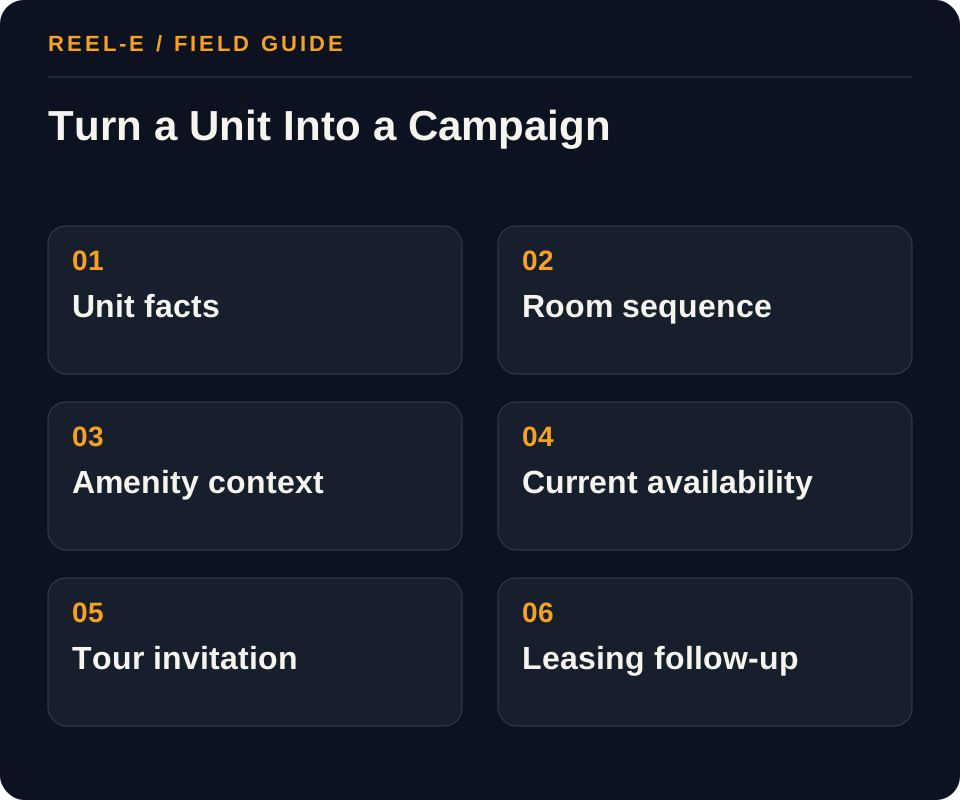
A Repeatable Campaign Card for Every Idea
Turn every idea into a compact campaign card with a stage, audience, input, owner, inventory dependency, compliance check, destination, and metric. Then run only what the property can support well.
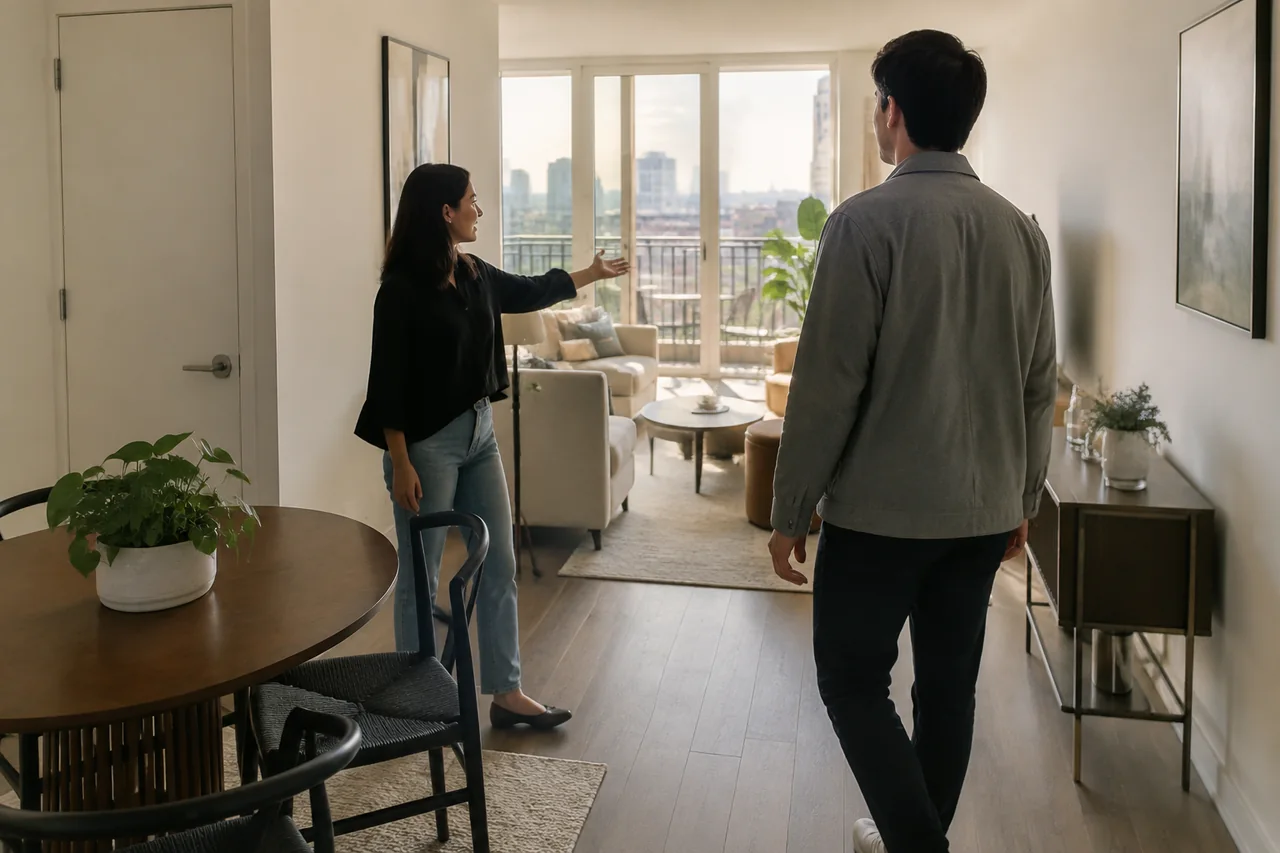
1. Separate the Journeys
Map new renter discovery, tour and application conversion, and resident advocacy and renewal independently. For each, record the triggering event, core uncertainty, required facts, people involved, typical objections, destination, conversion action, response owner, and sales or leasing stage.
- Record: Funnel Stage in the Apartment Campaign Card
- Control: Route every campaign to current units, dates, and terms.
- Review: Share of the apartment audience taking the defined action that advances more qualified tours, completed applications, and resident referrals without undifferentiated discounting within new renter discovery, tour and application conversion, or resident advocacy and renewal. Improve the promise, real unit walkthroughs, destination, or qualification for the weak apartment journey.
2. Create the Verified Proof Set
Assemble current, permissioned evidence such as real unit walkthroughs, floor-plan context, amenity use cases, commute/access facts, staff response process, resident-approved stories. Date time-sensitive facts, disclose renderings or staged imagery, distinguish aspiration from delivered condition, and remove any asset that cannot be licensed or substantiated.
- Record: Inquiry in the Leasing Constraint Diagnosis
- Control: Use explicit permissions and documented media rights.
- Review: Time and conversion between named apartment stages under a consistent cohort and source definition. Fix the owner, floor-plan context, or handoff between new renter discovery, tour and application conversion, and resident advocacy and renewal.
3. Build the Owned Destination
Give the apartment campaign an owned page or sales asset that combines real unit walkthroughs, floor-plan context, and amenity use cases with the current status, next action, accessibility, and analytics needed for more qualified tours, completed applications, and resident referrals without undifferentiated discounting. Posts in listing portals and property website should route to this source rather than carry every changeable detail.
- Record: Availability Dependency in the Apartment Campaign Card
- Control: Review creative, audiences, optimization, and delivery under fair-housing guidance.
- Review: Contribution toward more qualified tours, completed applications, and resident referrals without undifferentiated discounting compared with production, listing portals distribution, and response cost. Change the apartment channel, scope, or audience instead of optimizing impressions alone.
4. Plan Capture and Derivatives
Write the apartment media brief from unanswered questions in new renter discovery and tour and application conversion. Capture real unit walkthroughs, floor-plan context, amenity use cases, then produce horizontal, vertical, still, thumbnail, presentation, or email derivatives only for named jobs in listing portals, property website, local search, short-form video. Label exceptions that affect resident advocacy and renewal instead of hiding them in cinematic coverage.
- Record: Tour Schedule in the Leasing Constraint Diagnosis
- Control: Keep one verified apartment asset library, but give new renter discovery, tour and application conversion, and resident advocacy and renewal distinct messages, destinations, and actions.
- Review: Share of the apartment audience taking the defined action that advances more qualified tours, completed applications, and resident referrals without undifferentiated discounting within new renter discovery, tour and application conversion, or resident advocacy and renewal. Improve the promise, real unit walkthroughs, destination, or qualification for the weak apartment journey.
5. Assign Channel Roles
Use listing portals, property website, local search, short-form video, email/SMS where permitted, resident and employer partnerships selectively. Label each as discovery, proof, nurture, retargeting, sales enablement, or retention; set owner, cadence, spend, audience rule, destination, and stop condition.
- Record: Owner and Effort in the Apartment Campaign Card
- Control: Define the qualified action, movement toward more qualified tours, completed applications, and resident referrals without undifferentiated discounting, and source economics before launching through listing portals.
- Review: Time and conversion between named apartment stages under a consistent cohort and source definition. Fix the owner, floor-plan context, or handoff between new renter discovery, tour and application conversion, and resident advocacy and renewal.
6. Run the Operating Review
For the apartment program, review real unit walkthroughs completion and response through listing portals weekly, movement toward more qualified tours, completed applications, and resident referrals without undifferentiated discounting biweekly, and source economics monthly. Diagnose whether new renter discovery, tour and application conversion, or resident advocacy and renewal is constrained by proof, destination, channel, or follow-up before concluding that demand is weak.
- Record: Application in the Leasing Constraint Diagnosis
- Control: Route every campaign to current units, dates, and terms.
- Review: Contribution toward more qualified tours, completed applications, and resident referrals without undifferentiated discounting compared with production, listing portals distribution, and response cost. Change the apartment channel, scope, or audience instead of optimizing impressions alone.

A 90-Day Rollout
| Window | Work | Finish Line |
|---|---|---|
| Days 1-30 | Separate the Journeys; Create the Verified Proof Set | Baseline and first complete path |
| Days 31-60 | Build the Owned Destination; Plan Capture and Derivatives | Repeatable production and handoff |
| Days 61-90 | Assign Channel Roles; Run the Operating Review | Review, correction, and next allocation |
A Worked Example: Apartment Campaign with Three Stakeholder Journeys
The situation: The team has credible property assets but one generic brochure and campaign currently attempts to serve new renter discovery, tour and application conversion, and resident advocacy and renewal. Engagement is reported, but nobody can show which journey advances.

The approach: The team creates separate messages and destinations, reuses one verified media library, and shows real unit walkthroughs, floor-plan context, amenity use cases only where each is relevant. listing portals, property website, local search receive distinct hooks and next actions, while one owner handles every qualified response.
The result to review: Reporting now shows which journey contributes to more qualified tours, completed applications, and resident referrals without undifferentiated discounting. The team can improve the weak stage without replacing the entire campaign or publishing more generic content.
The campaign works because the team chose an idea for a known constraint and prepared the handoff. Creativity is doing a job here, which is generally when it becomes more interesting.
Match the Metric to the Campaign Job
A discovery campaign may earn qualified visits. A tour campaign should affect scheduled and completed tours. A resident program may support referrals or renewal. Match the number to the job before the recap deck gets enthusiastic.
| Metric | Definition | How to Use It |
|---|---|---|
| Apartment Qualified Next-Action Rate | Share of the apartment audience taking the defined action that advances more qualified tours, completed applications, and resident referrals without undifferentiated discounting within new renter discovery, tour and application conversion, or resident advocacy and renewal. | Improve the promise, real unit walkthroughs, destination, or qualification for the weak apartment journey. |
| Apartment Stage Velocity | Time and conversion between named apartment stages under a consistent cohort and source definition. | Fix the owner, floor-plan context, or handoff between new renter discovery, tour and application conversion, and resident advocacy and renewal. |
| Apartment Contribution Economics | Contribution toward more qualified tours, completed applications, and resident referrals without undifferentiated discounting compared with production, listing portals distribution, and response cost. | Change the apartment channel, scope, or audience instead of optimizing impressions alone. |
Tools You Can Use
Apartment Campaign Card
Make each idea executable and comparable.
- Funnel Stage: Current fact, source, owner, approval date, effect on separate the journeys, and fit with new renter discovery.
- Renter Question: Current fact, source, owner, approval date, effect on create the verified proof set, and fit with tour and application conversion.
- Availability Dependency: Current fact, source, owner, approval date, effect on build the owned destination, and fit with resident advocacy and renewal.
- Media and Input: Current fact, source, owner, approval date, effect on plan capture and derivatives, and fit with new renter discovery.
- Owner and Effort: Current fact, source, owner, approval date, effect on assign channel roles, and fit with tour and application conversion.
- Fair-Housing Check: Current fact, source, owner, approval date, effect on run the operating review, and fit with resident advocacy and renewal.
- Destination and Sla: Current fact, source, owner, approval date, effect on separate the journeys, and fit with new renter discovery.
- Metric and Stop: Current fact, source, owner, approval date, effect on create the verified proof set, and fit with tour and application conversion.
Leasing Constraint Diagnosis
Choose the right campaign family.
- Discovery: Current fact, source, owner, approval date, effect on create the verified proof set, and fit with tour and application conversion.
- Inquiry: Current fact, source, owner, approval date, effect on build the owned destination, and fit with resident advocacy and renewal.
- Response: Current fact, source, owner, approval date, effect on plan capture and derivatives, and fit with new renter discovery.
- Tour Schedule: Current fact, source, owner, approval date, effect on assign channel roles, and fit with tour and application conversion.
- Tour Completion: Current fact, source, owner, approval date, effect on run the operating review, and fit with resident advocacy and renewal.
- Application: Current fact, source, owner, approval date, effect on separate the journeys, and fit with new renter discovery.
- Approval and Lease: Current fact, source, owner, approval date, effect on create the verified proof set, and fit with tour and application conversion.
- Renewal and Referral: Current fact, source, owner, approval date, effect on build the owned destination, and fit with resident advocacy and renewal.
Where This Usually Breaks
Review fair-housing language and targeting, resident privacy, current availability, permissions, and operational capacity. The idea should make the experience easier to trust, not harder to reconcile.
| Risk | Practical Control |
|---|---|
| Ideas Disconnected from Availability | Route every campaign to current units, dates, and terms. |
| Resident Privacy or Unapproved Testimonials | Use explicit permissions and documented media rights. |
| Protected-Class Proxies in Targeting | Review creative, audiences, optimization, and delivery under fair-housing guidance. |
| One Creative for Every Apartment Stakeholder | Keep one verified apartment asset library, but give new renter discovery, tour and application conversion, and resident advocacy and renewal distinct messages, destinations, and actions. |
| Apartment Vanity Measurement | Define the qualified action, movement toward more qualified tours, completed applications, and resident referrals without undifferentiated discounting, and source economics before launching through listing portals. |
Ideas Disconnected from Availability
- Control: Route every campaign to current units, dates, and terms.
- Review Stage: Separate the Journeys
- Early Warning: Share of the apartment audience taking the defined action that advances more qualified tours, completed applications, and resident referrals without undifferentiated discounting within new renter discovery, tour and application conversion, or resident advocacy and renewal.
- Response: Improve the promise, real unit walkthroughs, destination, or qualification for the weak apartment journey.
Resident Privacy or Unapproved Testimonials
- Control: Use explicit permissions and documented media rights.
- Review Stage: Create the Verified Proof Set
- Early Warning: Time and conversion between named apartment stages under a consistent cohort and source definition.
- Response: Fix the owner, floor-plan context, or handoff between new renter discovery, tour and application conversion, and resident advocacy and renewal.
Protected-Class Proxies in Targeting
- Control: Review creative, audiences, optimization, and delivery under fair-housing guidance.
- Review Stage: Build the Owned Destination
- Early Warning: Contribution toward more qualified tours, completed applications, and resident referrals without undifferentiated discounting compared with production, listing portals distribution, and response cost.
- Response: Change the apartment channel, scope, or audience instead of optimizing impressions alone.
One Creative for Every Apartment Stakeholder
- Control: Keep one verified apartment asset library, but give new renter discovery, tour and application conversion, and resident advocacy and renewal distinct messages, destinations, and actions.
- Review Stage: Plan Capture and Derivatives
- Early Warning: Share of the apartment audience taking the defined action that advances more qualified tours, completed applications, and resident referrals without undifferentiated discounting within new renter discovery, tour and application conversion, or resident advocacy and renewal.
- Response: Improve the promise, real unit walkthroughs, destination, or qualification for the weak apartment journey.
Apartment Vanity Measurement
- Control: Define the qualified action, movement toward more qualified tours, completed applications, and resident referrals without undifferentiated discounting, and source economics before launching through listing portals.
- Review Stage: Assign Channel Roles
- Early Warning: Time and conversion between named apartment stages under a consistent cohort and source definition.
- Response: Fix the owner, floor-plan context, or handoff between new renter discovery, tour and application conversion, and resident advocacy and renewal.
Verify current primary guidance for the actual jurisdiction, platform, campaign, property, and professional relationship. This researched guide is not individualized legal, aviation, financial, privacy, or compliance advice.
My Bottom Line
Start with the leasing stage, use proof the property genuinely has, and hand the campaign to the people who will answer it. A smaller idea run completely will beat a brainstorm that never quite meets operations.
Sources and Research Notes
Open the source ledger- HUD guidance on digital housing advertising. Primary federal guidance on Fair Housing Act considerations in digital targeting and delivery. Accessed August 12, 2026.
- National Association of REALTORS Fair Housing resources. Industry resource for fair-housing education; local counsel and brokerage policy remain controlling. Accessed August 12, 2026.
- NAR video marketing practice article. Industry practice source for concise, audience-centered real-estate video planning. Accessed August 12, 2026.
- RealPage apartment ideas. Format and coverage reference. Broad current coverage at 3,489 words but with limited standardized input, owner, compliance, and metric fields. Accessed August 12, 2026.
- Grace Hill seasonal ideas. Format and coverage reference. Useful prompts by season; less connected to current availability and funnel diagnosis. Accessed August 12, 2026.
- LeaseEngine luxury strategies. Format and coverage reference. Many ideas and examples; limited reusable measurement and fair-housing governance. Accessed August 12, 2026.
Sources support only the claims described in their notes. Reopen current primary sources before a purchase, launch, or compliance decision.