
Commercial real estate marketing is not residential marketing with a longer brochure. An occupier, investor, broker, lender, and community stakeholder can look at the same asset and need completely different proof. The plan has to control facts, sequence disclosure, and move each audience toward the right conversation.
I have produced commercial and institutional property media within a career that now covers more than $50 billion in filmed real estate. The biggest difference from residential work is not simply scale. It is the number of stakeholders who can look at the same asset and ask completely different questions.
Who this is for: commercial brokers, owners, and asset teams marketing office, retail, industrial, land, or investment opportunities.
Research note: Researched vertical operating framework using current fair-housing and video-practice sources where applicable. Local rules, asset facts, platform terms, and performance claims require project-specific verification.
Route the Plan by Asset and Stakeholder
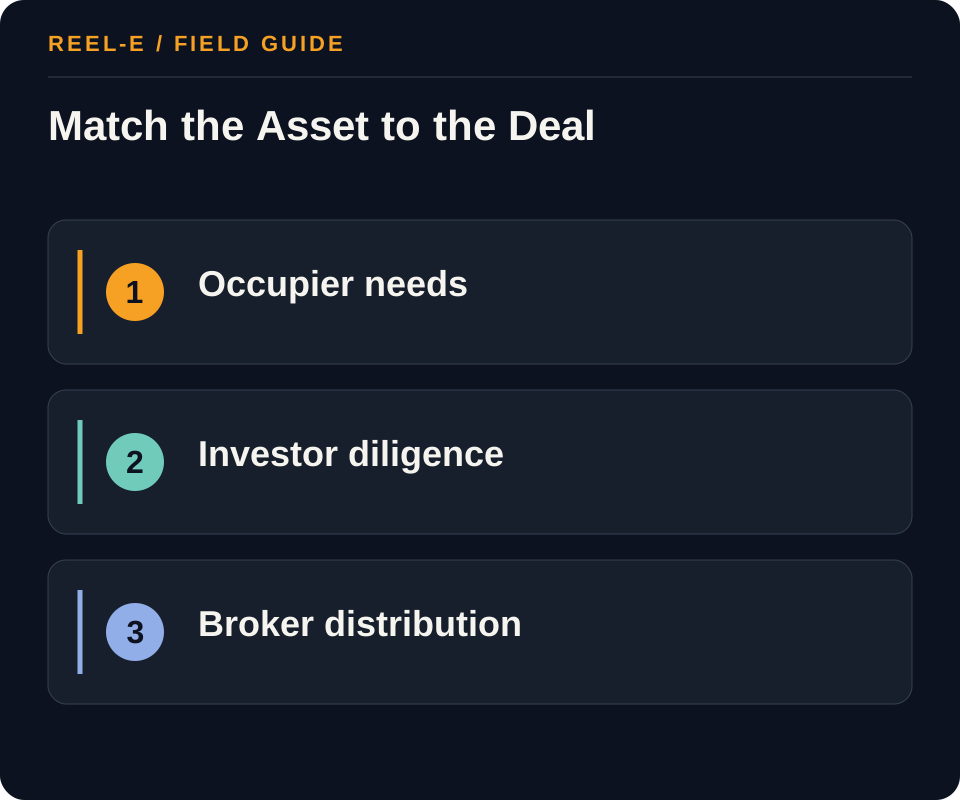
Choose the asset type, stakeholder, approved facts, and next deal action before you choose the channel mix. Commercial marketing gets vague very quickly when it tries to impress an occupier, investor, broker, lender, and community stakeholder in the same paragraph.
| Path | Use It When | Reconsider It When |
|---|---|---|
| Tenant or Occupier Demand | This audience is the constraint on qualified tours, broker engagement, proposals, and deal progression and the team has proof and response capacity for it. | The same creative and destination are being used for a different stakeholder journey. |
| Buyer and Investor Evaluation | buyer and investor evaluation is the constraint on qualified tours, broker engagement, proposals, and deal progression, and the team can prove plans and dimensions plus condition and improvements at the owned destination. | tenant or occupier demand and buyer and investor evaluation still share one generic promise, response queue, or campaign page. |
| Broker and Partner Distribution | broker and partner distribution depends on longer-cycle trust, permissioned permitted financial/operating materials, and a response path through target-account outreach or LinkedIn. | The commercial real estate team cannot maintain permitted financial/operating materials or identify the owner who advances broker and partner distribution. |
Tenant or Occupier Demand
- Best Fit: This audience is the constraint on qualified tours, broker engagement, proposals, and deal progression and the team has proof and response capacity for it.
- Pause If: The same creative and destination are being used for a different stakeholder journey.
- Review: Share of the commercial real estate audience taking the defined action that advances qualified tours, broker engagement, proposals, and deal progression within tenant or occupier demand, buyer and investor evaluation, or broker and partner distribution. Improve the promise, site and aerial context, destination, or qualification for the weak commercial real estate journey.
- Control: Stale or Inconsistent Deal Facts. Use an approved source sheet and versioned data room/deal page.
Buyer and Investor Evaluation
- Best Fit: buyer and investor evaluation is the constraint on qualified tours, broker engagement, proposals, and deal progression, and the team can prove plans and dimensions plus condition and improvements at the owned destination.
- Pause If: tenant or occupier demand and buyer and investor evaluation still share one generic promise, response queue, or campaign page.
- Review: Time and conversion between named commercial real estate stages under a consistent cohort and source definition. Fix the owner, access and loading, or handoff between tenant or occupier demand, buyer and investor evaluation, and broker and partner distribution.
- Control: Confidential or Regulated Materials. Separate public marketing from controlled diligence and obtain approvals.
Broker and Partner Distribution
- Best Fit: broker and partner distribution depends on longer-cycle trust, permissioned permitted financial/operating materials, and a response path through target-account outreach or LinkedIn.
- Pause If: The commercial real estate team cannot maintain permitted financial/operating materials or identify the owner who advances broker and partner distribution.
- Review: Contribution toward qualified tours, broker engagement, proposals, and deal progression compared with production, owned deal page distribution, and response cost. Change the commercial real estate channel, scope, or audience instead of optimizing impressions alone.
- Control: Aerial or Map Implications. Verify boundaries, access, labels, rights, and drone compliance.
What Commercial Media Needs Before It Gets Cinematic
The Fact Sheet Is the Creative Source
Dimensions, access, loading, power, tenancy, condition, location, zoning context, and availability should have owners and dates. The brochure, video, deal page, outreach, and data-room handoff should draw from the same approved record.
The Asset Type Changes the Order
Industrial, office, retail, land, and investment assets do not share one visual argument. A truck court may lead an industrial story. A lobby may matter for office. The camera route should not become the buyer journey by accident.
Good Marketing Respects Diligence
Public materials should earn the right next conversation without pretending to replace detailed review. Make confidentiality, document access, and claim boundaries explicit so interest can progress cleanly.
The Approved Fact Sheet I Want Behind Every Campaign
Separate Public, Qualified, and Diligence Facts
Mark which asset, location, tenancy, operating, financial, zoning, environmental, and condition information can appear publicly, which requires a qualified conversation, and which belongs only in controlled diligence. Add source, owner, date, and approval. The campaign should earn progression without leaking confidential material or forcing a public brochure to carry facts that require a fuller document and professional review.
Attach Every Claim to Media and a Next Step
For each major value point, identify the accurate photograph, plan, map, video segment, document, or human explanation that supports it. Then name the destination and stakeholder action. This keeps creative from drifting into attractive generalities and makes review more concrete. If the campaign cannot show or support a claim, the team should change the claim rather than turning the music up.
How I Would Route the Same Asset to Three Audiences
The Occupier Route
Lead with use, access, configuration, dimensions, loading or customer circulation, location, condition, and the next site or requirements conversation. Support visual claims with plans or approved facts and make availability current. The occupier does not need the complete investment narrative before deciding whether the asset can support the business. Respecting that order makes the campaign feel more informed and less like one brochure learned several job titles.
The Investor Route
Lead with asset and location context, tenancy or plan where public, condition, capital story, market evidence, risk boundaries, and the qualified path to controlled information. Keep financial and legal details inside the appropriate review. The public campaign should create a credible reason to engage without summarizing diligence into one confident chart. A video can reveal scale and context. It cannot volunteer to become the underwriting model.
The Broker and Partner Route
Give the distribution partner accurate facts, approved media, audience routes, key objections, access instructions, version dates, and a fast path for corrections. Track which materials travel and which questions return. Brokers extend the campaign's reach, so version control matters. The most polished deal page cannot protect a stale PDF that has already begun its independent career in several inboxes.
A Version-Control Rule for Long Campaigns
Put a Date and Owner on Every Distributed Asset
Fact sheets, brochures, maps, plans, videos, email copy, partner kits, and data-room invitations should show or retain a version, approval date, and owner. Keep a replacement path and tell partners when a material fact changes. Commercial campaigns travel through inboxes and relationships for months, which means an old file can remain persuasive long after it remains true. Version control is not administrative fuss. It is part of factual marketing.
Build the Campaign From Approved Facts
Route by Asset Type and Stakeholder
Office, retail, industrial, multifamily, hospitality, land, owner-user, lease, and investment opportunities present different questions. Occupiers may prioritize access, layout, loading, workforce, condition, and timing. Investors may prioritize approved operating and market evidence. Brokers need a concise transferable story. Build one fact base, then separate narratives, destinations, media orders, and actions for each relevant stakeholder.
Select asset type, transaction, and stakeholder before the brief.
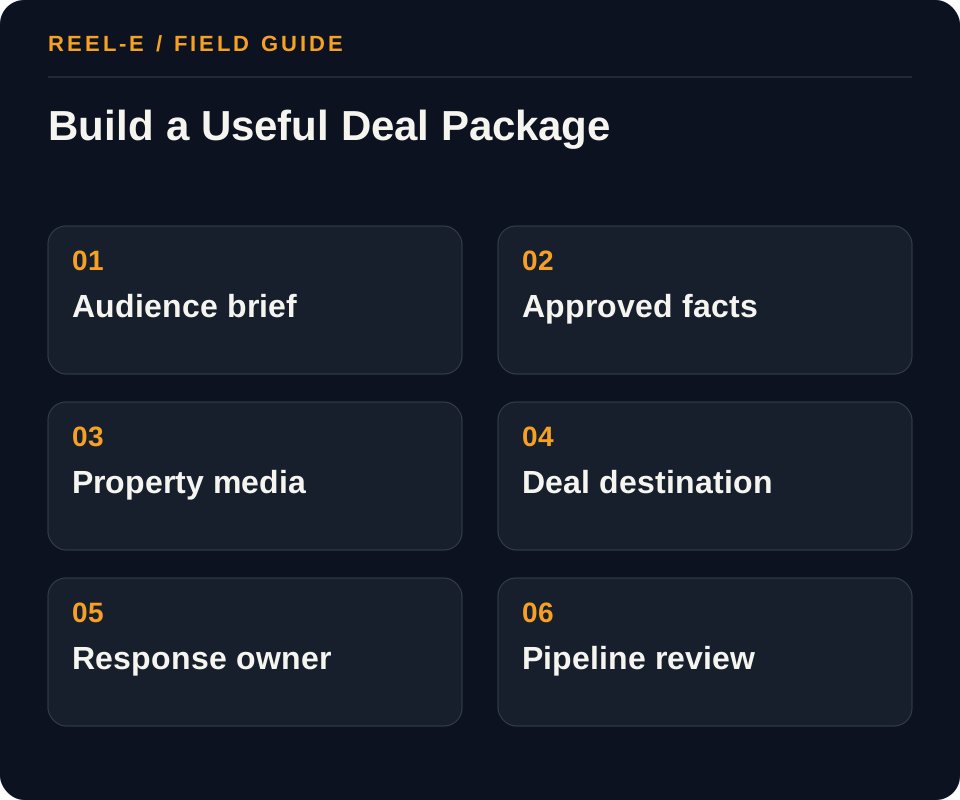
Create an Approved Fact Sheet and Deal Destination
Centralize address, status, spaces, plans, dimensions, access, parking and loading, condition, improvements, use caveats, availability, dates, contacts, map labels, media, and approved public financial or market claims. Name source and approver. The deal page should carry the complete approved story, media, plans, accessibility, analytics, and controlled next step. Keep confidential material in controlled diligence.
Require a versioned fact sheet and controlled diligence boundary.
Sequence Media and Measure Qualified Progression
Order evidence by stakeholder: industrial access and loading, retail frontage and traffic context, office suite and amenity flow, or land orientation and verified boundaries. Track qualified sessions, plan engagement, inquiries, broker conversations, tours, proposals, diligence, and deal stage with source and cohort. Long cycles make last-click claims weak; reach supports awareness but is not a deal outcome.
Use asset-specific media order and source-to-stage reporting.
Launch the Asset Without Losing Control of the Story
Run the campaign from approved facts to asset route, owned destination, controlled distribution, response, qualification, and diligence handoff. Every version should know which stakeholder it is helping.
1. Separate the Journeys
Map tenant or occupier demand, buyer and investor evaluation, and broker and partner distribution independently. For each, record the triggering event, core uncertainty, required facts, people involved, typical objections, destination, conversion action, response owner, and sales or leasing stage.
- Record: Asset and Transaction in the CRE Approved Fact Sheet
- Control: Use an approved source sheet and versioned data room/deal page.
- Review: Share of the commercial real estate audience taking the defined action that advances qualified tours, broker engagement, proposals, and deal progression within tenant or occupier demand, buyer and investor evaluation, or broker and partner distribution. Improve the promise, site and aerial context, destination, or qualification for the weak commercial real estate journey.
2. Create the Verified Proof Set
Assemble current, permissioned evidence such as site and aerial context, access and loading, plans and dimensions, condition and improvements, permitted financial/operating materials, submarket evidence. Date time-sensitive facts, disclose renderings or staged imagery, distinguish aspiration from delivered condition, and remove any asset that cannot be licensed or substantiated.
- Record: Top Questions in the Asset-Type Media Route
- Control: Separate public marketing from controlled diligence and obtain approvals.
- Review: Time and conversion between named commercial real estate stages under a consistent cohort and source definition. Fix the owner, access and loading, or handoff between tenant or occupier demand, buyer and investor evaluation, and broker and partner distribution.
3. Build the Owned Destination
Give the commercial real estate campaign an owned page or sales asset that combines site and aerial context, access and loading, and plans and dimensions with the current status, next action, accessibility, and analytics needed for qualified tours, broker engagement, proposals, and deal progression. Posts in owned deal page and listing networks should route to this source rather than carry every changeable detail.
- Record: Dimensions and Access in the CRE Approved Fact Sheet
- Control: Verify boundaries, access, labels, rights, and drone compliance.
- Review: Contribution toward qualified tours, broker engagement, proposals, and deal progression compared with production, owned deal page distribution, and response cost. Change the commercial real estate channel, scope, or audience instead of optimizing impressions alone.
4. Plan Capture and Derivatives
Write the commercial real estate media brief from unanswered questions in tenant or occupier demand and buyer and investor evaluation. Capture site and aerial context, access and loading, plans and dimensions, then produce horizontal, vertical, still, thumbnail, presentation, or email derivatives only for named jobs in owned deal page, listing networks, broker email, target-account outreach. Label exceptions that affect broker and partner distribution instead of hiding them in cinematic coverage.
- Record: Interior and Operations in the Asset-Type Media Route
- Control: Keep one verified commercial real estate asset library, but give tenant or occupier demand, buyer and investor evaluation, and broker and partner distribution distinct messages, destinations, and actions.
- Review: Share of the commercial real estate audience taking the defined action that advances qualified tours, broker engagement, proposals, and deal progression within tenant or occupier demand, buyer and investor evaluation, or broker and partner distribution. Improve the promise, site and aerial context, destination, or qualification for the weak commercial real estate journey.
5. Assign Channel Roles
Use owned deal page, listing networks, broker email, target-account outreach, LinkedIn, sales presentations selectively. Label each as discovery, proof, nurture, retargeting, sales enablement, or retention; set owner, cadence, spend, audience rule, destination, and stop condition.
- Record: Public Claims in the CRE Approved Fact Sheet
- Control: Define the qualified action, movement toward qualified tours, broker engagement, proposals, and deal progression, and source economics before launching through owned deal page.
- Review: Time and conversion between named commercial real estate stages under a consistent cohort and source definition. Fix the owner, access and loading, or handoff between tenant or occupier demand, buyer and investor evaluation, and broker and partner distribution.
6. Run the Operating Review
For the commercial real estate program, review site and aerial context completion and response through owned deal page weekly, movement toward qualified tours, broker engagement, proposals, and deal progression biweekly, and source economics monthly. Diagnose whether tenant or occupier demand, buyer and investor evaluation, or broker and partner distribution is constrained by proof, destination, channel, or follow-up before concluding that demand is weak.
- Record: Drone Need in the Asset-Type Media Route
- Control: Use an approved source sheet and versioned data room/deal page.
- Review: Contribution toward qualified tours, broker engagement, proposals, and deal progression compared with production, owned deal page distribution, and response cost. Change the commercial real estate channel, scope, or audience instead of optimizing impressions alone.

A 90-Day Rollout
| Window | Work | Finish Line |
|---|---|---|
| Days 1-30 | Separate the Journeys; Create the Verified Proof Set | Baseline and first complete path |
| Days 31-60 | Build the Owned Destination; Plan Capture and Derivatives | Repeatable production and handoff |
| Days 61-90 | Assign Channel Roles; Run the Operating Review | Review, correction, and next allocation |
A Worked Example: Commercial Real Estate Campaign with Three Stakeholder Journeys
The situation: The team has credible property assets but one generic brochure and campaign currently attempts to serve tenant or occupier demand, buyer and investor evaluation, and broker and partner distribution. Engagement is reported, but nobody can show which journey advances.
The approach: The team creates separate messages and destinations, reuses one verified media library, and shows site and aerial context, access and loading, plans and dimensions only where each is relevant. owned deal page, listing networks, broker email receive distinct hooks and next actions, while one owner handles every qualified response.
The result to review: Reporting now shows which journey contributes to qualified tours, broker engagement, proposals, and deal progression. The team can improve the weak stage without replacing the entire campaign or publishing more generic content.
The asset is not receiving more decoration in this example. It is receiving a clearer sequence of proof, which helps the right people move without asking the public page to become a data room.
Track Qualified Movement Through a Long Cycle
Track qualified engagement, inquiry quality, document requests, meetings, broker activity, and stage progression. The cycle is long, so be careful about crediting the last visible touch for work the full campaign performed.
| Metric | Definition | How to Use It |
|---|---|---|
| Commercial Real Estate Qualified Next-Action Rate | Share of the commercial real estate audience taking the defined action that advances qualified tours, broker engagement, proposals, and deal progression within tenant or occupier demand, buyer and investor evaluation, or broker and partner distribution. | Improve the promise, site and aerial context, destination, or qualification for the weak commercial real estate journey. |
| Commercial Real Estate Stage Velocity | Time and conversion between named commercial real estate stages under a consistent cohort and source definition. | Fix the owner, access and loading, or handoff between tenant or occupier demand, buyer and investor evaluation, and broker and partner distribution. |
| Commercial Real Estate Contribution Economics | Contribution toward qualified tours, broker engagement, proposals, and deal progression compared with production, owned deal page distribution, and response cost. | Change the commercial real estate channel, scope, or audience instead of optimizing impressions alone. |
Tools You Can Use
CRE Approved Fact Sheet
Keep public claims, media, and diligence aligned.
- Asset and Transaction: Current fact, source, owner, approval date, effect on separate the journeys, and fit with tenant or occupier demand.
- Space and Status: Current fact, source, owner, approval date, effect on create the verified proof set, and fit with buyer and investor evaluation.
- Dimensions and Access: Current fact, source, owner, approval date, effect on build the owned destination, and fit with broker and partner distribution.
- Plans and Maps: Current fact, source, owner, approval date, effect on plan capture and derivatives, and fit with tenant or occupier demand.
- Public Claims: Current fact, source, owner, approval date, effect on assign channel roles, and fit with buyer and investor evaluation.
- Source: Current fact, source, owner, approval date, effect on run the operating review, and fit with broker and partner distribution.
- Approver: Current fact, source, owner, approval date, effect on separate the journeys, and fit with tenant or occupier demand.
- Version: Current fact, source, owner, approval date, effect on create the verified proof set, and fit with buyer and investor evaluation.
- Confidential Boundary: Current fact, source, owner, approval date, effect on build the owned destination, and fit with broker and partner distribution.
Asset-Type Media Route
Order evidence around stakeholder decisions.
- Stakeholder: Current fact, source, owner, approval date, effect on create the verified proof set, and fit with buyer and investor evaluation.
- Top Questions: Current fact, source, owner, approval date, effect on build the owned destination, and fit with broker and partner distribution.
- Site and Context: Current fact, source, owner, approval date, effect on plan capture and derivatives, and fit with tenant or occupier demand.
- Interior and Operations: Current fact, source, owner, approval date, effect on assign channel roles, and fit with buyer and investor evaluation.
- Plan or Map: Current fact, source, owner, approval date, effect on run the operating review, and fit with broker and partner distribution.
- Drone Need: Current fact, source, owner, approval date, effect on separate the journeys, and fit with tenant or occupier demand.
- Destination: Current fact, source, owner, approval date, effect on create the verified proof set, and fit with buyer and investor evaluation.
- Next Action: Current fact, source, owner, approval date, effect on build the owned destination, and fit with broker and partner distribution.
Where This Usually Breaks
Stale facts, confidential material, implied boundaries, unreviewed maps or aerials, and uncontrolled channel versions can become expensive. Treat the source record and approval history as part of the marketing asset.
| Risk | Practical Control |
|---|---|
| Stale or Inconsistent Deal Facts | Use an approved source sheet and versioned data room/deal page. |
| Confidential or Regulated Materials | Separate public marketing from controlled diligence and obtain approvals. |
| Aerial or Map Implications | Verify boundaries, access, labels, rights, and drone compliance. |
| One Creative for Every Commercial Real Estate Stakeholder | Keep one verified commercial real estate asset library, but give tenant or occupier demand, buyer and investor evaluation, and broker and partner distribution distinct messages, destinations, and actions. |
| Commercial Real Estate Vanity Measurement | Define the qualified action, movement toward qualified tours, broker engagement, proposals, and deal progression, and source economics before launching through owned deal page. |
Stale or Inconsistent Deal Facts
- Control: Use an approved source sheet and versioned data room/deal page.
- Review Stage: Separate the Journeys
- Early Warning: Share of the commercial real estate audience taking the defined action that advances qualified tours, broker engagement, proposals, and deal progression within tenant or occupier demand, buyer and investor evaluation, or broker and partner distribution.
- Response: Improve the promise, site and aerial context, destination, or qualification for the weak commercial real estate journey.
Confidential or Regulated Materials
- Control: Separate public marketing from controlled diligence and obtain approvals.
- Review Stage: Create the Verified Proof Set
- Early Warning: Time and conversion between named commercial real estate stages under a consistent cohort and source definition.
- Response: Fix the owner, access and loading, or handoff between tenant or occupier demand, buyer and investor evaluation, and broker and partner distribution.
Aerial or Map Implications
- Control: Verify boundaries, access, labels, rights, and drone compliance.
- Review Stage: Build the Owned Destination
- Early Warning: Contribution toward qualified tours, broker engagement, proposals, and deal progression compared with production, owned deal page distribution, and response cost.
- Response: Change the commercial real estate channel, scope, or audience instead of optimizing impressions alone.
One Creative for Every Commercial Real Estate Stakeholder
- Control: Keep one verified commercial real estate asset library, but give tenant or occupier demand, buyer and investor evaluation, and broker and partner distribution distinct messages, destinations, and actions.
- Review Stage: Plan Capture and Derivatives
- Early Warning: Share of the commercial real estate audience taking the defined action that advances qualified tours, broker engagement, proposals, and deal progression within tenant or occupier demand, buyer and investor evaluation, or broker and partner distribution.
- Response: Improve the promise, site and aerial context, destination, or qualification for the weak commercial real estate journey.
Commercial Real Estate Vanity Measurement
- Control: Define the qualified action, movement toward qualified tours, broker engagement, proposals, and deal progression, and source economics before launching through owned deal page.
- Review Stage: Assign Channel Roles
- Early Warning: Time and conversion between named commercial real estate stages under a consistent cohort and source definition.
- Response: Fix the owner, access and loading, or handoff between tenant or occupier demand, buyer and investor evaluation, and broker and partner distribution.
Verify current primary guidance for the actual jurisdiction, platform, campaign, property, and professional relationship. This researched guide is not individualized legal, aviation, financial, privacy, or compliance advice.
My Bottom Line
Commercial real estate marketing should help a specific stakeholder understand a specific asset and take the right next step. Start with controlled facts. The cinematic sweep can join once it knows what it is sweeping toward.
Sources and Research Notes
Open the source ledger- FAA guidance for commercial small-drone operations. Primary source for Part 107 and controlled-airspace context; verify current local requirements before a flight. Accessed August 12, 2026.
- NAR video marketing practice article. Industry practice source for concise, audience-centered real-estate video planning. Accessed August 12, 2026.
- FAA commercial drone operators. Primary federal source for commercial aerial work. Accessed August 12, 2026.
- Adobe media accessibility resources. Primary product guidance for accessible media delivery. Accessed August 12, 2026.
- inMotion CRE tactics. Format and coverage reference. A current 28-tactic guide with 4,010 words and 97 images; opportunity is stronger governance and stakeholder routing. Accessed August 12, 2026.
- NAR marketing hub. Format and coverage reference. Authoritative general resources but not asset-type commercial deal operations. Accessed August 12, 2026.
- Matterport plan. Format and coverage reference. Strong general framework; limited controlled diligence and asset-specific fact governance. Accessed August 12, 2026.
Sources support only the claims described in their notes. Reopen current primary sources before a purchase, launch, or compliance decision.