
Multifamily marketing falls apart when the campaign, property page, call center, and leasing team disagree about what is actually available. A polished amenity video cannot rescue a floor plan that disappeared yesterday or a tour request that waits until Monday. Start with inventory truth and the lead-to-tour handoff.
I have filmed institutional portfolios and multifamily assets for clients including Greystar and Blackstone. That work taught me that one property has several true stories at once. The owner, prospect, resident, and on-site team are looking for different proof, and the marketing gets stronger when it respects those differences.
Who this is for: multifamily owners, operators, asset managers, and marketing/leasing teams.
Research note: Researched vertical operating framework using current fair-housing and video-practice sources where applicable. Local rules, asset facts, platform terms, and performance claims require project-specific verification.

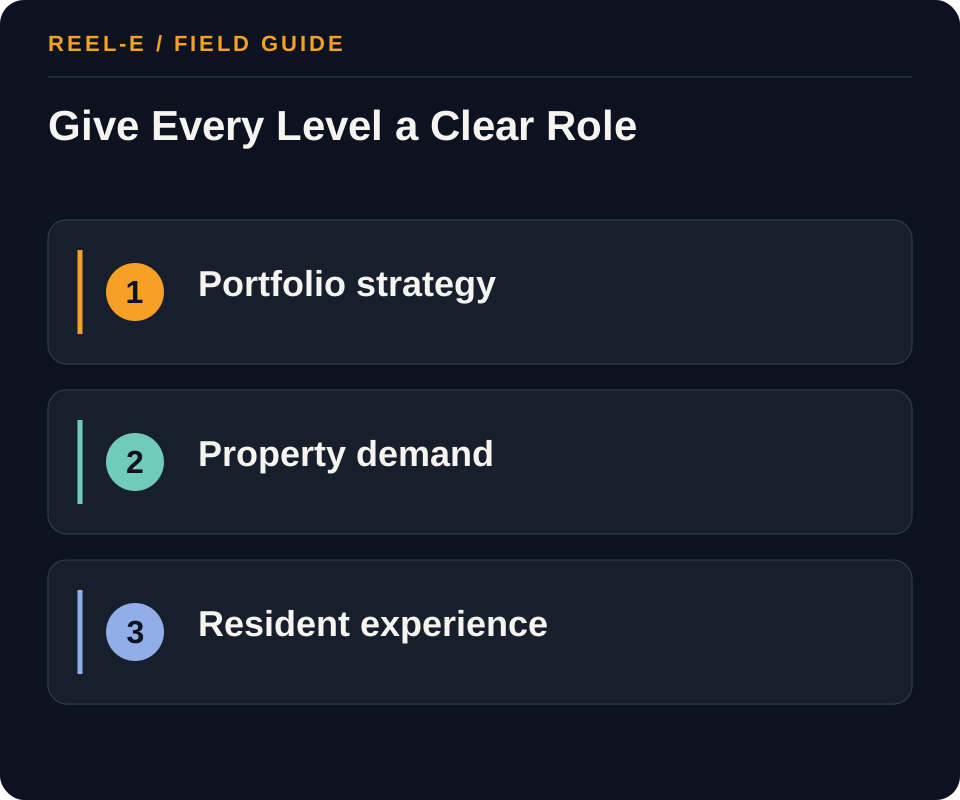
Separate Portfolio, Property, and Unit Jobs
Separate the portfolio story, property story, floor-plan story, and current unit story before assigning channels. A beautiful community film cannot repair stale availability, and an availability feed cannot explain why the place is worth considering.
| Path | Use It When | Reconsider It When |
|---|---|---|
| Portfolio and Owner Credibility | This audience is the constraint on qualified tours and applications at an economically sustainable occupancy level and the team has proof and response capacity for it. | The same creative and destination are being used for a different stakeholder journey. |
| Prospect Discovery and Qualification | prospect discovery and qualification is the constraint on qualified tours and applications at an economically sustainable occupancy level, and the team can prove floor plans plus location/access information at the owned destination. | portfolio and owner credibility and prospect discovery and qualification still share one generic promise, response queue, or campaign page. |
| Resident Experience and Referrals | resident experience and referrals depends on longer-cycle trust, permissioned service standards, and a response path through social video or employer and broker partnerships. | The multifamily team cannot maintain service standards or identify the owner who advances resident experience and referrals. |
Portfolio and Owner Credibility
- Best Fit: This audience is the constraint on qualified tours and applications at an economically sustainable occupancy level and the team has proof and response capacity for it.
- Pause If: The same creative and destination are being used for a different stakeholder journey.
- Review: Share of the multifamily audience taking the defined action that advances qualified tours and applications at an economically sustainable occupancy level within portfolio and owner credibility, prospect discovery and qualification, or resident experience and referrals. Improve the promise, unit and amenity media, destination, or qualification for the weak multifamily journey.
- Control: Fair-Housing Exposure in Language or Targeting. Apply current guidance across creative, audience rules, delivery, and automation.
Prospect Discovery and Qualification
- Best Fit: prospect discovery and qualification is the constraint on qualified tours and applications at an economically sustainable occupancy level, and the team can prove floor plans plus location/access information at the owned destination.
- Pause If: portfolio and owner credibility and prospect discovery and qualification still share one generic promise, response queue, or campaign page.
- Review: Time and conversion between named multifamily stages under a consistent cohort and source definition. Fix the owner, accurate availability, or handoff between portfolio and owner credibility, prospect discovery and qualification, and resident experience and referrals.
- Control: Stale Availability or Concessions. Connect campaigns to an owned, frequently updated source of truth.
Resident Experience and Referrals
- Best Fit: resident experience and referrals depends on longer-cycle trust, permissioned service standards, and a response path through social video or employer and broker partnerships.
- Pause If: The multifamily team cannot maintain service standards or identify the owner who advances resident experience and referrals.
- Review: Contribution toward qualified tours and applications at an economically sustainable occupancy level compared with production, property search and listings distribution, and response cost. Change the multifamily channel, scope, or audience instead of optimizing impressions alone.
- Control: Amenity-First Generic Creative. Show the actual unit-to-amenity-to-location decision journey.
What Institutional Property Work Changed for Me
The Property Promise Reaches Operations
A campaign can create demand, but the tour, response time, unit condition, and leasing information have to carry the same promise. Marketing does not end at the form. It hands the prospect to the property.
Amenities Need Context
A pool, coworking room, or fitness center is not automatically a story. Show who it helps, when it matters, and how it relates to the living experience. Otherwise the campaign becomes a pleasant slideshow of furniture nobody owns.
Portfolio Media Still Needs Local Truth
A shared visual system can make a portfolio recognizable, but availability, concessions, floor plans, neighborhood context, and resident permissions remain property-specific. Consistency should organize the facts, not flatten them.
One Operating Question I Would Put on Every Review
Where Did the Prospect Meet a Different Reality?
Compare the campaign promise with the property page, availability, response, tour, application, and move-in information. The highest-value fix may be a current floor plan, a clearer fee, a faster response, a better tour handoff, or media that answers the question prospects keep carrying forward. The review should locate the mismatch, not simply ask the marketing team for more traffic.
The Shared Proof Set I Would Build Once
Portfolio and Property Facts
Maintain approved ownership, management, location, building, amenity, floor-plan, policy, accessibility, fee, availability, concession, and contact information with owners and update times. Decide what belongs at the portfolio, property, plan, and unit level. This record should feed campaigns and on-site conversations without asking each channel to become its own amateur property-management system.
A Modular Media Library
Capture community context, arrival, amenity use, representative interiors, plan relationships, staff or service moments, and truthful local context with releases and labels. Organize files by property, date, status, and approved use. The library can support several audiences while preserving local truth. Modular does not mean anonymous. It means the team can assemble the right evidence without filming the same lobby every time the campaign calendar changes color.
A Creative Review With the On-Site Team
Ask What Prospects Still Misunderstand
Review tour questions, calls, chats, application friction, lost reasons, and resident feedback with the leasing and operations teams. Compare those patterns with the campaign. If prospects repeatedly ask about layout, fees, parking, pets, transit, noise, work-from-home space, or availability, the next creative should answer the real question rather than producing another broad amenity montage. The people closest to the handoff often know exactly where the media became too polite to be useful.
Check Whether the Property Can Keep the Promise
Confirm the current offer, condition, tour path, staffing, maintenance context, resident permissions, and the experience shown in the media. Adjust creative when an amenity closes, a phase changes, or availability moves. Marketing and operations do not need to agree on every adjective. They do need to agree on what a prospect can reasonably expect after the click.
The Portfolio Rule That Prevents Generic Creative
Standardize the Questions, Not the Answers
Every property can document arrival, unit relationships, amenities, neighborhood context, service, policies, availability truth, and the next action through the same brief. The evidence and emphasis should remain local. This gives the portfolio an operating grammar without forcing a garden community, urban tower, and renovation lease-up to perform the same personality. Scale is useful when it makes good questions repeatable, not when it makes every answer look like the same lobby.
Let the Property Retain a Point of View
Within the portfolio system, preserve the architecture, neighborhood, service style, resident experience, and leasing questions that make the community distinct. A scalable brand should help those truths travel, not airbrush them into one pleasant beige campaign.
Fix the Path From Availability to Tour
Separate Portfolio, Property, Plan, and Unit Jobs
Portfolio marketing explains operator credibility, markets, service, and resident experience. Property marketing explains location, amenities, operations, and current value. Floor-plan and unit media answer layout, finish, availability, timing, and price questions. Keep evidence connected but destinations and actions distinct. A brand campaign should not promise unit availability; a unit campaign should not carry every corporate message. This layered model makes update ownership clearer.
Map every asset to portfolio, property, floor plan, or unit.
Make Availability Truth the Campaign Backbone
Define the system of record for units, dates, pricing context, concessions, fees, policies, application criteria, tours, and contact routing. Date offers and remove them through an accountable review. Label whether media depicts the exact unit, a model, a similar plan, an amenity, or a rendering. Attractive creative cannot compensate for a destination that contradicts current leasing reality.
Route campaigns to a current availability source with an expiry owner.
Diagnose Leakage and Choose the Operating Mode
Track qualified sessions, availability views, inquiries, response, scheduled tours, completed tours, applications, approvals, leases, move-ins, and source cost with disposition reasons. Separate lease-up, stabilized, and BTR cohorts because inventory, urgency, and budget differ. Review language, imagery, targeting, delivery, forms, and automation under current fair-housing guidance instead of treating compliance as a copy-only check.
Use a stage-leakage sheet before changing spend or media.
Run Lease-Up and Stabilized Campaigns Differently
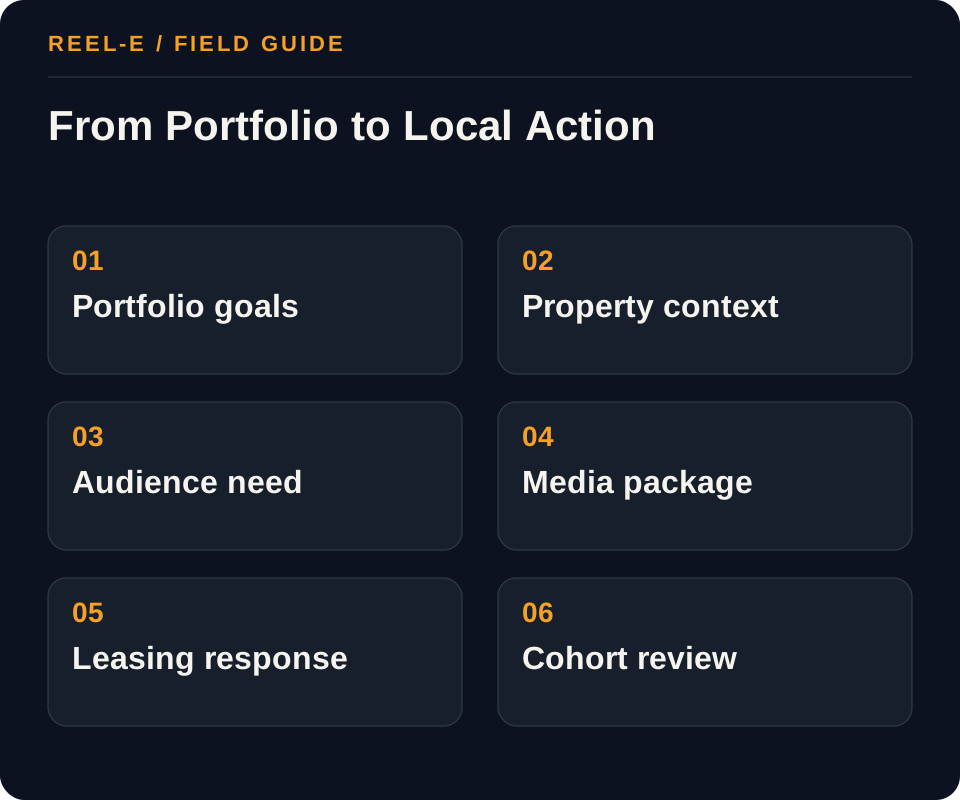
Build the system from verified inventory through the property destination, channel plan, response owner, tour, and reporting loop. The creative should make that path easier to understand, not become a separate department with nicer lighting.
1. Separate the Journeys
Map portfolio and owner credibility, prospect discovery and qualification, and resident experience and referrals independently. For each, record the triggering event, core uncertainty, required facts, people involved, typical objections, destination, conversion action, response owner, and sales or leasing stage.
- Record: Layer in the Multifamily Truth Map
- Control: Apply current guidance across creative, audience rules, delivery, and automation.
- Review: Share of the multifamily audience taking the defined action that advances qualified tours and applications at an economically sustainable occupancy level within portfolio and owner credibility, prospect discovery and qualification, or resident experience and referrals. Improve the promise, unit and amenity media, destination, or qualification for the weak multifamily journey.
2. Create the Verified Proof Set
Assemble current, permissioned evidence such as unit and amenity media, accurate availability, floor plans, location/access information, service standards, review context. Date time-sensitive facts, disclose renderings or staged imagery, distinguish aspiration from delivered condition, and remove any asset that cannot be licensed or substantiated.
- Record: Qualified Visits in the Lead-To-Lease Leakage Sheet
- Control: Connect campaigns to an owned, frequently updated source of truth.
- Review: Time and conversion between named multifamily stages under a consistent cohort and source definition. Fix the owner, accurate availability, or handoff between portfolio and owner credibility, prospect discovery and qualification, and resident experience and referrals.
3. Build the Owned Destination
Give the multifamily campaign an owned page or sales asset that combines unit and amenity media, accurate availability, and floor plans with the current status, next action, accessibility, and analytics needed for qualified tours and applications at an economically sustainable occupancy level. Posts in property search and listings and local search should route to this source rather than carry every changeable detail.
- Record: System of Record in the Multifamily Truth Map
- Control: Show the actual unit-to-amenity-to-location decision journey.
- Review: Contribution toward qualified tours and applications at an economically sustainable occupancy level compared with production, property search and listings distribution, and response cost. Change the multifamily channel, scope, or audience instead of optimizing impressions alone.
4. Plan Capture and Derivatives
Write the multifamily media brief from unanswered questions in portfolio and owner credibility and prospect discovery and qualification. Capture unit and amenity media, accurate availability, floor plans, then produce horizontal, vertical, still, thumbnail, presentation, or email derivatives only for named jobs in property search and listings, local search, email/SMS where permitted, social video. Label exceptions that affect resident experience and referrals instead of hiding them in cinematic coverage.
- Record: Response Time in the Lead-To-Lease Leakage Sheet
- Control: Keep one verified multifamily asset library, but give portfolio and owner credibility, prospect discovery and qualification, and resident experience and referrals distinct messages, destinations, and actions.
- Review: Share of the multifamily audience taking the defined action that advances qualified tours and applications at an economically sustainable occupancy level within portfolio and owner credibility, prospect discovery and qualification, or resident experience and referrals. Improve the promise, unit and amenity media, destination, or qualification for the weak multifamily journey.
5. Assign Channel Roles
Use property search and listings, local search, email/SMS where permitted, social video, employer and broker partnerships, retargeting selectively. Label each as discovery, proof, nurture, retargeting, sales enablement, or retention; set owner, cadence, spend, audience rule, destination, and stop condition.
- Record: Exact or Model Label in the Multifamily Truth Map
- Control: Define the qualified action, movement toward qualified tours and applications at an economically sustainable occupancy level, and source economics before launching through property search and listings.
- Review: Time and conversion between named multifamily stages under a consistent cohort and source definition. Fix the owner, accurate availability, or handoff between portfolio and owner credibility, prospect discovery and qualification, and resident experience and referrals.
6. Run the Operating Review
For the multifamily program, review unit and amenity media completion and response through property search and listings weekly, movement toward qualified tours and applications at an economically sustainable occupancy level biweekly, and source economics monthly. Diagnose whether portfolio and owner credibility, prospect discovery and qualification, or resident experience and referrals is constrained by proof, destination, channel, or follow-up before concluding that demand is weak.
- Record: Applications in the Lead-To-Lease Leakage Sheet
- Control: Apply current guidance across creative, audience rules, delivery, and automation.
- Review: Contribution toward qualified tours and applications at an economically sustainable occupancy level compared with production, property search and listings distribution, and response cost. Change the multifamily channel, scope, or audience instead of optimizing impressions alone.

A 90-Day Rollout
| Window | Work | Finish Line |
|---|---|---|
| Days 1-30 | Separate the Journeys; Create the Verified Proof Set | Baseline and first complete path |
| Days 31-60 | Build the Owned Destination; Plan Capture and Derivatives | Repeatable production and handoff |
| Days 61-90 | Assign Channel Roles; Run the Operating Review | Review, correction, and next allocation |
A Worked Example: Multifamily Campaign with Three Stakeholder Journeys
The situation: The team has credible property assets but one generic brochure and campaign currently attempts to serve portfolio and owner credibility, prospect discovery and qualification, and resident experience and referrals. Engagement is reported, but nobody can show which journey advances.
The approach: The team creates separate messages and destinations, reuses one verified media library, and shows unit and amenity media, accurate availability, floor plans only where each is relevant. property search and listings, local search, email/SMS where permitted receive distinct hooks and next actions, while one owner handles every qualified response.
The result to review: Reporting now shows which journey contributes to qualified tours and applications at an economically sustainable occupancy level. The team can improve the weak stage without replacing the entire campaign or publishing more generic content.
The improvement in this example comes from connecting demand to an accurate operating path. More traffic without that connection would simply produce a busier version of the same leak.
Measure Leakage Between Lead and Lease
I would keep portfolio credibility, prospect progression, leasing response, tour behavior, and contribution economics in separate views. They interact, but they are not interchangeable proof of success.
| Metric | Definition | How to Use It |
|---|---|---|
| Multifamily Qualified Next-Action Rate | Share of the multifamily audience taking the defined action that advances qualified tours and applications at an economically sustainable occupancy level within portfolio and owner credibility, prospect discovery and qualification, or resident experience and referrals. | Improve the promise, unit and amenity media, destination, or qualification for the weak multifamily journey. |
| Multifamily Stage Velocity | Time and conversion between named multifamily stages under a consistent cohort and source definition. | Fix the owner, accurate availability, or handoff between portfolio and owner credibility, prospect discovery and qualification, and resident experience and referrals. |
| Multifamily Contribution Economics | Contribution toward qualified tours and applications at an economically sustainable occupancy level compared with production, property search and listings distribution, and response cost. | Change the multifamily channel, scope, or audience instead of optimizing impressions alone. |
Tools You Can Use
Multifamily Truth Map
Connect portfolio, property, plan, and unit claims to owners.
- Layer: Current fact, source, owner, approval date, effect on separate the journeys, and fit with portfolio and owner credibility.
- Claim: Current fact, source, owner, approval date, effect on create the verified proof set, and fit with prospect discovery and qualification.
- System of Record: Current fact, source, owner, approval date, effect on build the owned destination, and fit with resident experience and referrals.
- Media Type: Current fact, source, owner, approval date, effect on plan capture and derivatives, and fit with portfolio and owner credibility.
- Exact or Model Label: Current fact, source, owner, approval date, effect on assign channel roles, and fit with prospect discovery and qualification.
- Expiry: Current fact, source, owner, approval date, effect on run the operating review, and fit with resident experience and referrals.
- Approver: Current fact, source, owner, approval date, effect on separate the journeys, and fit with portfolio and owner credibility.
- Destination: Current fact, source, owner, approval date, effect on create the verified proof set, and fit with prospect discovery and qualification.
Lead-To-Lease Leakage Sheet
Find the constrained stage.
- Source: Current fact, source, owner, approval date, effect on create the verified proof set, and fit with prospect discovery and qualification.
- Qualified Visits: Current fact, source, owner, approval date, effect on build the owned destination, and fit with resident experience and referrals.
- Availability Views: Current fact, source, owner, approval date, effect on plan capture and derivatives, and fit with portfolio and owner credibility.
- Response Time: Current fact, source, owner, approval date, effect on assign channel roles, and fit with prospect discovery and qualification.
- Scheduled and Completed Tours: Current fact, source, owner, approval date, effect on run the operating review, and fit with resident experience and referrals.
- Applications: Current fact, source, owner, approval date, effect on separate the journeys, and fit with portfolio and owner credibility.
- Leases: Current fact, source, owner, approval date, effect on create the verified proof set, and fit with prospect discovery and qualification.
- Disposition: Current fact, source, owner, approval date, effect on build the owned destination, and fit with resident experience and referrals.
- Cost: Current fact, source, owner, approval date, effect on plan capture and derivatives, and fit with portfolio and owner credibility.
Where This Usually Breaks
Fair-housing requirements, stale inventory, mismatched concessions, privacy, and one-size-fits-all creative deserve explicit review. Scale makes small inconsistencies travel farther.
| Risk | Practical Control |
|---|---|
| Fair-Housing Exposure in Language or Targeting | Apply current guidance across creative, audience rules, delivery, and automation. |
| Stale Availability or Concessions | Connect campaigns to an owned, frequently updated source of truth. |
| Amenity-First Generic Creative | Show the actual unit-to-amenity-to-location decision journey. |
| One Creative for Every Multifamily Stakeholder | Keep one verified multifamily asset library, but give portfolio and owner credibility, prospect discovery and qualification, and resident experience and referrals distinct messages, destinations, and actions. |
| Multifamily Vanity Measurement | Define the qualified action, movement toward qualified tours and applications at an economically sustainable occupancy level, and source economics before launching through property search and listings. |
Fair-Housing Exposure in Language or Targeting
- Control: Apply current guidance across creative, audience rules, delivery, and automation.
- Review Stage: Separate the Journeys
- Early Warning: Share of the multifamily audience taking the defined action that advances qualified tours and applications at an economically sustainable occupancy level within portfolio and owner credibility, prospect discovery and qualification, or resident experience and referrals.
- Response: Improve the promise, unit and amenity media, destination, or qualification for the weak multifamily journey.
Stale Availability or Concessions
- Control: Connect campaigns to an owned, frequently updated source of truth.
- Review Stage: Create the Verified Proof Set
- Early Warning: Time and conversion between named multifamily stages under a consistent cohort and source definition.
- Response: Fix the owner, accurate availability, or handoff between portfolio and owner credibility, prospect discovery and qualification, and resident experience and referrals.
Amenity-First Generic Creative
- Control: Show the actual unit-to-amenity-to-location decision journey.
- Review Stage: Build the Owned Destination
- Early Warning: Contribution toward qualified tours and applications at an economically sustainable occupancy level compared with production, property search and listings distribution, and response cost.
- Response: Change the multifamily channel, scope, or audience instead of optimizing impressions alone.
One Creative for Every Multifamily Stakeholder
- Control: Keep one verified multifamily asset library, but give portfolio and owner credibility, prospect discovery and qualification, and resident experience and referrals distinct messages, destinations, and actions.
- Review Stage: Plan Capture and Derivatives
- Early Warning: Share of the multifamily audience taking the defined action that advances qualified tours and applications at an economically sustainable occupancy level within portfolio and owner credibility, prospect discovery and qualification, or resident experience and referrals.
- Response: Improve the promise, unit and amenity media, destination, or qualification for the weak multifamily journey.
Multifamily Vanity Measurement
- Control: Define the qualified action, movement toward qualified tours and applications at an economically sustainable occupancy level, and source economics before launching through property search and listings.
- Review Stage: Assign Channel Roles
- Early Warning: Time and conversion between named multifamily stages under a consistent cohort and source definition.
- Response: Fix the owner, accurate availability, or handoff between portfolio and owner credibility, prospect discovery and qualification, and resident experience and referrals.
Verify current primary guidance for the actual jurisdiction, platform, campaign, property, and professional relationship. This researched guide is not individualized legal, aviation, financial, privacy, or compliance advice.
My Bottom Line
A strong multifamily strategy connects honest property media to current inventory and a responsive leasing experience. The portfolio can have one voice without pretending every community, resident, and prospect is the same.
Sources and Research Notes
Open the source ledger- HUD guidance on digital housing advertising. Primary federal guidance on Fair Housing Act considerations in digital targeting and delivery. Accessed August 12, 2026.
- National Association of REALTORS Fair Housing resources. Industry resource for fair-housing education; local counsel and brokerage policy remain controlling. Accessed August 12, 2026.
- NAR video marketing practice article. Industry practice source for concise, audience-centered real-estate video planning. Accessed August 12, 2026.
- U.S. Census housing data. Primary federal housing-data hub for market context. Accessed August 12, 2026.
- JPMorgan multifamily guide. Format and coverage reference. Current lender and industry perspective measured at 1,332 visible words, focused on renter understanding and service. Accessed August 12, 2026.
- RealPage strategies. Format and coverage reference. Current technology-led coverage across discovery, tours, SEO, and AI, but less independent on operating tradeoffs. Accessed August 12, 2026.
- Zego multifamily plan. Format and coverage reference. Strong renter-lifecycle framing but lighter on source-of-truth and media governance. Accessed August 12, 2026.
Sources support only the claims described in their notes. Reopen current primary sources before a purchase, launch, or compliance decision.