
Content gets exhausting when every post begins as a blank document. Real estate teams already produce source material: listings, market questions, inspections, design choices, neighborhood knowledge, client objections, and transaction lessons. The system's job is to capture that material once, turn it into distinct assets, and retire it when the facts go stale.
Operating a media platform and contributing to industry publications has taught me that good content rarely begins with ‘we need a post.’ It begins with a real question, a useful piece of evidence, or a decision someone keeps having to explain from scratch.
Who this is for: agents and teams that have expertise and listing assets but lack a reliable path from idea to published, reusable content.
Research note: Researched operating model informed by current Reel-E organic and content workflow. It separates first-party performance from modeled keyword estimates.

Start With a Source Asset Worth Reusing
Choose one source asset that deserves to exist, then decide how the article, email, video, and social pieces will each serve a different reader moment. Copying the same paragraph into four shapes is distribution, technically, but it is not much of a system.
| Path | Use It When | Reconsider It When |
|---|---|---|
| Search-Led Source Article | The question has durable research intent and needs a complete answer. | The topic is momentary or cannot be supported. |
| Email-Led Explanation | The value comes from relationship context or a timely local decision. | The answer should remain discoverable and canonical on the website. |
| Video-Led Demonstration | Showing the process, property, output, or comparison is faster than describing it. | The claim needs detail, citations, or an updateable reference page. |
Search-Led Source Article
- Best Fit: The question has durable research intent and needs a complete answer.
- Pause If: The topic is momentary or cannot be supported.
- Review: High-value recurring questions with one current canonical answer. Fill evidence-backed gaps before chasing unrelated volume.
- Control: Cannibalization. Inventory URLs and assign one owner before drafting.
Email-Led Explanation
- Best Fit: The value comes from relationship context or a timely local decision.
- Pause If: The answer should remain discoverable and canonical on the website.
- Review: Useful derivatives and sales uses per source asset. Improve capture or choose a stronger source format.
- Control: Derivative Duplication. Adapt each channel's format, hook, and action.
Video-Led Demonstration
- Best Fit: Showing the process, property, output, or comparison is faster than describing it.
- Pause If: The claim needs detail, citations, or an updateable reference page.
- Review: Search visitors reaching the relevant next guide, product page, or qualified action. Strengthen the intent bridge rather than add generic CTAs.
- Control: Unsourced Expertise. Keep a dated source ledger and label evidence mode.
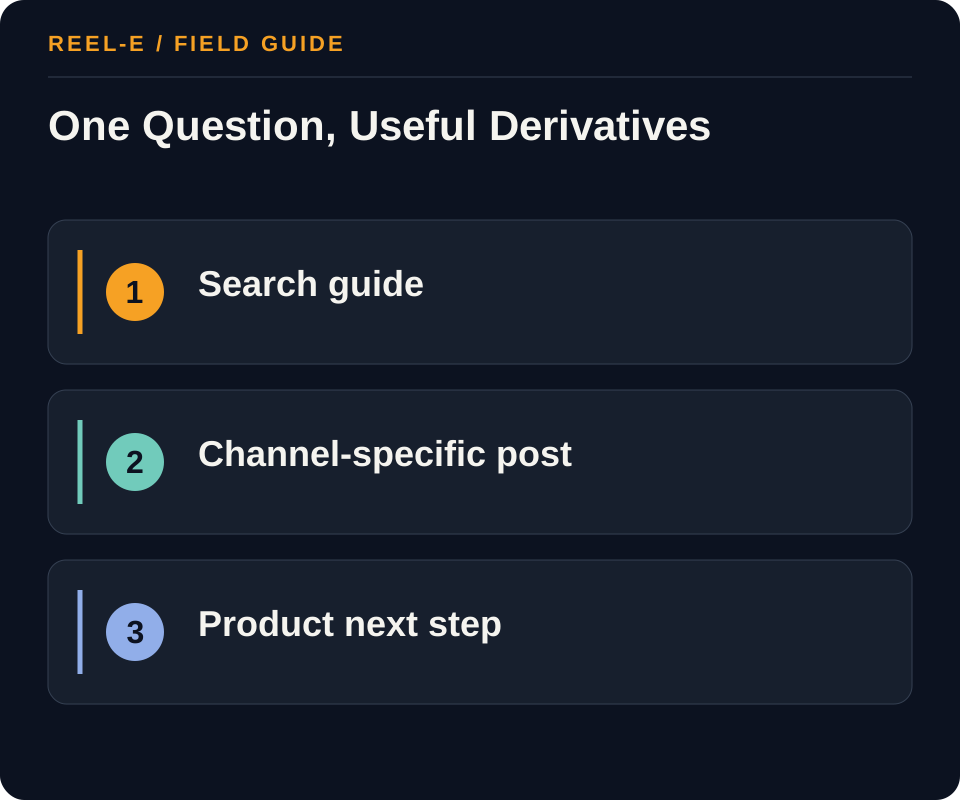
How I Keep the System From Becoming a Content Treadmill
Questions Are Better Raw Material Than Trends
Recurring sales questions, client objections, production decisions, and property problems have durable value. A trend can help package the answer, but it should not be the only reason the answer exists.
One Page Should Own the Full Answer
Give the authoritative version a clear home. Derivatives can summarize, demonstrate, or invite a reply, but they should point back to the source instead of competing with it.
Retiring Content Is Part of Publishing
Facts change, platforms move, and two useful pages can drift into the same query. A real operating board shows what to refresh, combine, redirect after evidence, or stop promoting.
Five Editorial Habits That Create Compounding Value
Keep a Question Bank With Context
Record the question, who asked it, what decision they were making, the language they used, and whether an existing page already answers it. This prevents the team from treating every phrasing as a new article. It also preserves the human reason behind the keyword, which makes the eventual opening and examples much easier to write.
Build a Small Evidence Packet First
Collect the verified internal observation, current primary sources, relevant screenshots or media, limitations, and the product or service boundary before drafting. The packet does not belong in the reader's face, but it keeps the writer from filling gaps with confidence. It also makes refreshes faster because the team can see which claims will age.
Choose Derivatives by Reader Moment
The article can hold the full explanation. Email can frame why the decision matters now. A short video can demonstrate one point. Social can invite a useful response. A listing presentation can turn the framework into a client conversation. Each version should earn its format instead of behaving like the article was placed near a photocopier.
Link the Library Like a Conversation
A parent guide should lead to the narrower decisions a reader may need next, and those pages should make the relationship clear. Product links should appear where the workflow naturally reaches the product. Internal links work best when the sentence explains why the next page helps. A pile of keyword anchors at the bottom mostly explains that someone had a spreadsheet.
Schedule the Refresh While Publishing
Mark claims tied to price, policy, product compatibility, platform behavior, or fresh data, then give the page a realistic review window. Watch search queries, page behavior, replies, and sales questions. Refresh a useful owner before creating a near-duplicate. When two published pages appear to overlap, wait for current query evidence before deciding which one survives.
A Monthly Editorial Review That Makes Real Decisions
Review the Questions Entering the Business
Bring sales calls, support questions, comments, replies, search queries, client meetings, and production notes together. Group repeated decisions rather than counting every phrasing separately. Mark which audience asked, how urgent the answer was, and whether a current source already exists. This keeps the editorial plan close to the work and makes it harder for a random trend to outrank a question the company explains every week.
Review the Existing Owners Before Adding URLs
For every proposed article, name the closest current page, its search queries where available, links, conversions, freshness, and the boundary between the two intents. Strengthen an existing owner when the new idea is only a subsection or fresher angle. Hold deletion and redirect decisions until current first-party query evidence supports them. A content library compounds when URLs become more authoritative, not when every meeting produces three cousins with similar names.
Review Whether the Derivatives Did Different Work
Look at the article, email, video, presentation, and social pieces created from each source. If they all use the same opening and make the same point, the team republished rather than adapted. Keep the source, rewrite the derivative around its channel and reader moment, and retire versions that add no value. Reuse should reduce production waste without asking the audience to watch the same idea change outfits.
Choose Refresh, Expand, Consolidate, or Stop
Refresh current claims and media on useful pages. Expand the section that readers or queries show they need. Consolidate drafts freely when they never had a public history, but protect published URLs until query, link, and conversion evidence is current. Stop producing formats that require disproportionate effort and create no useful path. The review should release capacity, not reward the team for keeping every idea alive indefinitely.
A Source Asset Worth Building
It Answers a Decision Completely
The source should give the direct answer, tradeoffs, method or evidence, implementation, example, limitations, and next step appropriate to the intent. It does not need to be the longest page in the category. It needs enough substance that derivatives can select a useful part without inventing new claims. When the full answer is thin, repurposing multiplies the thinness with remarkable operational efficiency.
It Contains Something the Team Owns
Use original judgment, a verified workflow, calculator, checklist, annotated example, product output, current first-party observation, or media the company has the right to publish. External sources support facts and boundaries, while the owned contribution gives the page a reason to exist. A summary of ranking pages may be accurate and still feel interchangeable. The reader should leave with a tool or perspective that came from the work.
It Has a Clear Update Path
Record the owner, source ledger, sensitive claims, media rights, internal links, structured data, publish date, and next review. Watch queries and reader behavior without treating a modeled tool as first-party traffic. The source becomes an asset when the team can improve it over time. Otherwise it is a long post waiting patiently to become outdated in several channels at once.
How to Protect the Founder Voice at Scale
Record Judgment, Not Only Information
During the source interview, ask what the founder would choose, what makes them pause, what experience changed the opinion, where the product or service is not the right fit, and what detail outsiders usually miss. Verify the claim boundary. These answers create voice because they reveal decisions. A biography pasted into an introduction creates credentials, but it does not make the next two thousand words sound like the person.
Keep the Research Out of the Reader's Way
The source ledger, query research, competitor notes, analytics definitions, and editorial checks belong behind the finished article. Use them to make the answer more accurate, current, and complete, then write the page as a founder helping one reader. Internal production labels may be useful to the team and exhausting to everyone else. Rigor is most persuasive when the reader experiences the result without attending the editorial stand-up.
Measure the Library, Not Only the Launch
Review which sources keep attracting useful queries, links, replies, sales use, product paths, and derivative opportunities. A strong article can earn value slowly and assist conversations the analytics cannot cleanly attribute. Keep definitions honest and compare over consistent windows. The system should favor durable owners and thoughtful refreshes, even when a new post creates a more satisfying line item in the weekly report.
Preserve the Useful Counterargument
Every authoritative source should say where the recommendation changes, what the company cannot verify, and when a different product, specialist, or format is better. This is not weakness added for balance. It helps the right reader trust the advice and reduces the pressure to turn every article into a long path toward the same product conclusion. A library becomes more credible when its pages are allowed to disagree with a sale.
Edit Shared Phrases Across the Batch
Search for repeated openings, transitions, conclusions, jokes, and first-person stems. Boilerplate can label research and disclosures, but narrative repetition makes twenty topics feel like one form. Read the pages in sequence and rewrite anything that sounds assembled. A content system should preserve standards behind the scenes while allowing the reader to feel that this article was written because this particular decision mattered.
Give Every URL and Derivative One Job
Build from Recurring Questions and Owned Evidence
Inventory questions prospects ask before listing, buying, choosing an agent, understanding a neighborhood, evaluating media, or advancing. Pair each with a current source of truth: market data, approved process, listing fact sheet, first-party behavior, or authority. Choose formats after evidence is known. This reverses the common workflow of selecting a trend and searching for something to say.
Maintain a question-to-source ledger before an editorial calendar.
Create One Canonical Source and Purposeful Derivatives
A durable guide, listing page, webinar, interview, field test, or shoot can produce short video, email, social, diagrams, sales slides, and FAQs. Each derivative needs its own audience job, opening, context, format, destination, and retirement link. Copying identical paragraphs across URLs creates cannibalization and weak value. Keep factual updates centralized and re-render dependent assets when the source changes.
Map every derivative to one canonical source, job, and destination.
Operate, Measure, Refresh, and Consolidate with Evidence
Track query, intent, evidence mode, source owner, media owner, reviewer, compliance, publication, distribution, metric, refresh, and retirement. Assign one content job and stable definition per URL. Never add modeled traffic to first-party sessions. Consolidate production URLs only when first-party query and page evidence shows overlap; when GSC is unavailable, hold redirects and deletions instead of guessing.
Use status limits, metric contracts, and evidence-backed refresh decisions.
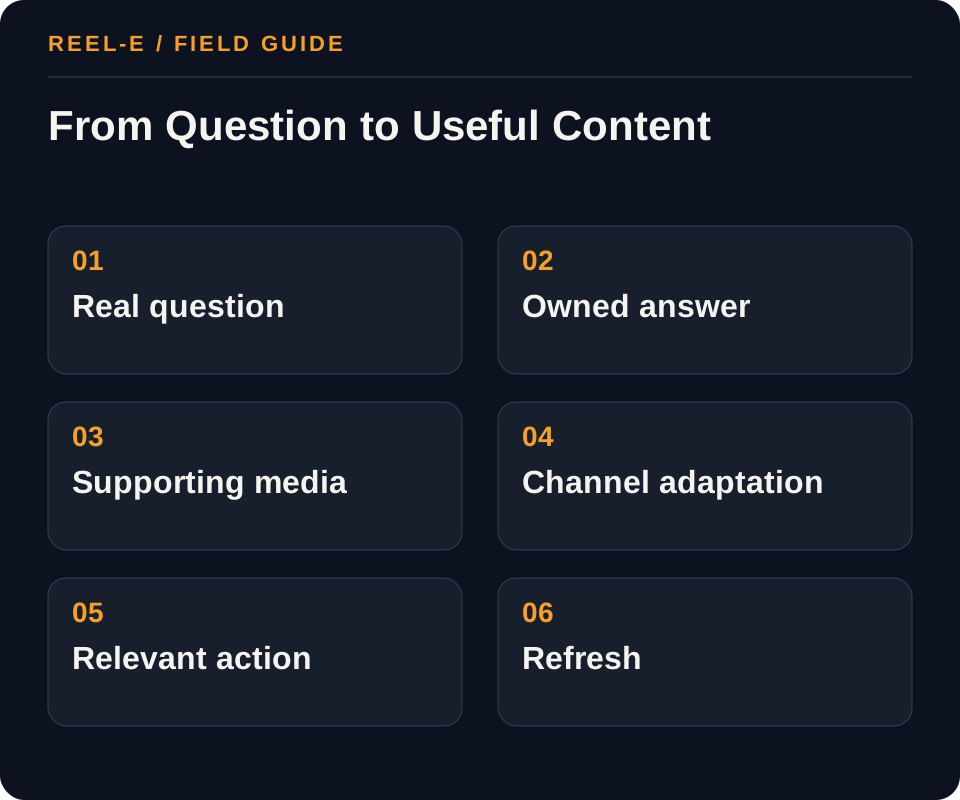
Run the Editorial Board From Capture to Refresh
Run the board from question capture through source creation, adaptation, distribution, and refresh. The loop matters because audience behavior should change what the team explains next.
1. Build the Question Bank
Capture exact questions from buyer and seller calls, listing presentations, comments, search queries, support, and partner conversations. Tag audience, stage, property type, business value, evidence available, and nearest existing URL.
- Record: Audience in the Question-To-Source Ledger
- Control: Inventory URLs and assign one owner before drafting.
- Review: High-value recurring questions with one current canonical answer. Fill evidence-backed gaps before chasing unrelated volume.
2. Choose a Canonical Owner
Group questions that express the same decision and assign one page to own it. Define subordinate spokes only when they answer a distinct use case, platform, industry, or implementation question.
- Record: Content Job in the Content Operating Board
- Control: Adapt each channel's format, hook, and action.
- Review: Useful derivatives and sales uses per source asset. Improve capture or choose a stronger source format.
3. Create the Evidence Packet
Collect current primary sources, first-party observations, examples, screenshots, media rights, and limitations. Label modeled demand separately and never add it to observed traffic.
- Record: Intent in the Question-To-Source Ledger
- Control: Keep a dated source ledger and label evidence mode.
- Review: Search visitors reaching the relevant next guide, product page, or qualified action. Strengthen the intent bridge rather than add generic CTAs.
4. Publish the Source Asset
Write the complete answer with a decision tool, worked example, media, links, and next action. Give it a stable URL and update record so derivatives have something authoritative to reference.
- Record: Media in the Content Operating Board
- Control: Measure question coverage, qualified paths, and refresh gains.
- Review: High-value recurring questions with one current canonical answer. Fill evidence-backed gaps before chasing unrelated volume.
5. Adapt Derivatives
Turn one section into an email, one decision into a short video, one table into a presentation slide, and one example into a social post. Rewrite the hook and action for the channel; do not paste an identical excerpt everywhere.
- Record: Evidence Mode in the Question-To-Source Ledger
- Control: Inventory URLs and assign one owner before drafting.
- Review: Useful derivatives and sales uses per source asset. Improve capture or choose a stronger source format.
6. Close the Learning Loop
Review GSC query/page data, PostHog behavior, conversions, replies, and sales questions. Improve pages with high impressions or useful traffic before creating near-duplicates. Preserve a URL's distinct demand unless current evidence supports consolidation.
- Record: Distribution in the Content Operating Board
- Control: Adapt each channel's format, hook, and action.
- Review: Search visitors reaching the relevant next guide, product page, or qualified action. Strengthen the intent bridge rather than add generic CTAs.

A 90-Day Rollout
| Window | Work | Finish Line |
|---|---|---|
| Days 1-30 | Build the Question Bank; Choose a Canonical Owner | Baseline and first complete path |
| Days 31-60 | Create the Evidence Packet; Publish the Source Asset | Repeatable production and handoff |
| Days 61-90 | Adapt Derivatives; Close the Learning Loop | Review, correction, and next allocation |
A Worked Example: Turn One Seller Question Into a Content Family
The situation: Sellers repeatedly ask whether they need drone, a tour, or video, and the team answers from scratch in every presentation.
The approach: The team publishes a canonical media-package guide, creates a comparison table for presentations, records a 45-second explanation, sends a checklist by email, and links platform posts back to the source article.
The result to review: One researched answer supports search, sales, email, and social while remaining updateable. New content is created only when a different decision appears.
The team saves time because it stops answering the same question from a blank page. More importantly, the answer becomes more consistent and easier for readers to find again.
Measure Useful Paths, Not Publishing Streaks
Measure question coverage, useful paths, derivative yield, search behavior, replies, and conversions with careful attribution language. A publishing streak mostly proves that the calendar was persistent.
| Metric | Definition | How to Use It |
|---|---|---|
| Question Coverage | High-value recurring questions with one current canonical answer. | Fill evidence-backed gaps before chasing unrelated volume. |
| Reuse Yield | Useful derivatives and sales uses per source asset. | Improve capture or choose a stronger source format. |
| Query-To-Action Path | Search visitors reaching the relevant next guide, product page, or qualified action. | Strengthen the intent bridge rather than add generic CTAs. |
Tools You Can Use
Question-To-Source Ledger
Ground ideas in recurring decisions and evidence.
- Audience: Current fact, source, owner, approval date, effect on build the question bank, and fit with search-led source article.
- Question: Current fact, source, owner, approval date, effect on choose a canonical owner, and fit with email-led explanation.
- Intent: Current fact, source, owner, approval date, effect on create the evidence packet, and fit with video-led demonstration.
- Source of Truth: Current fact, source, owner, approval date, effect on publish the source asset, and fit with search-led source article.
- Evidence Mode: Current fact, source, owner, approval date, effect on adapt derivatives, and fit with email-led explanation.
- Canonical Asset: Current fact, source, owner, approval date, effect on close the learning loop, and fit with video-led demonstration.
- Owner: Current fact, source, owner, approval date, effect on build the question bank, and fit with search-led source article.
- Volatility: Current fact, source, owner, approval date, effect on choose a canonical owner, and fit with email-led explanation.
Content Operating Board
Control production, distribution, and retirement.
- URL: Current fact, source, owner, approval date, effect on choose a canonical owner, and fit with email-led explanation.
- Content Job: Current fact, source, owner, approval date, effect on create the evidence packet, and fit with video-led demonstration.
- Status: Current fact, source, owner, approval date, effect on publish the source asset, and fit with search-led source article.
- Media: Current fact, source, owner, approval date, effect on adapt derivatives, and fit with email-led explanation.
- Reviewer: Current fact, source, owner, approval date, effect on close the learning loop, and fit with video-led demonstration.
- Distribution: Current fact, source, owner, approval date, effect on build the question bank, and fit with search-led source article.
- Metric: Current fact, source, owner, approval date, effect on choose a canonical owner, and fit with email-led explanation.
- Refresh Date: Current fact, source, owner, approval date, effect on create the evidence packet, and fit with video-led demonstration.
- Consolidation Proof: Current fact, source, owner, approval date, effect on publish the source asset, and fit with search-led source article.
Where This Usually Breaks
The big risks are duplicate intent, unsourced expertise, stale claims, and volume becoming the goal. Keep one canonical owner and let evidence decide when consolidation is safe.
| Risk | Practical Control |
|---|---|
| Cannibalization | Inventory URLs and assign one owner before drafting. |
| Derivative Duplication | Adapt each channel's format, hook, and action. |
| Unsourced Expertise | Keep a dated source ledger and label evidence mode. |
| Production Volume as Goal | Measure question coverage, qualified paths, and refresh gains. |
Cannibalization
- Control: Inventory URLs and assign one owner before drafting.
- Review Stage: Build the Question Bank
- Early Warning: High-value recurring questions with one current canonical answer.
- Response: Fill evidence-backed gaps before chasing unrelated volume.
Derivative Duplication
- Control: Adapt each channel's format, hook, and action.
- Review Stage: Choose a Canonical Owner
- Early Warning: Useful derivatives and sales uses per source asset.
- Response: Improve capture or choose a stronger source format.
Unsourced Expertise
- Control: Keep a dated source ledger and label evidence mode.
- Review Stage: Create the Evidence Packet
- Early Warning: Search visitors reaching the relevant next guide, product page, or qualified action.
- Response: Strengthen the intent bridge rather than add generic CTAs.
Production Volume as Goal
- Control: Measure question coverage, qualified paths, and refresh gains.
- Review Stage: Publish the Source Asset
- Early Warning: High-value recurring questions with one current canonical answer.
- Response: Fill evidence-backed gaps before chasing unrelated volume.
Verify current primary guidance for the actual jurisdiction, platform, campaign, property, and professional relationship. This researched guide is not individualized legal, aviation, financial, privacy, or compliance advice.
My Bottom Line
Capture real questions, build one answer worth keeping, and adapt it with respect for each channel. That creates an editorial library. Everything else is a pile of posts with excellent attendance.
Sources and Research Notes
Open the source ledger- NAR video marketing practice article. Industry practice source for concise, audience-centered real-estate video planning. Accessed August 12, 2026.
- HUD guidance on digital housing advertising. Primary federal guidance on Fair Housing Act considerations in digital targeting and delivery. Accessed August 12, 2026.
- NAR social media resources. Current industry guidance for real estate social use. Accessed August 12, 2026.
- Google email sender guidelines. Primary platform guidance for email distribution quality. Accessed August 12, 2026.
- HousingWire social strategies. Format and coverage reference. Strong tactical breadth but centered on channels rather than a governed source-asset system. Accessed August 12, 2026.
- Matterport marketing ideas. Format and coverage reference. Broad tactics with visual emphasis; limited content lifecycle and retirement operations. Accessed August 12, 2026.
- iHomefinder content creation. Format and coverage reference. Useful format ideas but not a complete evidence, reuse, update, and pipeline taxonomy. Accessed August 12, 2026.
Sources support only the claims described in their notes. Reopen current primary sources before a purchase, launch, or compliance decision.