
Most real estate social plans are calendars wearing strategy costumes. They say to post a market update on Tuesday and a quote on Thursday, but never explain who should care, what the post should prove, where the click goes, or who answers the response. Start with audience jobs and repeatable source material. The calendar comes later.
Operating Reel-E has given me a very practical view of social media: the hard part is not producing one attractive post. It is turning real property work into a recognizable publishing rhythm, then making sure somebody responds when the content does its job.
Who this is for: agents and small teams that need a repeatable social operating system rather than another list of post ideas.
Research note: Researched from current NAR practice and HUD digital-advertising guidance, combined with observed Reel-E listing-media workflow. Platform features and policies should be rechecked before campaign launch.

Give Every Channel a Job
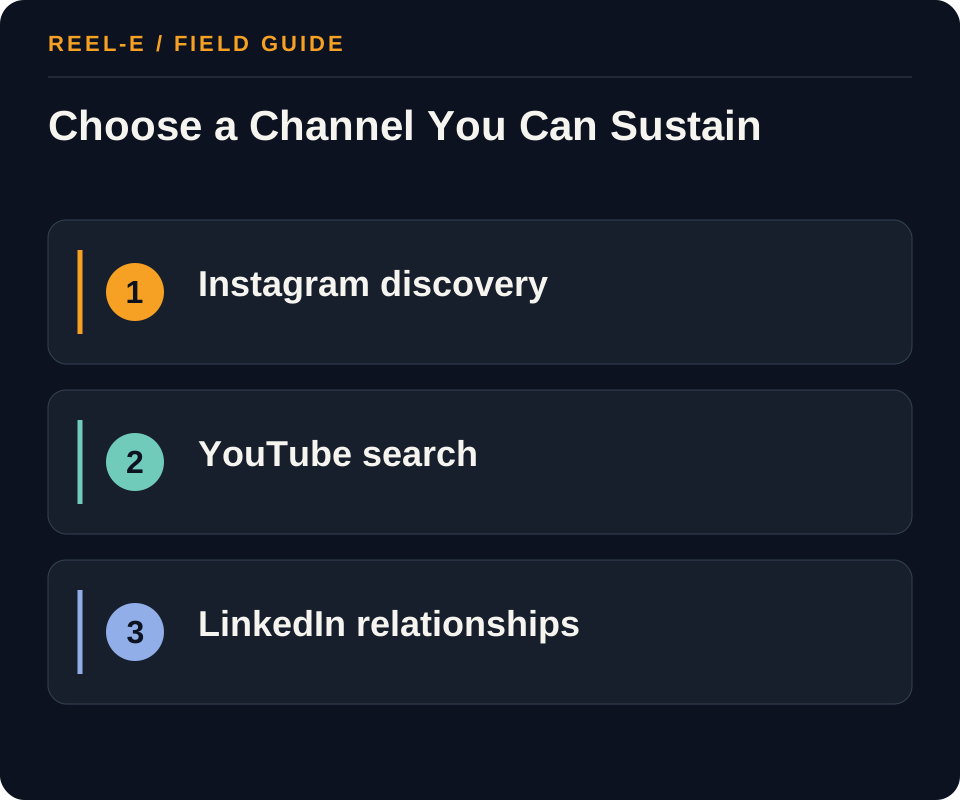
Give each platform one primary responsibility before you build a calendar. Otherwise the team ends up feeding five channels the same square meal and wondering why none of them feels native.
| Path | Use It When | Reconsider It When |
|---|---|---|
| Instagram-Led | Visual property proof, Stories, Reels, and agent familiarity are core and the team can respond consistently. | The audience is elsewhere or the team cannot sustain visual production. |
| Youtube-Led | Searchable neighborhood, process, and property explanations can compound over time. | The team only has capacity for unstructured short clips. |
| Linkedin-Led | Referral partners, commercial clients, builders, investors, or professional credibility drive the pipeline. | The content remains consumer-listing promotion with no professional insight. |
Instagram-Led
- Best Fit: Visual property proof, Stories, Reels, and agent familiarity are core and the team can respond consistently.
- Pause If: The audience is elsewhere or the team cannot sustain visual production.
- Review: Meaningful prospect or partner conversations divided by content viewers or profile visitors, using a consistent denominator. Improve audience fit and next action.
- Control: Discriminatory Targeting or Language. Apply current fair-housing guidance, brokerage review, and documented audience controls.
Youtube-Led
- Best Fit: Searchable neighborhood, process, and property explanations can compound over time.
- Pause If: The team only has capacity for unstructured short clips.
- Review: Useful channel-specific assets created from each listing or knowledge input. Fix capture and templates rather than demand more ideas.
- Control: Trend-Driven Inconsistency. Choose repeatable pillars and a realistic channel count.
Linkedin-Led
- Best Fit: Referral partners, commercial clients, builders, investors, or professional credibility drive the pipeline.
- Pause If: The content remains consumer-listing promotion with no professional insight.
- Review: Relevant comments/messages handled within the team's promised window. Change ownership or reduce channel load.
- Control: Identical Cross-Posting. Adapt hook, crop, caption, and action to the channel.
What Makes a Social System Feel Human
A Listing Is Source Material, Not the Whole Personality
Use the property to explain decisions, location, process, design, negotiation, and client service. A feed made entirely of beauty shots may look polished while saying almost nothing about why someone should hire you.
Recognizable Beats Constantly Reinvented
Two or three recurring formats make the account easier to understand and the production easier to sustain. Consistency does not mean every post looks identical. It means the audience recognizes the mind behind it.
The Reply Is Part of the Content
A useful question, property inquiry, or seller response needs an owner and a reasonable response window. Publishing without a handoff is lead generation by unattended mailbox.
Six Decisions That Keep the Calendar From Going Flat
Choose the Audience Before the Format
A first-time buyer, luxury seller, landlord, local homeowner, referral partner, and commercial owner will not find the same post useful. Pick one person and one decision for each piece, then choose the format that helps. Video may show a process or space. A carousel may compare choices. A short written post may handle a sharp opinion. Starting with ‘we need a Reel’ often produces a Reel that needed an idea.
Build Pillars From Work You Actually Do
A strong pillar should have a steady source of proof. Listings can support property and media lessons. Client questions can support decision education. Local work can support neighborhood context. Your operating process can support seller confidence. If a pillar depends on pretending you have daily insight into a subject you rarely touch, it will become generic quickly and the audience will feel the distance.
Capture the Person, Not Only the Property
Beautiful property footage attracts attention, but an agent brand needs a human point of view. Record short explanations before or after the listing shoot, while the details are fresh and the environment gives the commentary context. You do not need to perform enthusiasm at the camera. Explain one useful thing as if a client asked beside you. Warm expertise usually survives a phone camera better than a memorized hook survives take nine.
Give Every Post a Destination
The destination can be a property page, guide, reply, profile, email signup, listing presentation, or direct conversation. Name it before publishing and make sure the page works on mobile. A viewer who watches thirty seconds and then lands on a broken, slow, or unrelated destination has not entered a funnel. They have completed a small obstacle course.
Batch the Expensive Part
Travel, property access, lighting, setup, and getting the right people together are expensive. Capture several useful source moments while those conditions exist, then edit and write the derivatives separately. Batching does not mean publishing six nearly identical clips. It means giving the team enough raw material to answer different questions without reopening the property for every post.
Review the Comments Like Research
Useful replies reveal confusion, objections, language, local concerns, and future topics. Record the question behind the comment and answer it where the audience can benefit. Do not turn every interaction into content, and protect client information, but let real conversations improve the plan. The audience is often more helpful than another hour spent arranging colored blocks on the calendar.
A Week That Is Actually Sustainable
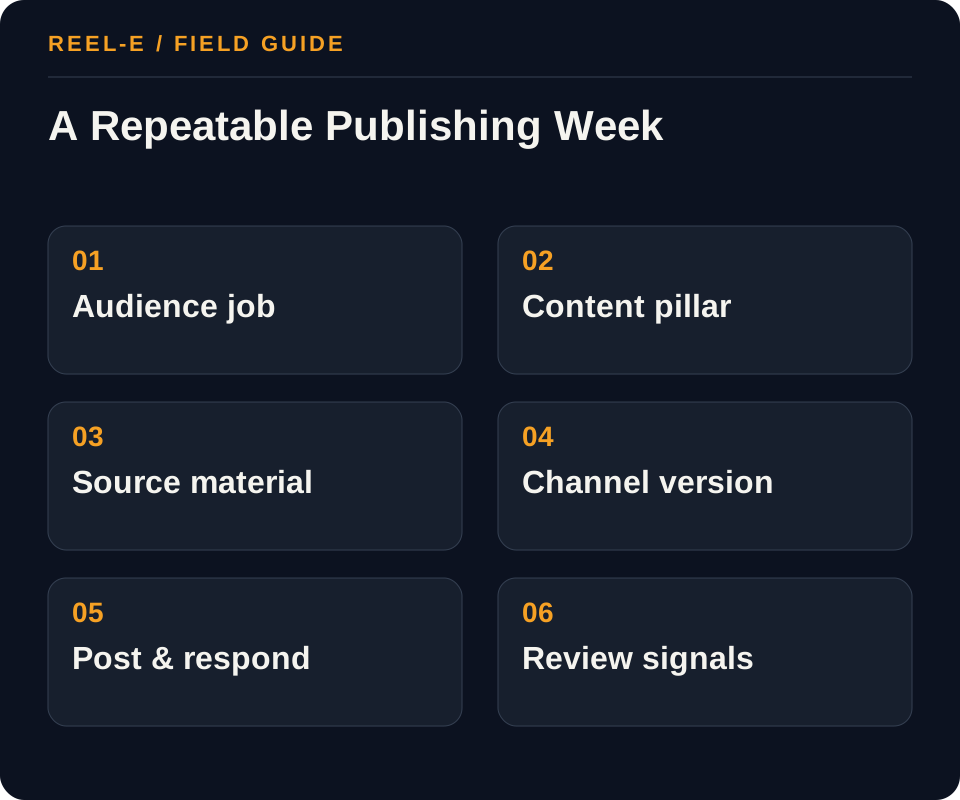
One Strong Property Story
Publish one piece that makes a clear argument about a listing, neighborhood, design choice, media decision, or seller strategy. Use the strongest format for the idea rather than forcing every property into the same edit. The post should make sense to someone who is not shopping for that exact home. That broader usefulness is what turns listing inventory into an agent brand instead of a temporary catalog.
One Founder or Agent Explanation
Answer a recurring client question directly to camera, through voiceover, or in a concise written post. Begin with the real decision and give the opinion earlier than feels comfortable. Support it with a property example, process detail, or current source where needed. The tone can be warm and confident without pretending every topic has one answer. Readers tend to trust expertise that can explain the tradeoff and still leave room for their situation.
One Local Piece With a Point
Show a street, planning change, amenity, business, route, building type, or recurring local question, but explain why it matters to the audience. Local content becomes generic when it is only a montage of places the creator visited. Use current facts, permissions, and fair-housing-safe language. The goal is to demonstrate attention to place, not to declare that one block contains the universally perfect kind of person.
One Relationship Touch
Share a useful client process, event, partner lesson, behind-the-scenes decision, or thoughtful response to a community question. Protect private information and do not manufacture sentiment. This piece reminds the audience that real estate work involves people and judgment, not only polished surfaces. It also gives the account some oxygen between listings, which are rarely considerate enough to arrive on a perfect publishing schedule.
One Review Block
Reserve time to answer meaningful comments and messages, route inquiries, capture new questions, update the content board, and review what actually reached a useful next step. Do not let publishing consume the entire operating budget. The response and learning block is where social stops being a stage and becomes a relationship channel. It is also where the team discovers which recurring post deserves a deeper article, video, or email.
How I Would Turn One Shoot Into a Month of Useful Material
Capture the Property Story
Record a clean horizontal overview, several vertical sequences, specific room relationships, exterior and location context, detail shots, natural sound where useful, and enough stills for thumbnails and written pieces. Label the must-have claims and do not invent features in the edit. This source can support the listing launch, but it should also preserve moments that help explain design, preparation, media, neighborhood, and seller decisions later.
Capture Three Short Explanations
While the listing details are fresh, answer why the opening shot matters, what buyers may miss in the photos, and one decision the seller or team made well. Keep each answer focused and conversational. These pieces give the founder or agent a visible point of view without requiring a separate studio day. They also make the final feed feel like a person noticed the property, not like the camera operated independently and uploaded its findings.
Capture the Process With Permission
Show staging, photography, video, floor-plan work, team coordination, neighborhood research, or the approval process when it reveals useful care. Protect the seller, occupants, documents, access codes, and private conversations. Behind-the-scenes material should explain the standard, not merely prove that people carried equipment. A ten-second clip of a careful decision can say more about service than a long montage of everyone walking quickly.
Write the Derivatives After the Edit
Use the finished property story and captured explanations to create distinct posts for discovery, education, local context, seller process, and conversation. Change the opening and next action for each channel. Link deeper questions to an article, property page, or direct reply. The same footage can support several ideas because the ideas are different. If every caption begins with ‘Just listed,’ the source library is not the problem.
What I Would Stop Posting
Anything the Team Cannot Explain or Support
Stop generic market claims without a current source, borrowed luxury language without proof, neighborhood superlatives that create fair-housing or credibility problems, client stories without permission, and trend participation that hides the actual service. A lighter calendar with stronger judgment is easier to follow and easier to produce. The account should not sound like a different enthusiastic intern takes control every Tuesday.
Anything That Has No Reader Beyond the Algorithm
A post can be entertaining, beautiful, or timely, but it should still have a human reason to exist. If the only explanation is that the platform favors the format, give the idea another pass. Algorithms change and useful expertise travels. This does not mean every post needs a lesson and a worksheet. It means the audience should receive more than evidence that the team found the upload button.
Anything the Response Team Cannot Inherit
Pause offers, events, listing claims, and lead magnets that the team cannot explain, deliver, route, or measure. Prepare the destination and response before publishing. Social can make a small team feel very visible very quickly, which is valuable until the first ten interested people receive ten different answers. The content plan and the service plan should meet before the audience introduces them.
Anything You Would Not Want to Explain in Person
If the hook depends on an exaggerated claim, false urgency, a private detail, or a joke that becomes uncomfortable beside the client, do not publish it. The warm founder tone survives contact with real people.
Turn One Listing Into Useful Distribution
Assign Every Platform One Primary Job
Choose discovery, proof, local expertise, conversation, nurture, or retargeting for each active channel. Instagram can carry short visual discovery; YouTube can hold durable explanations; LinkedIn may fit professional or commercial context; Facebook can support local community and existing relationships. The exact mix depends on audience and capacity. A channel without a named job, source asset, destination, response owner, and review window becomes a posting obligation.
Keep only channels with a distinct job and accountable owner.
Turn One Verified Listing Source Into Derivatives
Start with an approved fact sheet, photo set, floor plan, property page, and video master. Produce derivatives by audience question: location, room relationship, feature proof, seller process, capture, market education, and listing invitation. Rewrite opening, crop, caption, duration, and action for the channel. Do not copy the same file everywhere or let social captions become a second ungoverned source of property facts.
Use one source packet and derivative map per campaign.
Operate the Calendar, Compliance, and Measurement Path
The calendar should show source asset, audience, job, channel, owner, approval, publish date, destination, response route, and metric. Review housing creative, audience, delivery, and optimization under current HUD and platform guidance; disclose material relationships under FTC guidance. Define qualified profile visits, useful completion, property-page sessions, inquiries, response, appointments, and pipeline separately. Do not call engagement revenue.
Run a 30-day calendar with preflight and stable metric definitions.
A 30-Day Social System the Team Can Repeat
Build this in ninety days, but make the first month deliberately small. A complete two-channel system teaches you more than an ambitious six-channel calendar that quietly stops on day eleven.
1. Days 1-15: Define the Audience Job
Choose one primary audience and one business outcome for the quarter. Document what they need before contacting an agent: local orientation, seller confidence, process transparency, property discovery, or proof that the team can market a listing well.
- Record: Source Fact Sheet in the One-Listing Derivative Map
- Control: Apply current fair-housing guidance, brokerage review, and documented audience controls.
- Review: Meaningful prospect or partner conversations divided by content viewers or profile visitors, using a consistent denominator. Improve audience fit and next action.
2. Days 1-15: Build Four Pillars
Use property stories, local expertise, process/proof, and agent perspective. Give each pillar a repeatable format, source asset, owner, and next action. Keep fair-housing and brokerage review in the workflow rather than as a final caption check.
- Record: Content Job in the 30-Day Social Calendar
- Control: Choose repeatable pillars and a realistic channel count.
- Review: Useful channel-specific assets created from each listing or knowledge input. Fix capture and templates rather than demand more ideas.
3. Days 16-30: Create the Production Board
For every asset, track idea, audience question, source, format, channel, owner, due date, approval, caption, destination, publication URL, and result. Batch recording and editing, but leave space for timely local updates.
- Record: Audience Question in the One-Listing Derivative Map
- Control: Adapt hook, crop, caption, and action to the channel.
- Review: Relevant comments/messages handled within the team's promised window. Change ownership or reduce channel load.
4. Days 31-60: Repurpose with Intent
Turn one listing into a short vertical hook, a horizontal tour, a seller-facing process post, a feature explainer, an email block, and a website example. Change the opening and action for each channel instead of cross-posting an identical file.
- Record: Channel in the 30-Day Social Calendar
- Control: Tie content to conversations, appointments, listing presentations, and owned-audience growth.
- Review: Meaningful prospect or partner conversations divided by content viewers or profile visitors, using a consistent denominator. Improve audience fit and next action.
5. Days 31-60: Install Response Ownership
Decide who monitors comments and messages, response times, prohibited topics, escalation rules, lead capture, and CRM notes. Publishing without response ownership creates attention with no operational path.
- Record: Hook and Crop in the One-Listing Derivative Map
- Control: Apply current fair-housing guidance, brokerage review, and documented audience controls.
- Review: Useful channel-specific assets created from each listing or knowledge input. Fix capture and templates rather than demand more ideas.
6. Days 61-90: Review Qualified Signals
Compare saves, meaningful replies, profile or site visits, video completion, conversations, appointments, and listing presentations by pillar and channel. Keep a pillar only if it teaches, builds trust, or advances a measurable relationship.
- Record: Compliance in the 30-Day Social Calendar
- Control: Choose repeatable pillars and a realistic channel count.
- Review: Relevant comments/messages handled within the team's promised window. Change ownership or reduce channel load.

A 90-Day Rollout
| Window | Work | Finish Line |
|---|---|---|
| Days 1-30 | Days 1-15: Define the Audience Job; Days 1-15: Build Four Pillars | Baseline and first complete path |
| Days 31-60 | Days 16-30: Create the Production Board; Days 31-60: Repurpose with Intent | Repeatable production and handoff |
| Days 61-90 | Days 31-60: Install Response Ownership; Days 61-90: Review Qualified Signals | Review, correction, and next allocation |
A Worked Example: Solo Agent with Two Listings Per Month
The situation: The agent cannot post daily and has no full-time marketer, but does receive professional photos for every listing.
The approach: Each listing produces two vertical videos, one feature explanation, one seller-process post, one local-context post, and an email block. The agent records two short voiceovers in one sitting and schedules three useful posts per week.
The result to review: The calendar remains sustainable because it begins with existing work. The agent measures conversations and seller interest rather than celebrating reach alone.
The agent in this example is not creating six times more content. The team is capturing one useful source well and giving each derivative a reason to exist.
Measure the Handoff After the Like
Likes can be pleasant. I would make decisions from saves, useful replies, profile or site visits, video completion, qualified conversations, and whether the team actually handled those conversations.
| Metric | Definition | How to Use It |
|---|---|---|
| Qualified Conversation Rate | Meaningful prospect or partner conversations divided by content viewers or profile visitors, using a consistent denominator. | Improve audience fit and next action. |
| Content Reuse Yield | Useful channel-specific assets created from each listing or knowledge input. | Fix capture and templates rather than demand more ideas. |
| Response Completion | Relevant comments/messages handled within the team's promised window. | Change ownership or reduce channel load. |
Tools You Can Use
One-Listing Derivative Map
Create channel-native assets without factual drift.
- Source Fact Sheet: Current fact, source, owner, approval date, effect on days 1-15: define the audience job, and fit with instagram-led.
- Master Media: Current fact, source, owner, approval date, effect on days 1-15: build four pillars, and fit with youtube-led.
- Audience Question: Current fact, source, owner, approval date, effect on days 16-30: create the production board, and fit with linkedin-led.
- Channel Job: Current fact, source, owner, approval date, effect on days 31-60: repurpose with intent, and fit with instagram-led.
- Hook and Crop: Current fact, source, owner, approval date, effect on days 31-60: install response ownership, and fit with youtube-led.
- Destination: Current fact, source, owner, approval date, effect on days 61-90: review qualified signals, and fit with linkedin-led.
- Approval: Current fact, source, owner, approval date, effect on days 1-15: define the audience job, and fit with instagram-led.
- Retirement: Current fact, source, owner, approval date, effect on days 1-15: build four pillars, and fit with youtube-led.
30-Day Social Calendar
Coordinate publishing, response, and measurement.
- Date: Current fact, source, owner, approval date, effect on days 1-15: build four pillars, and fit with youtube-led.
- Content Job: Current fact, source, owner, approval date, effect on days 16-30: create the production board, and fit with linkedin-led.
- Source Asset: Current fact, source, owner, approval date, effect on days 31-60: repurpose with intent, and fit with instagram-led.
- Channel: Current fact, source, owner, approval date, effect on days 31-60: install response ownership, and fit with youtube-led.
- Owner: Current fact, source, owner, approval date, effect on days 61-90: review qualified signals, and fit with linkedin-led.
- Compliance: Current fact, source, owner, approval date, effect on days 1-15: define the audience job, and fit with instagram-led.
- Destination: Current fact, source, owner, approval date, effect on days 1-15: build four pillars, and fit with youtube-led.
- Response Sla: Current fact, source, owner, approval date, effect on days 16-30: create the production board, and fit with linkedin-led.
- Metric: Current fact, source, owner, approval date, effect on days 31-60: repurpose with intent, and fit with instagram-led.
Where This Usually Breaks
Check fair-housing language and targeting, keep property facts current, and stop identical cross-posting from becoming the strategy. A trend is allowed to be fun. It is not allowed to become the operating model.
| Risk | Practical Control |
|---|---|
| Discriminatory Targeting or Language | Apply current fair-housing guidance, brokerage review, and documented audience controls. |
| Trend-Driven Inconsistency | Choose repeatable pillars and a realistic channel count. |
| Identical Cross-Posting | Adapt hook, crop, caption, and action to the channel. |
| Vanity Reporting | Tie content to conversations, appointments, listing presentations, and owned-audience growth. |
Discriminatory Targeting or Language
- Control: Apply current fair-housing guidance, brokerage review, and documented audience controls.
- Review Stage: Days 1-15: Define the Audience Job
- Early Warning: Meaningful prospect or partner conversations divided by content viewers or profile visitors, using a consistent denominator.
- Response: Improve audience fit and next action.
Trend-Driven Inconsistency
- Control: Choose repeatable pillars and a realistic channel count.
- Review Stage: Days 1-15: Build Four Pillars
- Early Warning: Useful channel-specific assets created from each listing or knowledge input.
- Response: Fix capture and templates rather than demand more ideas.
Identical Cross-Posting
- Control: Adapt hook, crop, caption, and action to the channel.
- Review Stage: Days 16-30: Create the Production Board
- Early Warning: Relevant comments/messages handled within the team's promised window.
- Response: Change ownership or reduce channel load.
Vanity Reporting
- Control: Tie content to conversations, appointments, listing presentations, and owned-audience growth.
- Review Stage: Days 31-60: Repurpose with Intent
- Early Warning: Meaningful prospect or partner conversations divided by content viewers or profile visitors, using a consistent denominator.
- Response: Improve audience fit and next action.
Verify current primary guidance for the actual jurisdiction, platform, campaign, property, and professional relationship. This researched guide is not individualized legal, aviation, financial, privacy, or compliance advice.
My Bottom Line
Choose a few formats you can make well, publish them with a recognizable point of view, and own the response. The goal is not to look busy online. It is to become useful and memorable to the right people.
Sources and Research Notes
Open the source ledger- NAR video marketing practice article. Industry practice source for concise, audience-centered real-estate video planning. Accessed August 12, 2026.
- HUD guidance on digital housing advertising. Primary federal guidance on Fair Housing Act considerations in digital targeting and delivery. Accessed August 12, 2026.
- National Association of REALTORS Fair Housing resources. Industry resource for fair-housing education; local counsel and brokerage policy remain controlling. Accessed August 12, 2026.
- FTC social media disclosure guidance. Primary federal guidance for clear disclosure of material connections. Accessed August 12, 2026.
- NAR social media. Format and coverage reference. Authoritative resource hub but not a single end-to-end content operating system. Accessed August 12, 2026.
- Matterport social ideas. Format and coverage reference. Broad platform and idea coverage; limited source-asset, response, and measurement operations. Accessed August 12, 2026.
- HousingWire strategies. Format and coverage reference. Current 2,600-word guide with 50 images; strong tactic breadth but less reusable campaign governance. Accessed August 12, 2026.
Sources support only the claims described in their notes. Reopen current primary sources before a purchase, launch, or compliance decision.
Keep Reading
- connect social work to the full marketing plan
- make the channel reinforce a recognizable agent brand
- turn each listing into a repeatable content system
- adapt the channel plan for short-term rental demand
- plan Instagram Reels for real estate
- create a Reel-E listing video
- compare the strongest real estate video-maker workflows
- see how Reel-E turns approved photos into listing video