
Architecture marketing often starts with gorgeous finished photography and skips the thinking that made the project worth photographing. Clients hire a firm to navigate constraints, tradeoffs, approvals, teams, budgets, and places. The portfolio should show the result, but the story has to reveal the judgment behind it.
My work across architectural, commercial, institutional, and corporate media has put me close to the moment when a complex project gets reduced to a beautiful image and three vague adjectives. The image matters. The judgment behind it is what makes the story credible.
Who this is for: architecture principals and marketing teams building authority without reducing every project to a glossy portfolio image.
Research note: Researched vertical operating framework using current fair-housing and video-practice sources where applicable. Local rules, asset facts, platform terms, and performance claims require project-specific verification.

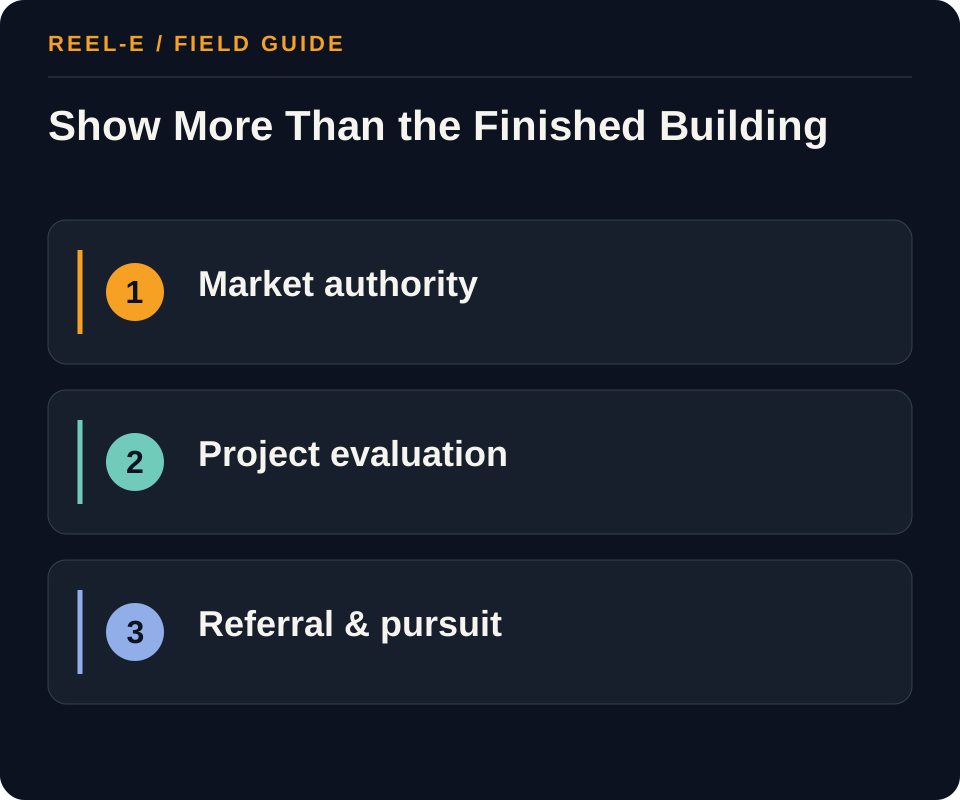
Choose a Market Position the Portfolio Supports
Choose the markets and project types the portfolio can genuinely support. Then show the constraint, the firm's role, the decision, the collaboration, and the result. A gallery earns attention. A well-built project story helps a client evaluate the firm.
| Path | Use It When | Reconsider It When |
|---|---|---|
| Market Authority | This audience is the constraint on qualified inquiries, shortlist invitations, and stronger pursuits in chosen markets and the team has proof and response capacity for it. | The same creative and destination are being used for a different stakeholder journey. |
| Project and Capability Evaluation | project and capability evaluation is the constraint on qualified inquiries, shortlist invitations, and stronger pursuits in chosen markets, and the team can prove team contribution plus drawings or diagrams approved for use at the owned destination. | market authority and project and capability evaluation still share one generic promise, response queue, or campaign page. |
| Referral and Pursuit Conversion | referral and pursuit conversion depends on longer-cycle trust, permissioned client-approved outcomes, and a response path through speaking and publications or email. | The architecture firm team cannot maintain client-approved outcomes or identify the owner who advances referral and pursuit conversion. |
Market Authority
- Best Fit: This audience is the constraint on qualified inquiries, shortlist invitations, and stronger pursuits in chosen markets and the team has proof and response capacity for it.
- Pause If: The same creative and destination are being used for a different stakeholder journey.
- Review: Share of the architecture firm audience taking the defined action that advances qualified inquiries, shortlist invitations, and stronger pursuits in chosen markets within market authority, project and capability evaluation, or referral and pursuit conversion. Improve the promise, permissioned project photography/video, destination, or qualification for the weak architecture firm journey.
- Control: Client or Photographer Rights Conflict. Record approvals, credits, licenses, embargoes, and permitted uses.
Project and Capability Evaluation
- Best Fit: project and capability evaluation is the constraint on qualified inquiries, shortlist invitations, and stronger pursuits in chosen markets, and the team can prove team contribution plus drawings or diagrams approved for use at the owned destination.
- Pause If: market authority and project and capability evaluation still share one generic promise, response queue, or campaign page.
- Review: Time and conversion between named architecture firm stages under a consistent cohort and source definition. Fix the owner, design problem and constraints, or handoff between market authority, project and capability evaluation, and referral and pursuit conversion.
- Control: Firm Claims Exceed Team Contribution. Describe scope, collaborators, dates, and outcomes accurately.
Referral and Pursuit Conversion
- Best Fit: referral and pursuit conversion depends on longer-cycle trust, permissioned client-approved outcomes, and a response path through speaking and publications or email.
- Pause If: The architecture firm team cannot maintain client-approved outcomes or identify the owner who advances referral and pursuit conversion.
- Review: Contribution toward qualified inquiries, shortlist invitations, and stronger pursuits in chosen markets compared with production, firm website distribution, and response cost. Change the architecture firm channel, scope, or audience instead of optimizing impressions alone.
- Control: Beautiful Portfolio with No Decision Context. Explain problem, constraints, choices, process, and result.
What Makes a Project Story Feel Substantial
Name the Constraint
Site, program, approvals, preservation, climate, budget, schedule, material, or stakeholder needs give the design a reason to exist. Without the constraint, even excellent work can read like a collection of preferences.
Credit Is Part of the Story
Define the firm's contribution and credit collaborators accurately. Clients, photographers, consultants, contractors, and project teams should not become administrative cleanup after the case study is drafted.
One Project Can Teach More Than One Thing
A project can support a full case study, a technical explanation, a pursuit example, a lecture, and a short visual story. Each derivative should make a distinct point instead of repeating the same project description at different lengths.
The Case Study Opening I Would Use
Begin With the Decision, Not the Adjective
In the first screen, name the client or project type where permitted, the central constraint, the firm's role, and the response. Then use drawings, photography, diagrams, quotations with permission, and performance evidence to unfold the story. This gives a prospective client a reason to keep reading beyond the hero image and prevents the introduction from asking ‘innovative, timeless, contextual’ to perform structural engineering.
A Permission Check Before the Photographer Is Booked
Confirm Access, Use, Credit, and Approval Early
Identify the client, owner, occupants, photographer, consultants, contractor, and other parties whose permission, credit, or review may be required. Define intended editorial, awards, social, pursuit, lecture, and press uses before capture. This protects the final story and helps the shot plan support what can actually be published. Rights work is less exciting than golden hour, but it is much better at keeping golden hour on the website.
Turn a Project Into a Credible Story
Choose Markets from Credible Evidence
List sectors, project types, delivery roles, regions, scales, constraints, technical capabilities, client relationships, and repeatable expertise. Score candidates by evidence depth, current team, business fit, competitive distinction, permissions, and pursuit opportunity. Avoid claiming expertise from a peripheral role or outdated project. Positioning should guide what the firm pursues and publishes, not merely decorate the website.
Score target markets against evidence, team, permission, and pipeline.
Turn a Gallery Into a Decision-Rich Project Story
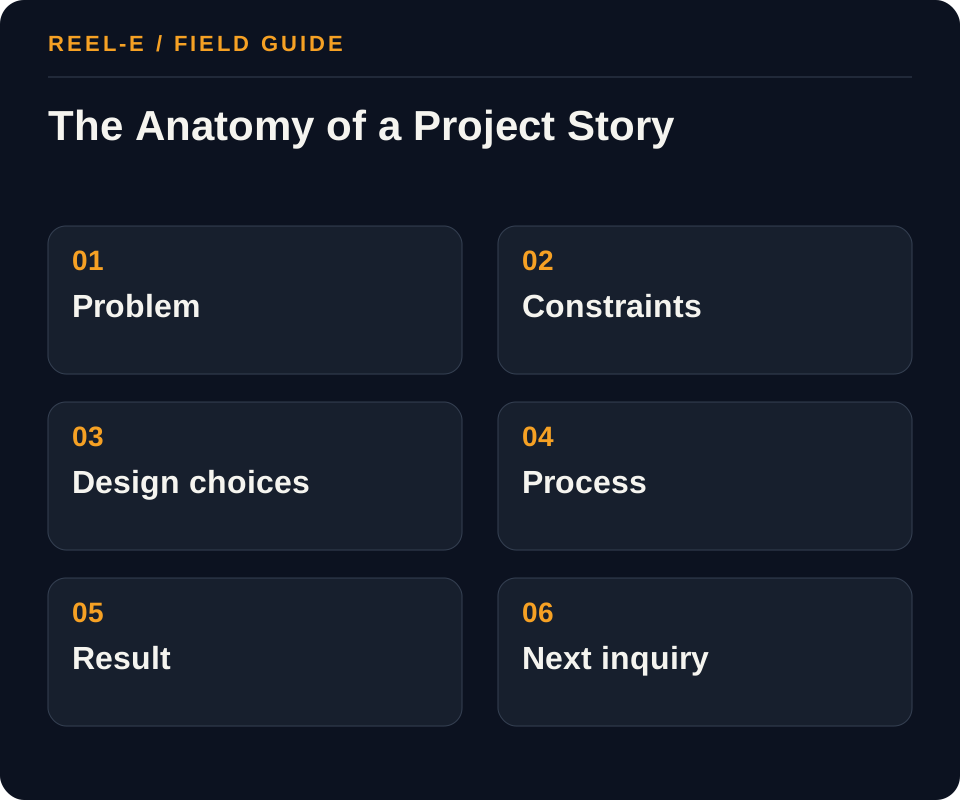
Name the client-approved challenge, context, constraints, firm scope, collaborators, critical decisions, process, evidence, and outcome without disclosing protected information or overstating credit. Drawings, diagrams, models, photography, and video should clarify the problem and response. A gallery can establish taste; a story helps a prospective client evaluate how the team thinks and works.
Use a problem, constraints, decisions, contribution, and outcome structure.
Operate Permission and Pursuit Reuse
Record client approval, creator, license, credit, channels, paid use, geography, duration, collaborators, confidentiality, embargo, security concerns, and retirement for every asset. Do not assume possession equals publication rights. Map recurring buyer questions and pursuit themes to approved project stories, explainers, talks, diagrams, interviews, newsletters, and presentation modules so business development can reuse evidence under deadline.
Maintain a rights ledger and expertise-to-pursuit reuse map.
Reuse Expertise Without Repeating the Same Case Study
Create the rights and evidence packet before publication, then build a source story that can support pursuits and thoughtful derivatives. Review it when project facts, team roles, or target markets change.
1. Separate the Journeys
Map market authority, project and capability evaluation, and referral and pursuit conversion independently. For each, record the triggering event, core uncertainty, required facts, people involved, typical objections, destination, conversion action, response owner, and sales or leasing stage.
- Record: Market in the Architecture Market Scorecard
- Control: Record approvals, credits, licenses, embargoes, and permitted uses.
- Review: Share of the architecture firm audience taking the defined action that advances qualified inquiries, shortlist invitations, and stronger pursuits in chosen markets within market authority, project and capability evaluation, or referral and pursuit conversion. Improve the promise, permissioned project photography/video, destination, or qualification for the weak architecture firm journey.
2. Create the Verified Proof Set
Assemble current, permissioned evidence such as permissioned project photography/video, design problem and constraints, team contribution, drawings or diagrams approved for use, client-approved outcomes, credentials and delivery process. Date time-sensitive facts, disclose renderings or staged imagery, distinguish aspiration from delivered condition, and remove any asset that cannot be licensed or substantiated.
- Record: Client Approval in the Project Rights Ledger
- Control: Describe scope, collaborators, dates, and outcomes accurately.
- Review: Time and conversion between named architecture firm stages under a consistent cohort and source definition. Fix the owner, design problem and constraints, or handoff between market authority, project and capability evaluation, and referral and pursuit conversion.
3. Build the Owned Destination
Give the architecture firm campaign an owned page or sales asset that combines permissioned project photography/video, design problem and constraints, and team contribution with the current status, next action, accessibility, and analytics needed for qualified inquiries, shortlist invitations, and stronger pursuits in chosen markets. Posts in firm website and searchable project stories should route to this source rather than carry every changeable detail.
- Record: Team and Role in the Architecture Market Scorecard
- Control: Explain problem, constraints, choices, process, and result.
- Review: Contribution toward qualified inquiries, shortlist invitations, and stronger pursuits in chosen markets compared with production, firm website distribution, and response cost. Change the architecture firm channel, scope, or audience instead of optimizing impressions alone.
4. Plan Capture and Derivatives
Write the architecture firm media brief from unanswered questions in market authority and project and capability evaluation. Capture permissioned project photography/video, design problem and constraints, team contribution, then produce horizontal, vertical, still, thumbnail, presentation, or email derivatives only for named jobs in firm website, searchable project stories, LinkedIn, speaking and publications. Label exceptions that affect referral and pursuit conversion instead of hiding them in cinematic coverage.
- Record: Credit in the Project Rights Ledger
- Control: Keep one verified architecture firm asset library, but give market authority, project and capability evaluation, and referral and pursuit conversion distinct messages, destinations, and actions.
- Review: Share of the architecture firm audience taking the defined action that advances qualified inquiries, shortlist invitations, and stronger pursuits in chosen markets within market authority, project and capability evaluation, or referral and pursuit conversion. Improve the promise, permissioned project photography/video, destination, or qualification for the weak architecture firm journey.
5. Assign Channel Roles
Use firm website, searchable project stories, LinkedIn, speaking and publications, email, pursuit presentations selectively. Label each as discovery, proof, nurture, retargeting, sales enablement, or retention; set owner, cadence, spend, audience rule, destination, and stop condition.
- Record: Permission in the Architecture Market Scorecard
- Control: Define the qualified action, movement toward qualified inquiries, shortlist invitations, and stronger pursuits in chosen markets, and source economics before launching through firm website.
- Review: Time and conversion between named architecture firm stages under a consistent cohort and source definition. Fix the owner, design problem and constraints, or handoff between market authority, project and capability evaluation, and referral and pursuit conversion.
6. Run the Operating Review
For the architecture firm program, review permissioned project photography/video completion and response through firm website weekly, movement toward qualified inquiries, shortlist invitations, and stronger pursuits in chosen markets biweekly, and source economics monthly. Diagnose whether market authority, project and capability evaluation, or referral and pursuit conversion is constrained by proof, destination, channel, or follow-up before concluding that demand is weak.
- Record: Confidential or Embargo in the Project Rights Ledger
- Control: Record approvals, credits, licenses, embargoes, and permitted uses.
- Review: Contribution toward qualified inquiries, shortlist invitations, and stronger pursuits in chosen markets compared with production, firm website distribution, and response cost. Change the architecture firm channel, scope, or audience instead of optimizing impressions alone.

A 90-Day Rollout
| Window | Work | Finish Line |
|---|---|---|
| Days 1-30 | Separate the Journeys; Create the Verified Proof Set | Baseline and first complete path |
| Days 31-60 | Build the Owned Destination; Plan Capture and Derivatives | Repeatable production and handoff |
| Days 61-90 | Assign Channel Roles; Run the Operating Review | Review, correction, and next allocation |
A Worked Example: Architecture Firm Campaign with Three Stakeholder Journeys
The situation: The team has credible property assets but one generic brochure and campaign currently attempts to serve market authority, project and capability evaluation, and referral and pursuit conversion. Engagement is reported, but nobody can show which journey advances.
The approach: The team creates separate messages and destinations, reuses one verified media library, and shows permissioned project photography/video, design problem and constraints, team contribution only where each is relevant. firm website, searchable project stories, LinkedIn receive distinct hooks and next actions, while one owner handles every qualified response.
The result to review: Reporting now shows which journey contributes to qualified inquiries, shortlist invitations, and stronger pursuits in chosen markets. The team can improve the weak stage without replacing the entire campaign or publishing more generic content.
The firm becomes easier to evaluate because the portfolio now reveals how it thinks, not just how the finished work photographs. That is a quieter form of authority and a more durable one.
Connect Attention to the Pursuit Pipeline Carefully
Connect useful attention, project-page behavior, qualified inquiries, shortlist or pursuit activity, and relationship context carefully. Architecture decisions are long, collaborative, and rarely attributable to one post with a straight face.
| Metric | Definition | How to Use It |
|---|---|---|
| Architecture Firm Qualified Next-Action Rate | Share of the architecture firm audience taking the defined action that advances qualified inquiries, shortlist invitations, and stronger pursuits in chosen markets within market authority, project and capability evaluation, or referral and pursuit conversion. | Improve the promise, permissioned project photography/video, destination, or qualification for the weak architecture firm journey. |
| Architecture Firm Stage Velocity | Time and conversion between named architecture firm stages under a consistent cohort and source definition. | Fix the owner, design problem and constraints, or handoff between market authority, project and capability evaluation, and referral and pursuit conversion. |
| Architecture Firm Contribution Economics | Contribution toward qualified inquiries, shortlist invitations, and stronger pursuits in chosen markets compared with production, firm website distribution, and response cost. | Change the architecture firm channel, scope, or audience instead of optimizing impressions alone. |
Tools You Can Use
Architecture Market Scorecard
Select a position the firm can prove and staff.
- Market: Current fact, source, owner, approval date, effect on separate the journeys, and fit with market authority.
- Project Evidence: Current fact, source, owner, approval date, effect on create the verified proof set, and fit with project and capability evaluation.
- Team and Role: Current fact, source, owner, approval date, effect on build the owned destination, and fit with referral and pursuit conversion.
- Client Proof: Current fact, source, owner, approval date, effect on plan capture and derivatives, and fit with market authority.
- Permission: Current fact, source, owner, approval date, effect on assign channel roles, and fit with project and capability evaluation.
- Business Fit: Current fact, source, owner, approval date, effect on run the operating review, and fit with referral and pursuit conversion.
- Competitive Distinction: Current fact, source, owner, approval date, effect on separate the journeys, and fit with market authority.
- Pursuit Demand: Current fact, source, owner, approval date, effect on create the verified proof set, and fit with project and capability evaluation.
Project Rights Ledger
Protect client, creator, collaborator, and firm rights.
- Project and Asset: Current fact, source, owner, approval date, effect on create the verified proof set, and fit with project and capability evaluation.
- Client Approval: Current fact, source, owner, approval date, effect on build the owned destination, and fit with referral and pursuit conversion.
- Creator and License: Current fact, source, owner, approval date, effect on plan capture and derivatives, and fit with market authority.
- Credit: Current fact, source, owner, approval date, effect on assign channel roles, and fit with project and capability evaluation.
- Permitted Channels: Current fact, source, owner, approval date, effect on run the operating review, and fit with referral and pursuit conversion.
- Confidential or Embargo: Current fact, source, owner, approval date, effect on separate the journeys, and fit with market authority.
- Collaborators: Current fact, source, owner, approval date, effect on create the verified proof set, and fit with project and capability evaluation.
- Expiry: Current fact, source, owner, approval date, effect on build the owned destination, and fit with referral and pursuit conversion.
Where This Usually Breaks
Check client permission, photography rights, collaborator credit, confidential facts, team contribution, and unsupported performance claims. A strong story can be precise without claiming sole authorship of a building.
| Risk | Practical Control |
|---|---|
| Client or Photographer Rights Conflict | Record approvals, credits, licenses, embargoes, and permitted uses. |
| Firm Claims Exceed Team Contribution | Describe scope, collaborators, dates, and outcomes accurately. |
| Beautiful Portfolio with No Decision Context | Explain problem, constraints, choices, process, and result. |
| One Creative for Every Architecture Firm Stakeholder | Keep one verified architecture firm asset library, but give market authority, project and capability evaluation, and referral and pursuit conversion distinct messages, destinations, and actions. |
| Architecture Firm Vanity Measurement | Define the qualified action, movement toward qualified inquiries, shortlist invitations, and stronger pursuits in chosen markets, and source economics before launching through firm website. |
Client or Photographer Rights Conflict
- Control: Record approvals, credits, licenses, embargoes, and permitted uses.
- Review Stage: Separate the Journeys
- Early Warning: Share of the architecture firm audience taking the defined action that advances qualified inquiries, shortlist invitations, and stronger pursuits in chosen markets within market authority, project and capability evaluation, or referral and pursuit conversion.
- Response: Improve the promise, permissioned project photography/video, destination, or qualification for the weak architecture firm journey.
Firm Claims Exceed Team Contribution
- Control: Describe scope, collaborators, dates, and outcomes accurately.
- Review Stage: Create the Verified Proof Set
- Early Warning: Time and conversion between named architecture firm stages under a consistent cohort and source definition.
- Response: Fix the owner, design problem and constraints, or handoff between market authority, project and capability evaluation, and referral and pursuit conversion.
Beautiful Portfolio with No Decision Context
- Control: Explain problem, constraints, choices, process, and result.
- Review Stage: Build the Owned Destination
- Early Warning: Contribution toward qualified inquiries, shortlist invitations, and stronger pursuits in chosen markets compared with production, firm website distribution, and response cost.
- Response: Change the architecture firm channel, scope, or audience instead of optimizing impressions alone.
One Creative for Every Architecture Firm Stakeholder
- Control: Keep one verified architecture firm asset library, but give market authority, project and capability evaluation, and referral and pursuit conversion distinct messages, destinations, and actions.
- Review Stage: Plan Capture and Derivatives
- Early Warning: Share of the architecture firm audience taking the defined action that advances qualified inquiries, shortlist invitations, and stronger pursuits in chosen markets within market authority, project and capability evaluation, or referral and pursuit conversion.
- Response: Improve the promise, permissioned project photography/video, destination, or qualification for the weak architecture firm journey.
Architecture Firm Vanity Measurement
- Control: Define the qualified action, movement toward qualified inquiries, shortlist invitations, and stronger pursuits in chosen markets, and source economics before launching through firm website.
- Review Stage: Assign Channel Roles
- Early Warning: Time and conversion between named architecture firm stages under a consistent cohort and source definition.
- Response: Fix the owner, design problem and constraints, or handoff between market authority, project and capability evaluation, and referral and pursuit conversion.
Verify current primary guidance for the actual jurisdiction, platform, campaign, property, and professional relationship. This researched guide is not individualized legal, aviation, financial, privacy, or compliance advice.
My Bottom Line
Use the portfolio to show the work and the project story to show the judgment. When the constraint, role, collaboration, and result are clear, the word innovative can finally take a well-earned break.
Sources and Research Notes
Open the source ledger- NAR video marketing practice article. Industry practice source for concise, audience-centered real-estate video planning. Accessed August 12, 2026.
- AIA resource center. Professional association resources used to frame project information and role clarity. Accessed August 12, 2026.
- FTC disclosure guidance. Primary federal guidance for endorsements and material connections. Accessed August 12, 2026.
- AIA firm marketing. Format and coverage reference. Authoritative and concise at 1,584 visible words and ten images, not a complete project-content and rights system. Accessed August 12, 2026.
- ArchMarketing blueprint. Format and coverage reference. Broad specialist positioning and lead guidance; agency perspective and lighter evidence governance. Accessed August 12, 2026.
- Lifted Logic architecture marketing. Format and coverage reference. Practical digital ideas but limited permission, credit, pursuit, and project-story operations. Accessed August 12, 2026.
Sources support only the claims described in their notes. Reopen current primary sources before a purchase, launch, or compliance decision.