
An agent brand is not a logo dropped onto every available surface. It is the pattern people remember after seeing the listings, advice, follow-up, and client experience. If the visual identity says luxury but the proof says occasional open-house selfie, the market will believe the proof.
I have spent years shaping media for properties, companies, television, and now Reel-E. The strongest brands were not the loudest. They made a clear promise, repeated a recognizable set of choices, and backed those choices with work people could see.
Who this is for: agents and small teams clarifying what they should be known for and how that promise appears across listings and relationships.
Research note: Researched positioning and operating framework with current fair-housing guardrails. It does not claim that a specific visual identity causes sales.

Find a Position You Can Actually Prove
Choose a position you can prove on an ordinary week. If the brand only works when the perfect listing, photographer, and caption arrive together, it is a campaign, not a system.
| Path | Use It When | Reconsider It When |
|---|---|---|
| Local Decision Expert | The agent has genuine, repeatable neighborhood or property-type knowledge. | The positioning relies on exclusionary shorthand or vague ‘local expert’ claims. |
| Marketing-Process Specialist | The listing presentation, media system, communication, and reporting are demonstrably strong. | The promise cannot be shown through actual deliverables. |
| Client-Experience Specialist | A defined audience values a consistent process, education, and service behavior. | The audience definition or messaging creates fair-housing concerns. |
Local Decision Expert
- Best Fit: The agent has genuine, repeatable neighborhood or property-type knowledge.
- Pause If: The positioning relies on exclusionary shorthand or vague ‘local expert’ claims.
- Review: Prospects and partners accurately repeating the intended promise in interviews or notes. Simplify position and proof when recall is vague.
- Control: Logo-First Rebrand. Lock audience, promise, proof, and behavior before visual execution.
Marketing-Process Specialist
- Best Fit: The listing presentation, media system, communication, and reporting are demonstrably strong.
- Pause If: The promise cannot be shown through actual deliverables.
- Review: Direct/branded search, profile visits, and referrals that name the positioning or proof. Increase consistent distribution and attribution capture.
- Control: Fair-Housing Language. Review audience, neighborhood, lifestyle, and targeting language under current guidance.
Client-Experience Specialist
- Best Fit: A defined audience values a consistent process, education, and service behavior.
- Pause If: The audience definition or messaging creates fair-housing concerns.
- Review: Questions, objections, and decisions tied to the marketed process. Strengthen evidence or change an unsupported promise.
- Control: Unsupported Outcome Claims. Scope proof to actual cases and avoid universal promises.
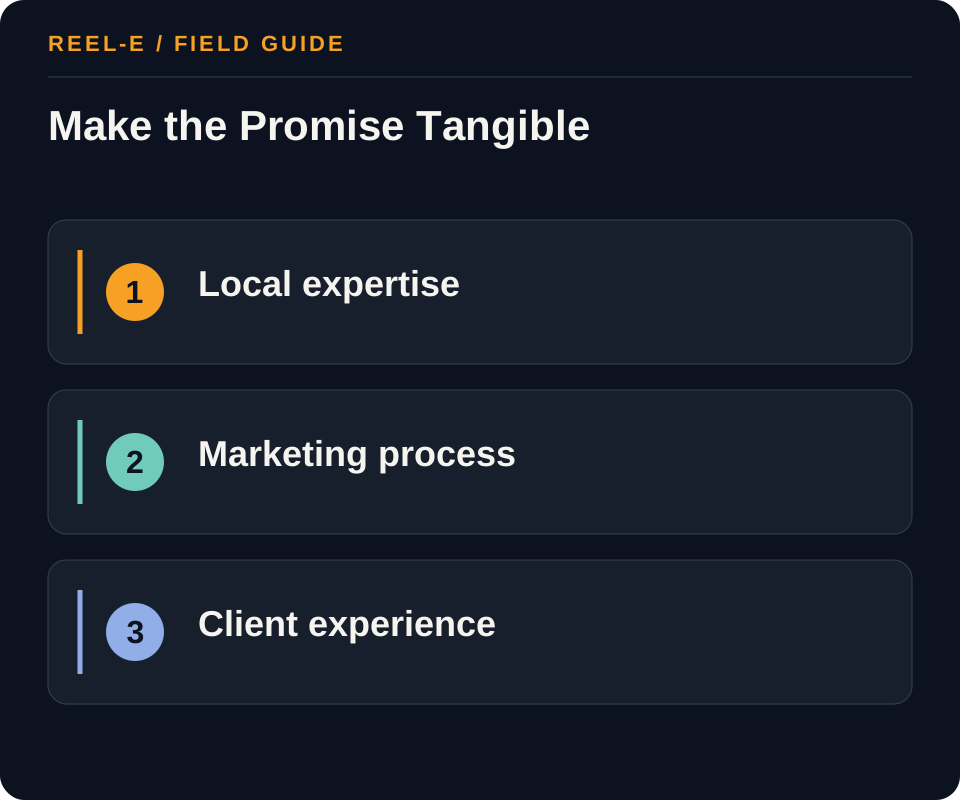
The Brand Lives in the Repeated Choices

Proof Comes Before Polish
Collect the listings, client process, market explanations, service standards, and outcomes you can support. Then choose language and visuals that make that evidence easier to recognize.
A Voice Needs Boundaries
Write down what you sound like, what you refuse to claim, and how you explain hard things. A brand voice is more useful when it helps someone edit a sentence than when it lives in a deck next to the word authentic.
The Experience Has to Match
The website, listing presentation, video, follow-up, and client update should feel related. A beautiful visual identity cannot cover for a service experience that changes depending on who remembered to send the email.
Two Tests Before You Roll the Brand Everywhere
Can a Client Repeat the Position?
Show the promise and a small proof set to people who know the work, then ask what they think the agent helps with and what evidence they remember. Do not explain the answer first. If everyone returns a different adjective, the position may be too broad. If they repeat the intended decision and cite real proof, the language is doing useful work.
Can the Team Apply It Without the Founder in the Room?
Give a coordinator, designer, photographer, or partner a real task using the voice, visual, and asset rules. Review where they hesitate. The confusing parts of a brand system appear quickly when another person has to select an image, write a caption, choose a logo state, or decide whether a claim fits. Fix the rules before inconsistency becomes a personality trait.
The Five-Page Brand Guide I Prefer to the Fifty-Page One

Page One: Position and Proof
State the audience decision, useful promise, boundaries, and three to five proof types the brand can repeat. Include language the team should not use because it is vague, unsupported, noncompliant, or simply not true to the work. This page should help a new collaborator understand the brand before they see a logo. If the position needs a long origin story to become clear, it is not ready for a listing presentation.
Page Two: Voice in Real Sentences
Show how the founder or agent opens an explanation, gives an opinion, handles uncertainty, describes a property, asks for a next step, and writes a difficult client update. Use examples and counterexamples from actual communication. Words such as warm, elevated, and authentic can stay, but they need evidence. A writer needs to know whether the brand says ‘Here is what I would do’ or ‘Unlock the journey to your dream.’ One of those sentences has already had a long career.
Pages Three to Five: Visuals and Operations
Define typography, color, photography, video openings, logo states, thumbnails, captions, branded and unbranded rules, and the templates the team uses most. Then name file locations, owners, approvals, and refresh dates. The system should make ordinary decisions faster without making every asset look cloned. A useful guide is not a museum of perfect mockups. It is a set of rules that survives the next listing on a busy afternoon.
What I Would Audit in One Afternoon
Search and Social Profiles
Compare names, brokerage, market, headshot, bio, links, contact information, service promise, reviews, and recent posts across the surfaces prospects actually see. Remove obsolete claims and conflicting positions. The goal is not perfect visual sameness. It is a coherent answer to who this person helps, how they work, and where the viewer should go next. A prospect should not need to reconcile three job titles before requesting a listing presentation.
Listings and Client Experience
Review listing photography, video, descriptions, property pages, signs, presentations, email, seller updates, buyer communication, closing materials, and follow-up. Mark where the stated brand promise appears in behavior and where it disappears. This is the useful tension in the audit: the visual identity can be excellent while the operating experience remains generic. Fixing that gap creates a brand people can describe from memory.
The Founder Test for Every New Asset
Would I Say This to a Client I Respect?
Read the headline, claim, caption, call to action, and fine print as a conversation, not a campaign. Remove language that becomes embarrassing when spoken plainly. Then ask whether the proof is visible and the next step is kind. This test keeps confidence without drifting into performance. The strongest founder voice usually sounds like a capable person sharing judgment, not a brand announcing that it has disrupted trust.
Would the Team Know When to Break the Pattern?
A good brand system makes normal choices easier and leaves room for the property, client, or situation to lead when needed. Consistency should support judgment, not replace it. Write down which elements are fixed, which are flexible, and who can approve an exception.
Build the Brand Beyond the Logo File
Position Around Evidence You Can Repeat
List markets, property types, client decisions, operating strengths, languages, local relationships, and service standards the agent can substantiate. Choose a narrow promise that matters to a defined audience. Avoid generic trusted, luxury, local expert, or full-service claims unless surrounding proof makes them specific. The brand should help a prospect predict how the agent works, not merely recognize a palette.
Choose one audience, one problem, one promise, and three proof types.
Build the Verbal System Before the Visual System
Write positioning line, value explanation, bio, listing-presentation language, service principles, proof statements, and words the brand will not use. Reconcile personal and brokerage identity, required disclosures, team names, titles, trademarks, and account ownership. Then define typography, color, photography, video behavior, thumbnails, lower thirds, and accessibility.
Approve message architecture and compliance constraints before design.
Roll Out and Audit Every High-Value Surface
Update website, profiles, brokerage directory, listing presentation, email signature, social bios, video templates, thumbnails, review response, signage, and follow-up in a controlled order. Record owner and source file for every asset. Audit promise, title, photo, colors, contact route, disclosure, link, and market focus quarterly. Measure branded search and qualified inquiries carefully without calling the refresh causal.
Run a 90-day surface inventory and quarterly consistency audit.
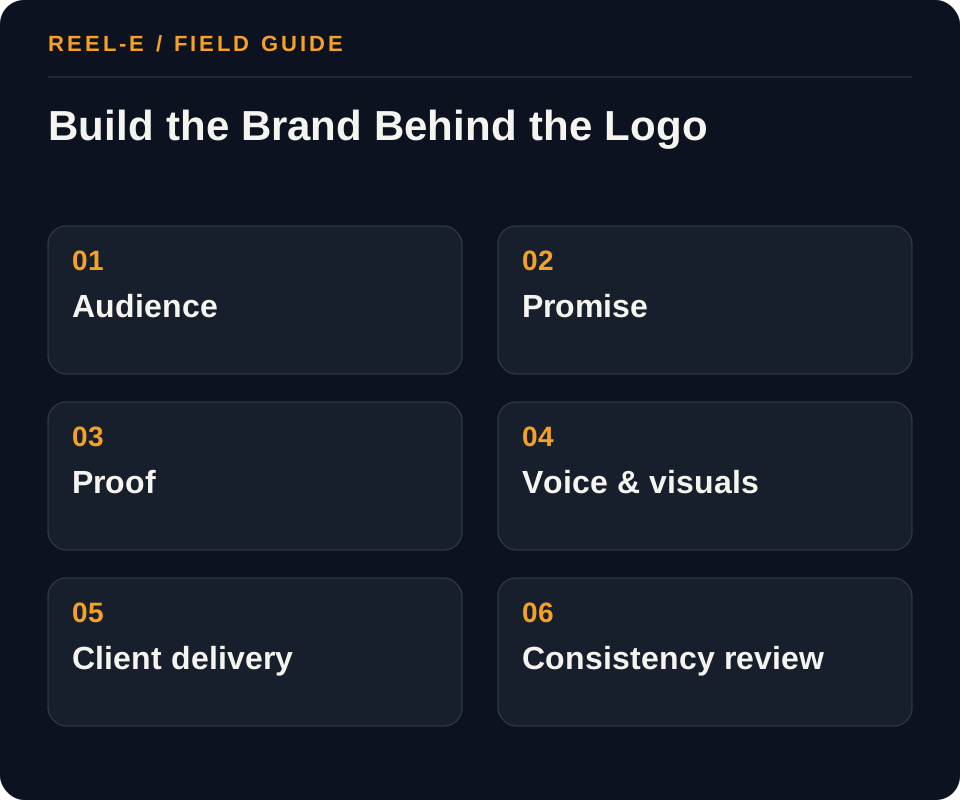
A 90-Day Rollout People Can Recognize
Roll the brand through the high-value surfaces first, then audit what people actually encounter. A controlled rollout gives the team time to learn the system instead of merely receiving new files.
1. Choose the Decision You Own
Interview clients, review conversations, and list the decisions where the team is genuinely useful. Define an audience by transaction context, property, need, or service relationship,not protected class or coded exclusion.
- Record: Audience in the Positioning Evidence Scorecard
- Control: Lock audience, promise, proof, and behavior before visual execution.
- Review: Prospects and partners accurately repeating the intended promise in interviews or notes. Simplify position and proof when recall is vague.
2. Write the Promise and Limits
Complete: ‘We help [audience] make [decision] by [method], proven by [evidence].’ Remove ‘best,’ ‘number one,’ and lifestyle claims unless supportable. Add where the team is not the right fit.
- Record: Message in the Brand Consistency Audit
- Control: Review audience, neighborhood, lifestyle, and targeting language under current guidance.
- Review: Direct/branded search, profile visits, and referrals that name the positioning or proof. Increase consistent distribution and attribution capture.
3. Assemble Proof
Use permissioned case examples, process artifacts, listing-media samples, communication standards, credentials, and scoped testimonials. Explain the situation and contribution instead of implying every client gets the same outcome.
- Record: Promise in the Positioning Evidence Scorecard
- Control: Scope proof to actual cases and avoid universal promises.
- Review: Questions, objections, and decisions tied to the marketed process. Strengthen evidence or change an unsupported promise.
4. Create Voice and Visual Rules
Define tone, terms to use/avoid, color and typography, logo clear space, photo treatment, captions, intro/outro, lower thirds, contact display, branded/unbranded variants, and accessible contrast.
- Record: Title and Disclosure in the Brand Consistency Audit
- Control: Maintain current brand files and explicit branded/unbranded video rules.
- Review: Prospects and partners accurately repeating the intended promise in interviews or notes. Simplify position and proof when recall is vague.
5. Standardize the Listing Experience
Translate the promise into intake, property preparation, media brief, launch plan, seller updates, inquiry handling, and post-launch reporting. The brand becomes credible when the behavior repeats.

- Record: Market Proof in the Positioning Evidence Scorecard
- Control: Lock audience, promise, proof, and behavior before visual execution.
- Review: Direct/branded search, profile visits, and referrals that name the positioning or proof. Increase consistent distribution and attribution capture.
6. Run a Consistency Audit
Review profiles, bios, website, email signature, listing presentation, video, social, portals, and follow-up. Fix contradictory claims, outdated headshots, mismatched contact details, and content that does not support the chosen position.
- Record: Link in the Brand Consistency Audit
- Control: Review audience, neighborhood, lifestyle, and targeting language under current guidance.
- Review: Questions, objections, and decisions tied to the marketed process. Strengthen evidence or change an unsupported promise.

A 90-Day Rollout
| Window | Work | Finish Line |
|---|---|---|
| Days 1-30 | Choose the Decision You Own; Write the Promise and Limits | Baseline and first complete path |
| Days 31-60 | Assemble Proof; Create Voice and Visual Rules | Repeatable production and handoff |
| Days 61-90 | Standardize the Listing Experience; Run a Consistency Audit | Review, correction, and next allocation |
A Worked Example: Agent Repositioning Around Listing Marketing
The situation: The agent's profiles say ‘luxury service’ but the actual advantage is a fast, transparent listing-launch process for ordinary homeowners.
The approach: The new position explains the launch system, shows a media brief and seller update, uses consistent listing-video openings, and publishes process explanations. Unsupported luxury language is removed.
The result to review: Prospects can now see what is different before the appointment. The brand is measured through recognition, qualified inquiries, and listing-presentation response,not visual preference alone.
The agent becomes easier to describe because the position, proof, and experience now agree. That is more valuable than simply looking newly branded.
Measure Recognition and Qualified Response
Look for message recall, branded discovery, listing-presentation response, and the quality of inbound conversations. Recognition is useful when people remember the right thing.
| Metric | Definition | How to Use It |
|---|---|---|
| Message Recall | Prospects and partners accurately repeating the intended promise in interviews or notes. | Simplify position and proof when recall is vague. |
| Branded Discovery | Direct/branded search, profile visits, and referrals that name the positioning or proof. | Increase consistent distribution and attribution capture. |
| Listing-Presentation Resonance | Questions, objections, and decisions tied to the marketed process. | Strengthen evidence or change an unsupported promise. |
Tools You Can Use
Positioning Evidence Scorecard
Select a brand promise the agent can prove.
- Audience: Current fact, source, owner, approval date, effect on choose the decision you own, and fit with local decision expert.
- Problem: Current fact, source, owner, approval date, effect on write the promise and limits, and fit with marketing-process specialist.
- Promise: Current fact, source, owner, approval date, effect on assemble proof, and fit with client-experience specialist.
- Operating Proof: Current fact, source, owner, approval date, effect on create voice and visual rules, and fit with local decision expert.
- Market Proof: Current fact, source, owner, approval date, effect on standardize the listing experience, and fit with marketing-process specialist.
- Client Proof: Current fact, source, owner, approval date, effect on run a consistency audit, and fit with client-experience specialist.
- Avoid Claims: Current fact, source, owner, approval date, effect on choose the decision you own, and fit with local decision expert.
- Brokerage Approval: Current fact, source, owner, approval date, effect on write the promise and limits, and fit with marketing-process specialist.
Brand Consistency Audit
Keep identity and conversion surfaces aligned.
- Surface: Current fact, source, owner, approval date, effect on write the promise and limits, and fit with marketing-process specialist.
- Message: Current fact, source, owner, approval date, effect on assemble proof, and fit with client-experience specialist.
- Visuals: Current fact, source, owner, approval date, effect on create voice and visual rules, and fit with local decision expert.
- Title and Disclosure: Current fact, source, owner, approval date, effect on standardize the listing experience, and fit with marketing-process specialist.
- Contact Route: Current fact, source, owner, approval date, effect on run a consistency audit, and fit with client-experience specialist.
- Link: Current fact, source, owner, approval date, effect on choose the decision you own, and fit with local decision expert.
- Source File: Current fact, source, owner, approval date, effect on write the promise and limits, and fit with marketing-process specialist.
- Owner: Current fact, source, owner, approval date, effect on assemble proof, and fit with client-experience specialist.
- Last Reviewed: Current fact, source, owner, approval date, effect on create voice and visual rules, and fit with local decision expert.
Where This Usually Breaks
Watch unsupported outcomes, fair-housing language, brokerage and trademark requirements, and mismatched branded or unbranded assets. Consistency should never make the claims less accurate.
| Risk | Practical Control |
|---|---|
| Logo-First Rebrand | Lock audience, promise, proof, and behavior before visual execution. |
| Fair-Housing Language | Review audience, neighborhood, lifestyle, and targeting language under current guidance. |
| Unsupported Outcome Claims | Scope proof to actual cases and avoid universal promises. |
| Inconsistent Asset Variants | Maintain current brand files and explicit branded/unbranded video rules. |
Logo-First Rebrand
- Control: Lock audience, promise, proof, and behavior before visual execution.
- Review Stage: Choose the Decision You Own
- Early Warning: Prospects and partners accurately repeating the intended promise in interviews or notes.
- Response: Simplify position and proof when recall is vague.
Fair-Housing Language
- Control: Review audience, neighborhood, lifestyle, and targeting language under current guidance.
- Review Stage: Write the Promise and Limits
- Early Warning: Direct/branded search, profile visits, and referrals that name the positioning or proof.
- Response: Increase consistent distribution and attribution capture.
Unsupported Outcome Claims
- Control: Scope proof to actual cases and avoid universal promises.
- Review Stage: Assemble Proof
- Early Warning: Questions, objections, and decisions tied to the marketed process.
- Response: Strengthen evidence or change an unsupported promise.
Inconsistent Asset Variants
- Control: Maintain current brand files and explicit branded/unbranded video rules.
- Review Stage: Create Voice and Visual Rules
- Early Warning: Prospects and partners accurately repeating the intended promise in interviews or notes.
- Response: Simplify position and proof when recall is vague.
Verify current primary guidance for the actual jurisdiction, platform, campaign, property, and professional relationship. This researched guide is not individualized legal, aviation, financial, privacy, or compliance advice.
My Bottom Line
Build the brand from a promise you can keep and proof you are proud to show. Then repeat it warmly and consistently. The logo can help. It just cannot do the job by itself.
Sources and Research Notes
Open the source ledger- HUD guidance on digital housing advertising. Primary federal guidance on Fair Housing Act considerations in digital targeting and delivery. Accessed August 12, 2026.
- National Association of REALTORS Fair Housing resources. Industry resource for fair-housing education; local counsel and brokerage policy remain controlling. Accessed August 12, 2026.
- NAR video marketing practice article. Industry practice source for concise, audience-centered real-estate video planning. Accessed August 12, 2026.
- NAR marketing resource center. Current industry guidance and related practice resources. Accessed August 12, 2026.
- FTC endorsement disclosure guidance. Primary federal guidance for material connections and testimonials. Accessed August 12, 2026.
- RealScout branding strategies. Format and coverage reference. Strong current breadth; limited implementation specification and brokerage or rights governance. Accessed August 12, 2026.
- PNC personal branding. Format and coverage reference. Accessible overview but not a real estate content-production system. Accessed August 12, 2026.
- Matterport personal brand. Format and coverage reference. Useful steps and media context; limited evidence inventory and consistency audit. Accessed August 12, 2026.
Sources support only the claims described in their notes. Reopen current primary sources before a purchase, launch, or compliance decision.